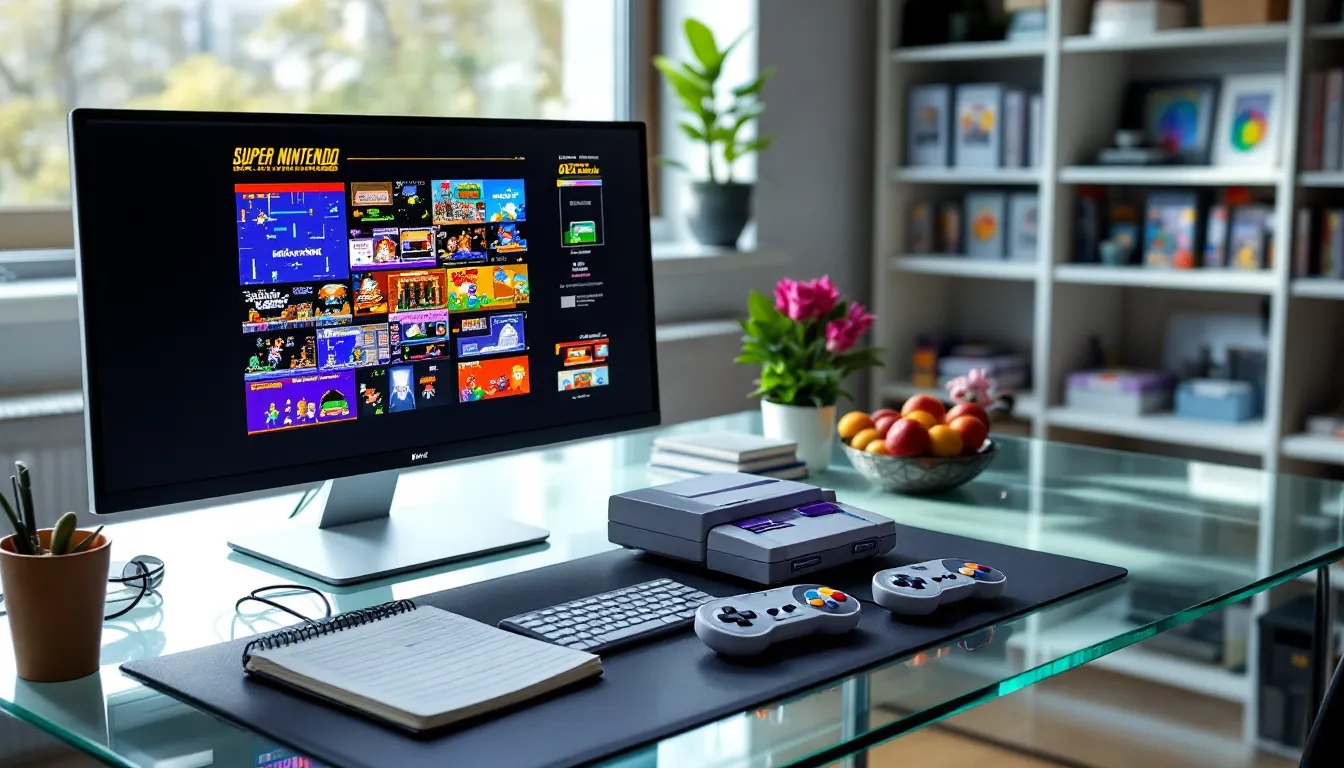
The Super Nintendo Entertainment System didn’t just compete in the 16-bit console wars, it dominated them. Released in North America in 1991, the SNES became home to some of the most influential titles in gaming history, establishing franchises that still thrive today and perfecting genres that other platforms could only imitate. From groundbreaking RPGs to platformers that redefined precision controls, the SNES library remains a masterclass in game design.
What made the SNES special wasn’t just the Mode 7 graphics chip or the expanded color palette. It was Nintendo’s ability to attract the industry’s best developers and give them the tools to create experiences that still hold up three decades later. Whether you’re a retro gaming enthusiast looking to revisit childhood favorites or a newcomer curious about what makes these titles legendary, this list breaks down the essential SNES games that every gamer should experience.
Key Takeaways
- The best Super Nintendo games pioneered design principles—tight controls, fair difficulty, and meaningful player choice—that modern developers still follow today.
- Super Metroid, A Link to the Past, and Chrono Trigger defined action-adventure and RPG genres, with design templates so refined that games three decades later reference them as gold standards.
- SNES platformers like Super Mario World and Donkey Kong Country balanced accessibility for casual players with depth and secrets rewarding completionists and speedrunners alike.
- Titles such as Street Fighter II Turbo and Super Mario Kart brought arcade-quality competitive experiences home, establishing genre conventions and esports foundations still used today.
- These best Super Nintendo games remain accessible in 2026 through Nintendo Switch Online, SNES Classic Edition, and emulation, making them essential gaming experiences regardless of hardware choice.
- The SNES library succeeded through execution over specifications, proving that thoughtful game design and polish matter far more than graphical power or processing speed.
Why the Super Nintendo Remains a Gaming Legend
The SNES launched at a time when Sega’s Genesis was gaining serious momentum with its “blast processing” marketing and faster-paced titles. Nintendo’s response wasn’t to match speed with speed, it was to deliver depth, polish, and innovation that would age like fine wine.
The console’s technical capabilities allowed for sprite scaling, transparency effects, and richer soundscapes through its Sony-designed SPC700 sound chip. These weren’t just spec sheet bullet points, they translated into atmospheric rain in Super Metroid, the iconic Mode 7 rotation in F-Zero, and orchestral-quality soundtracks that rivaled anything on more powerful hardware.
But hardware alone doesn’t create legends. The SNES library benefited from peak-era Squaresoft, Capcom firing on all cylinders, Konami’s A-team, and Nintendo’s own development studios at their creative zenith. This convergence of talent and technology produced games that weren’t just good for their time, they established templates that modern games still follow.
The console sold over 49 million units worldwide during its lifespan, but its cultural impact extends far beyond sales figures. Speedrunning communities still obsess over Super Metroid sequence breaks. Competitive players debate Street Fighter II frame data. RPG fans argue whether Chrono Trigger or Final Fantasy VI has the better narrative. That’s the mark of a library that transcended its era.
Top-Tier Masterpieces: The Absolute Best SNES Games
Super Metroid: The Definitive Action-Adventure Experience
Super Metroid (1994) didn’t invent the Metroidvania genre, but it perfected it so completely that nearly every game in the category since has been measured against it. The atmosphere is oppressive from the moment Samus lands on Zebes, minimal dialogue, environmental storytelling, and a soundtrack that shifts from eerie isolation to frantic combat seamlessly.
The game respects player intelligence in ways that feel radical even today. No quest markers, no handholding, just subtle visual cues and environmental design that guides exploration. The power-up progression feels earned, with each new ability like the Grapple Beam or Space Jump opening previously inaccessible areas in ways that feel organic rather than gated.
Sequence breaking wasn’t a bug, it was a feature that emerged from tight controls and physics systems that rewarded experimentation. Wall-jumping, bomb jumping, and speed-boosting techniques gave skilled players the freedom to tackle the game in wildly different orders, a design philosophy that speedrunners have exploited for decades.
The boss fights remain legendary. Ridley, Kraid, Phantoon, and Draygon each require different strategies, and the final escape sequence still delivers tension after hundreds of playthroughs. Super Metroid is the rare game that gets better the more you understand its systems.
The Legend of Zelda: A Link to the Past
Released as a 1991 launch title in Japan (1992 in North America), A Link to the Past took the original Zelda formula and expanded it in every direction. The Light World/Dark World duality wasn’t just a gimmick, it doubled the explorable area while creating puzzles that leveraged the relationship between parallel dimensions.
The dungeon design set a standard that Zelda games still follow. Each of the game’s twelve major dungeons introduces a unique item, builds puzzles around mastering that item, and culminates in a boss fight that tests your understanding of the new tool. The Hookshot alone transforms navigation, the Cane of Somaria enables block-pushing creativity, and the Fire Rod adds combat versatility.
Combat feels deliberate and tactical. The spin attack requires timing, enemy patterns demand observation, and resource management (hearts, magic meter, bombs, arrows) forces strategic thinking rather than button-mashing. The difficulty curve is near-perfect, gradually introducing mechanics without overwhelming players.
The game’s influence on modern action-adventure design can’t be overstated. The hub-and-spoke world structure, the progression-gated exploration, the balance between combat and puzzles, these became industry standards because A Link to the Past executed them so well. It’s essential gaming history that also happens to be incredibly fun.
Chrono Trigger: Time-Traveling RPG Perfection
Chrono Trigger (1995) assembled a dream team: Hironobu Sakaguchi (Final Fantasy creator), Yuji Horii (Dragon Quest creator), and Akira Toriyama (Dragon Ball artist). The result was an RPG that streamlined genre conventions while delivering emotional depth and mechanical innovation.
The Active Time Battle 2.0 system keeps combat dynamic. Positioning matters, some Dual Techs and Triple Techs require specific character combinations and enemy arrangements. There’s no random encounter grinding: enemies are visible on the map, and many can be avoided entirely. This respect for player time was revolutionary in an era of high random encounter rates.
The multiple ending system (13 different endings depending on when and how you defeat Lavos) gave players agency that most RPGs didn’t offer. New Game+ mode, which lets you carry over stats and equipment, encouraged experimentation with different narrative paths and made speedruns viable.
The time travel mechanic isn’t just narrative dressing, actions in one era ripple through others. Planting seeds in 600 A.D. yields forests in 1000 A.D. Defeating certain bosses changes future timelines. This cause-and-effect structure makes the world feel reactive and alive in ways that contemporary titles often fail to replicate, even with far more advanced technology that modern Nintendo Switch shooters take advantage of.
Super Mario World: The Platformer That Defined a Generation
Super Mario World (1990) was the SNES launch title that proved Nintendo’s new console could deliver tighter controls, more expressive gameplay, and deeper level design than its 8-bit predecessor. Mario’s movement feels perfect, momentum carries through jumps, the spin jump adds vertical control, and Cape Mario introduces flight mechanics that reward skill mastery.
The 96-exit structure encourages exploration. Secret exits unlock alternate paths through the world map, hidden 1-Up farming spots reward observant players, and the Special World stages punish veterans with precision platforming challenges. Completing all 96 exits triggers aesthetic changes to enemies and the world map, a cosmetic reward that completionists still chase.
Yoshi’s debut added a layer of complexity without cluttering the controls. Different colored Yoshis have unique abilities when holding Koopa shells: Red Yoshi spits fireballs, Blue Yoshi gains wings, and Yellow Yoshi creates ground pounds. These abilities aren’t required to finish the game, but they add depth for players who engage with the system.
The two-player co-op mode, while turn-based rather than simultaneous, made the game a household staple. The level design accommodates both casual and hardcore players, you can breeze through the main path or obsess over finding every Dragon Coin and hidden block. That accessibility without sacrificing depth became a Nintendo hallmark.
Essential RPGs That Shaped the Genre
Final Fantasy VI: Epic Storytelling at Its Finest
Final Fantasy VI (released as Final Fantasy III in North America in 1994) features an ensemble cast of 14 playable characters, each with distinct backstories, motivations, and character-specific abilities. Terra’s Trance, Sabin’s Blitzes, Edgar’s Tools, and Cyan’s Bushido techniques ensure that no character feels like a palette swap.
The villain, Keffa Palazzo, actually succeeds halfway through the game. The World of Balance becomes the World of Ruin, a post-apocalyptic wasteland where the party is scattered and civilization has collapsed. This narrative risk paid off, creating one of gaming’s most memorable antagonists and a tonal shift that still catches players off-guard.
The Esper system allows for extensive character customization. Equipping different Espers provides stat boosts on level-up and teaches magic spells over time. This flexibility means you can build characters in wildly different ways, tank Terra, glass-cannon Locke, or magic-focused Sabin all work with proper planning.
The opera house sequence remains iconic, a fully staged performance with timed dialogue choices and a dramatic battle atop the rafters. Moments like this, combined with Nobuo Uematsu’s soundtrack (particularly “Dancing Mad,” a 17-minute final boss theme), elevated video game storytelling to art. Reviews from outlets like Game Informer have consistently placed FFVI among the greatest RPGs ever made, and for good reason.
EarthBound: The Quirky Cult Classic
Released in 1995, EarthBound (Mother 2 in Japan) bombed commercially in North America but became one of the most beloved cult classics in gaming history. The modern-day setting, suburban Onett, desert Dusty Dunes, cosmopolitan Fourside, was a jarring departure from fantasy RPG conventions.
The humor is absurd and self-aware. Enemies include New Age Retro Hippies, Unassuming Local Guys, and Abstract Art. Status effects have names like “Mushroomized” and “Diamondized.” The game frequently breaks the fourth wall, with the final boss requiring players to pray for help, triggering messages from NPCs you’ve met throughout the journey.
Combat uses a rolling HP meter, damage doesn’t apply instantly, giving you a chance to heal or win the fight before a lethal hit fully registers. This creates clutch moments where victory snatches you from the jaws of defeat. The PSI abilities (EarthBound’s magic system) range from healing and buffs to screen-clearing offensive nukes.
The trippy final battle against Giygas is equal parts disturbing and emotionally resonant. The abstract, glitching visuals and unsettling audio create an atmosphere that feels genuinely alien. EarthBound’s influence on indie RPGs like Undertale and Omori is impossible to miss, the humor, the subversion of genre tropes, the emotional gut-punches hidden in quirky packaging all trace back to Shigesato Itoi’s masterpiece.
Secret of Mana: Cooperative Action-RPG Excellence
Secret of Mana (1993) pioneered real-time cooperative action-RPG gameplay with its three-player simultaneous mode using the SNES Multitap. Coordinating attacks, managing the ring menu mid-combat, and reviving downed allies created emergent teamwork moments that turn-based RPGs couldn’t replicate.
The weapon upgrade system is extensive. Eight weapon types, Sword, Spear, Axe, Whip, Bow, Boomerang, Glove, and Javelin, each level up independently through use and can be forged at specific locations to unlock charged attacks. Mastering charge timing (holding the attack button until the power gauge fills) is essential for dealing meaningful damage to bosses.
Magic is handled through equippable elemental spirits: Undine (water), Gnome (earth), Sylphid (wind), Salamando (fire), Shade (darkness), Lumina (light), Luna (moon), and Dryad (wood). Each spirit offers offensive, defensive, and support spells that level through repeated use, encouraging experimentation with different builds.
The Ring Menu system paused the action, allowing you to swap equipment, use items, or cast spells without frantic button-mashing. This made the game accessible to younger or less experienced players while still offering depth through proper resource management and spell/weapon synergy. The gorgeous sprite work and Hiroki Kikuta’s soundtrack elevate the entire experience into something magical.
Must-Play Action and Platforming Gems
Donkey Kong Country Series: Revolutionary Visuals and Gameplay
Rare’s Donkey Kong Country trilogy (1994, 1995, 1996) used pre-rendered 3D graphics converted to sprites, creating a visual style that still looks striking today. The Silicon Graphics workstations used for rendering produced character models and environments with depth and lighting that seemed impossible on 16-bit hardware.
The first game established the formula: Donkey Kong as the heavy hitter with stronger attacks, Diddy Kong as the faster, more agile character. Each level type, jungle, mine cart, underwater, snow, introduced unique mechanics and hazards. The secret bonus rooms, hidden animal buddies (Rambi the Rhino, Enguarde the Swordfish, Squawks the Parrot), and DK Coins created multiple layers of completion for collectors.
Donkey Kong Country 2: Diddy’s Kong Quest (1995) is widely considered the peak of the trilogy. The pirate theme, tighter level design, and introduction of Dixie Kong (with her helicopter-spin hair glide) refined the formula. Bramble levels with David Wise’s “Stickerbush Symphony” remain a high point in gaming atmosphere.
Donkey Kong Country 3: Dixie Kong’s Double Trouble. (1996) arrived late in the SNES lifecycle and often gets overlooked even though solid mechanics and creative boss fights. The vehicle sections and overworld exploration added Metroidvania elements that divided fans but rewarded thorough exploration.
The trilogy’s impact on platformers was immediate and lasting. The visual bar was raised, collectathon design became standard, and the soundtracks, particularly David Wise’s work, proved that game audio could be atmospheric and complex.
Super Castlevania IV: Gothic Action at Its Peak
Super Castlevania IV (1991) took the NES Castlevania formula and added omnidirectional whip control, tighter movement, and Mode 7 effects that created rotating rooms and shifting perspectives. The result feels like the definitive classic-style Castlevania experience before the series embraced Metroidvania structure with Symphony of the Night.
Simon Belmont’s Vampire Killer whip can now attack in eight directions, be used to grapple onto specific hooks, and be held out as a defensive shield. This flexibility transforms combat from pattern memorization into active, tactical engagements where positioning and timing matter equally.
The level design showcases the SNES hardware. Stage 4’s rising water, Stage 8’s spinning cylinders, and Stage 9’s Mode 7 ballroom create visual and gameplay variety that keeps the experience fresh across 11 stages. Boss fights like the Skull Knight, Medusa, and Dracula himself require learning attack patterns and exploiting brief vulnerability windows.
The gothic atmosphere is thick, crumbling castles, moonlit forests, underground caverns, and baroque architecture dripping with decay. Konami’s sound team delivered one of the system’s best soundtracks, with tracks like “Theme of Simon Belmont” and “Bloody Tears” arrangements that still get remixed in modern Castlevania entries. The difficulty is challenging but fair, rewarding perseverance without feeling cheap.
Mega Man X: Fast-Paced Precision Platforming
Mega Man X (1993) reinvented the Mega Man formula for the 16-bit era. X isn’t just a reskinned Mega Man, he can wall-jump, dash, and charge the X-Buster for more powerful shots. These mobility options create a faster, more fluid platforming experience that rewards aggressive play.
The eight Maverick stages can be tackled in any order, but smart routing pays off. Defeating Chill Penguin first gets you the Shotgun Ice, which trivializes Flame Mammoth. Beating Storm Eagle gives you the Storm Tornado, effective against Spark Mandrill. Learning these weaknesses and optimal orders became part of the game’s meta.
Hidden throughout the stages are Heart Tanks (expand max health), Sub-Tanks (store extra energy), Armor Upgrades (boots for dash, helmet for head-smash, armor for reduced damage, arms for charged shot upgrades), and the Hadoken secret technique. Completionists have guides memorized, but discovering these secrets organically feels incredible.
The boss rush and Sigma’s fortress stages ramp up difficulty significantly. The final confrontation with Sigma has multiple phases and requires mastery of dodging, pattern recognition, and resource management. The game’s tight controls make even the hardest sections feel fair, deaths result from mistakes, not cheap design. Mega Man X proved that classic franchises could evolve without losing their identity.
Competitive Multiplayer Games Worth Revisiting
Super Mario Kart: The Birth of Kart Racing
Before Mario Kart became a franchise juggernaut, Super Mario Kart (1992) invented the subgenre. The Mode 7 pseudo-3D tracks created the illusion of depth and curves, and while the graphics show their age, the core mechanics remain addictive.
Eight racers, Mario, Luigi, Princess Peach, Yoshi, Bowser, Donkey Kong Jr., Koopa Troopa, and Toad, each fall into weight classes that affect acceleration, top speed, and handling. Lightweights like Toad accelerate quickly but get bullied by heavier characters. Heavyweights like Bowser dominate straightaways but struggle with tight corners.
The item system introduced series staples: Green Shells (straight-line projectiles), Red Shells (homing missiles), Bananas (slippery hazards), Stars (invincibility), Lightning (shrinks opponents), and Mushrooms (speed boosts). Item management, holding a shell behind you defensively, timing a mushroom for a shortcut, added strategic depth beyond pure racing skill.
The Battle Mode arenas remain some of the best in the franchise. The block-filled arenas created tense cat-and-mouse chases, and the three-balloon system made every hit meaningful. Split-screen trash talk sessions with friends created memories that modern online matchmaking can’t replicate.
The track roster spans five cups (Mushroom, Flower, Star, Special, and Battle), with 20 racing circuits that introduce hazards like Thwomps, oil slicks, jumps, and Chain Chomps. Rainbow Road, even in its SNES form, established itself as the ultimate test of racing skill with no guardrails and tight turns.
Street Fighter II Turbo: Fighting Game Royalty
Street Fighter II Turbo (1993) brought the arcade phenomenon home with minimal compromises. The SNES version featured 12 playable characters, the original World Warriors plus the four boss characters (M. Bison, Vega, Sagat, Balrog), and introduced faster gameplay speeds than the original SFII.
Each character has distinct playstyles: Ryu and Ken are balanced shoto characters with fireballs and dragon punches, Zangief is a grappler who excels at close range, Dhalsim controls space with long-range limbs, Guile zones with Sonic Booms and Flash Kicks, and Chun-Li pressures with rapid-fire kicks.
The game’s depth comes from frame data, hitboxes, and execution barriers. Landing a Spinning Piledriver requires a 360-degree motion input. Guile’s Flash Kick demands charge time. Combo timing is strict, linking normals into specials requires practice and muscle memory. This skill ceiling created a competitive scene that thrived in arcades and living rooms worldwide.
The Turbo version added speed adjustments (0-4 stars) and allowed both players to select the same character, features that seem obvious now but were revelations in 1993. The SNES port’s six-button controller layout felt natural, making execution easier than Genesis’ three-button default setup, which is part of why modern players appreciate the Nintendo Switch 64 controller for accessing retro titles with authentic inputs.
Street Fighter II didn’t just popularize fighting games, it established conventions (health bars, super meters, special move inputs, frame advantages) that define the genre. The SNES version brought that competitive depth home, creating countless local rivalries and laying groundwork for esports decades later. Publications like DualShockers still reference SFII’s influence when covering modern fighting game design and competitive scenes.
Hidden Gems and Underrated Classics
Super Mario RPG: Legend of the Seven Stars
The collaboration between Nintendo and Squaresoft produced Super Mario RPG (1996), a late-lifecycle SNES title that blended Mario’s platforming DNA with Square’s RPG expertise. The result was a gateway RPG that made the genre accessible to platformer fans while offering enough depth to satisfy genre veterans.
The timed hit system keeps turn-based combat engaging. Pressing A at the precise moment an attack connects increases damage. Defending with proper timing reduces incoming damage. This active element transforms combat from menu selection into rhythm-based engagement that rewards player skill over pure stat-grinding.
The party composition, Mario, Mallow, Geno, Bowser, and Princess Toadstool, each brings unique abilities. Geno’s Geno Whirl can deal 9999 damage with perfect timing, Bowser serves as a physical tank, and Toadstool handles healing and support. Party synergy and equipment optimization add strategic layers without overwhelming newcomers.
The pre-rendered graphics (similar to Donkey Kong Country’s approach) gave the game a distinct visual identity. The isometric perspective, expressive character animations, and colorful environments felt fresh compared to traditional sprite-based RPGs. The humor is quintessentially Mario, silly without being juvenile, charming without being saccharine.
Hidden secrets like the Super Suit and Lazy Shell equipment, the casino mini-games, and the post-game Culex super boss (a Final Fantasy parody fight) reward thorough exploration. Super Mario RPG proved that Nintendo IPs could thrive in genres outside their traditional wheelhouses.
ActRaiser: Genre-Blending Innovation
Enix’s ActRaiser (1990) merged side-scrolling action stages with city-building simulation segments, creating a hybrid that shouldn’t work but absolutely does. You play as The Master, a deity rebuilding civilization after defeating monsters in action sequences, then guiding your followers’ growth in sim mode.
The action stages play like simplified Castlevania, platforming with sword combat, magic spells, and boss fights that require pattern recognition. The controls are tight, the difficulty is fair, and the level design introduces new mechanics gradually. These stages bookend each region, with the simulation segments sandwiched between.
In sim mode, you guide an angel to clear land, direct followers where to build, and protect them from monster raids. Population growth unlocks new abilities and magic spells usable in action stages. Helping people triggers prayers that increase your power, creating a mechanical loop that ties both genres together narratively and mechanically.
The Yuzo Koshiro soundtrack is legendary, featuring orchestral arrangements that push the SNES sound chip to its limits. Tracks like “Fillmore” and “Bloodpool” are majestic and atmospheric, enhancing both the action and simulation segments.
ActRaiser received a sequel that ditched the simulation elements entirely, and fans revolted. The original’s genre-blending innovation is what made it special, a bold experiment that paid off beautifully and still feels unique decades later.
F-Zero: High-Speed Racing Thrills
F-Zero (1990) was a Japanese SNES launch title designed to showcase Mode 7’s capabilities. The result was a futuristic racer that felt impossibly fast and looked unlike anything on competing consoles. The sense of speed, even today, is exhilarating.
Four pilots, Captain Falcon, Dr. Stewart, Pico, and Samurai Goroh, each pilot machines with different stats (max speed, acceleration, body strength). Captain Falcon’s Blue Falcon is the balanced all-rounder, Dr. Stewart’s Golden Fox accelerates quickly but is fragile, Pico’s Wild Goose has high body strength, and Goroh’s Fire Stingray boasts top speed but handles like a tank.
Three leagues (Knight, Queen, King) with five tracks each escalate in difficulty. Tracks like Mute City, Big Blue, Fire Field, and Port Town become increasingly technical with tight turns, boost pads, mines, and magnetic rail sections. Learning optimal racing lines and boost timing separates casual players from top-tier racers, as critics at outlets like Eurogamer have noted when analyzing retro racing game design.
The lack of weapons or items puts pure focus on racing skill. There’s no blue shell to even the playing field, if you fall behind, you catch up through superior technique. This purity appeals to racing purists who want competition decided by skill, not RNG.
F-Zero spawned a franchise that peaked on GameCube with F-Zero GX, but the SNES original remains brutally difficult and addictive. The 60fps performance (rare for SNES) keeps the game feeling smooth and responsive, proving that technical prowess in service of gameplay never goes out of style.
How to Play These SNES Classics Today
Accessing these classics in 2026 is easier than ever, with multiple legal options that don’t require hunting down original cartridges and hardware, though purists will argue nothing beats authentic CRT scanlines and original controllers.
Nintendo Switch Online remains the most convenient option. The service includes a library of SNES games playable with online multiplayer, rewind features, and save states. Subscribers get access to Super Metroid, A Link to the Past, Super Mario World, Donkey Kong Country trilogy, F-Zero, and many others. The SNES Controller for Nintendo Switch (sold separately) provides authentic button feel for those who want the original experience.
SNES Classic Edition (officially discontinued but available secondhand) came preloaded with 21 games including the previously unreleased Star Fox 2. The compact console connects via HDMI and includes two controllers. Availability varies, but used units circulate on secondary markets.
Original Hardware still works if you have the patience for cartridge hunting. SNES systems are durable, but replacing capacitors and cleaning connectors may be necessary for 30+ year-old hardware. Retro game stores, online marketplaces, and garage sales remain viable sources, though prices for desirable titles like Chrono Trigger and EarthBound can reach triple digits.
Emulation exists as a gray-area option. Software like RetroArch or SNES9x runs on nearly any device, offering upscaling, filters, and customization. Legally, this requires owning physical copies of games you emulate, though enforcement is virtually nonexistent. This route offers the most flexibility but lacks the official support and convenience of Nintendo’s solutions.
PC Ports and Remasters occasionally appear. Chrono Trigger received a Steam release (though the initial port had issues later patched). Final Fantasy VI is available through Steam and mobile platforms with updated graphics that divided fans. These versions add convenience but sometimes alter the original aesthetic or introduce bugs.
For the optimal experience, consider your priorities: Convenience favors Switch Online, authenticity points to original hardware, flexibility suggests emulation, and portability makes the SNES Classic or handheld emulation devices appealing. Whichever route you choose, these games remain accessible and worth experiencing.
Conclusion
The Super Nintendo’s library isn’t just a collection of old games, it’s a masterclass in design philosophy that modern developers still study. These titles succeeded because they prioritized tight controls, fair difficulty curves, and meaningful player choice over graphical fidelity or processing power. They understood that games are about how they feel, not just how they look.
Whether you’re revisiting childhood favorites or experiencing these classics for the first time, the SNES catalog holds up remarkably well. The best games on this list aren’t museum pieces, they’re active blueprints for what makes interactive entertainment work. From Super Metroid’s sequence-breaking freedom to Chrono Trigger’s narrative ambition to Super Mario World’s approachable depth, these games earned their legendary status through execution, not nostalgia.
The SNES era represented a peak in 2D game design before the industry’s 3D pivot. That focus produced refinement and polish that still impresses. Pick any game from this list, and you’ll find thoughtful design, memorable moments, and gameplay loops that respect your time and intelligence. That’s why these classics remain essential gaming experiences three decades later.