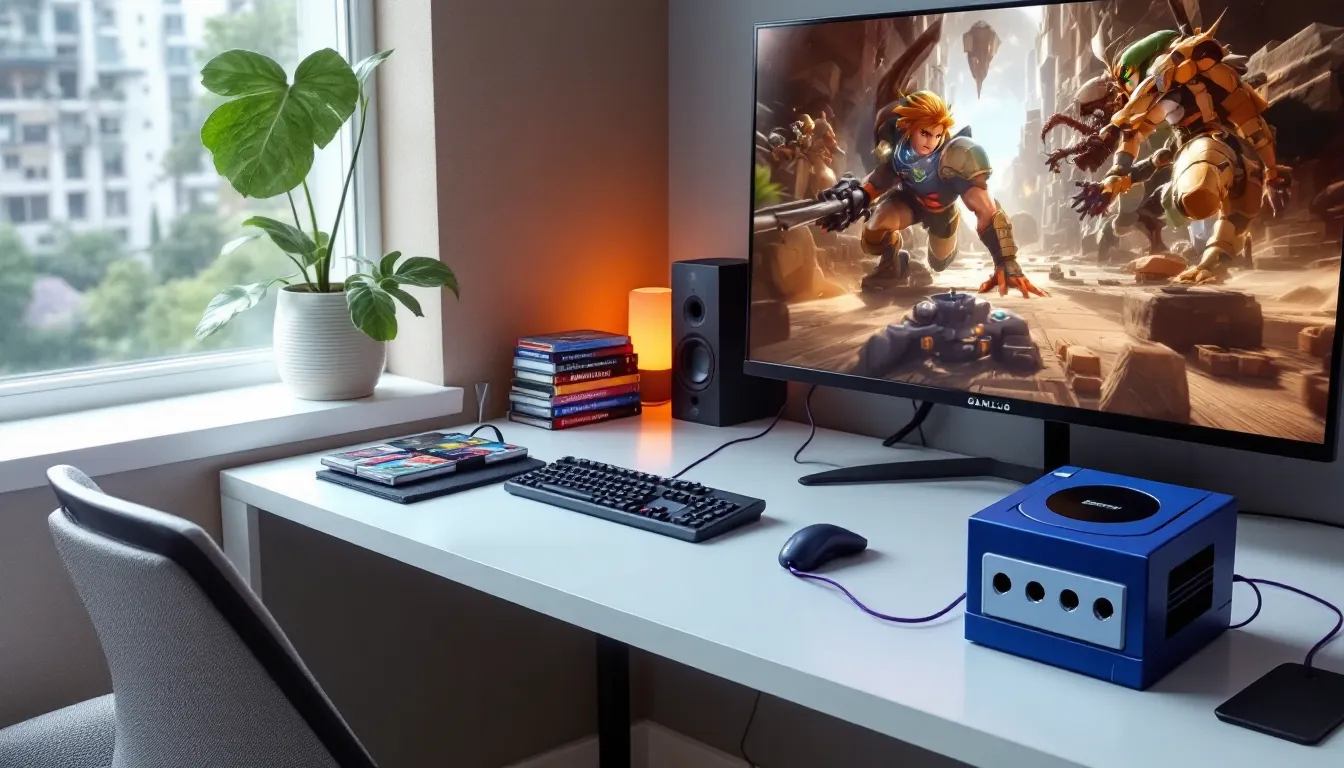
The GameCube sits in a strange place in Nintendo history, commercially overshadowed by the PS2 and Xbox, yet creatively firing on all cylinders. Released in 2001, Nintendo’s purple lunch box delivered some of the most inventive, polished, and downright fun games of the sixth console generation. Fast-forward to 2026, and those same titles command collector prices while influencing modern game design in ways developers still reference today.
Whether you’re a veteran who spent hundreds of hours in Super Smash Bros. Melee or a newcomer curious about what all the fuss is about, this guide breaks down everything you need to know about the GameCube’s library. We’ll cover the must-play classics, genre-specific recommendations, collectible rarities, and how to actually play these games today, whether you prefer original hardware or modern alternatives.
Key Takeaways
- Nintendo GameCube games prioritized art direction and gameplay over raw graphical power, allowing titles like The Wind Waker and Super Mario Sunshine to age exceptionally well compared to contemporary releases.
- Nintendo GameCube games from the first-party library including Metroid Prime, Super Smash Bros. Melee, and The Legend of Zelda: The Wind Waker fundamentally influenced modern game design, from perspective shifts to competitive depth to visual storytelling.
- Rare GameCube titles like Fire Emblem: Path of Radiance and Chibi-Robo now command serious collector prices ($150–$700+), making emulation through Dolphin Emulator a practical alternative for most players.
- The GameCube’s third-party library delivered genre-defining classics such as Resident Evil 4, whose over-the-shoulder camera became the industry standard for third-person action games.
- Playing GameCube games today offers multiple paths: original hardware with component cables for authenticity, budget-friendly Wii backward compatibility, or Dolphin Emulation for HD rendering and modern conveniences.
Why the GameCube Game Library Remains Iconic Today
The GameCube didn’t win the sales war, but it won something more lasting: a reputation for quality-over-quantity that still holds up. Nintendo’s first-party output during this era was nothing short of exceptional. The Legend of Zelda: The Wind Waker, Metroid Prime, Pikmin, and F-Zero GX weren’t just good, they redefined their respective franchises and set benchmarks that later entries still chase.
What made the library special wasn’t just Nintendo’s output. The console attracted experimental third-party support that resulted in genuine oddities you couldn’t find elsewhere. Eternal Darkness: Sanity’s Requiem messed with your TV settings to simulate madness. Viewtiful Joe introduced cel-shaded time manipulation that felt genuinely fresh. Resident Evil 4 debuted on GameCube as an exclusive before later ports, and it’s still considered one of the greatest action games ever made.
The hardware itself contributed to the magic. The GameCube’s architecture was surprisingly powerful for its size, enabling effects and visual fidelity that shocked players accustomed to the N64’s muddy textures. Games ran at smooth frame rates, loading times were minimal thanks to the miniDVD format, and the controller, even though initial skepticism, became beloved for its ergonomic design and responsive buttons.
By 2026, that library has aged remarkably well. Many GameCube titles prioritized art direction over raw graphical horsepower, which means games like The Wind Waker and Super Mario Sunshine still look gorgeous today. The gameplay-first philosophy that defined Nintendo’s approach means these games feel as tight and responsive as modern releases, sometimes more so.
The Best Nintendo GameCube Games of All Time
First-Party Nintendo Masterpieces
Nintendo’s first-party lineup on GameCube represents some of the company’s finest work, period.
The Legend of Zelda: The Wind Waker caught heat at launch for its cel-shaded art style, but time has been extraordinarily kind to this adventure. The sailing mechanics, dungeon design, and that final Ganondorf battle remain peak Zelda. The HD remaster on Wii U proved the art direction was timeless.
Metroid Prime did the impossible: it translated Metroid’s 2D exploration into first-person 3D without losing the series’ soul. Retro Studios nailed the atmosphere, the scanning mechanics added depth without bloating gameplay, and the world design rewarded curiosity at every turn. It’s still the gold standard for first-person adventure games.
Super Smash Bros. Melee doesn’t just top GameCube lists, it remains competitively viable in 2026. The movement tech (wavedashing, L-canceling, dash-dancing) created a skill ceiling so high that the competitive scene has thrived for over two decades. No Smash game since has matched its competitive depth.
Pikmin and Pikmin 2 introduced Miyamoto’s bizarre RTS-meets-puzzle gameplay. Managing your army of plant creatures while the day timer ticked down created genuine tension. The sequel removed the time pressure and added co-op, making both essential for different reasons.
Super Mario Sunshine split fans with its FLUDD water pack and tropical setting, but the platforming challenges, especially the secret levels that stripped away the gimmicks, showcased pure Mario design at its finest. Those who dismissed it at launch often come around years later.
Mario Kart: Double Dash.. broke the kart formula by putting two characters per kart, enabling character-switching mid-race and special items unique to each racer. It’s the most distinctive entry in the series, and many fans still consider it the best.
Animal Crossing made its Western debut on GameCube (after releasing on N64 in Japan), creating the life-sim phenomenon that now dominates Nintendo’s sales charts. The real-time clock, seasonal events, and charming villager interactions hooked millions.
Paper Mario: The Thousand-Year Door elevated the original’s RPG formula with better writing, more creative badge combinations, and partner characters that actually felt essential to combat. It’s regularly cited as the series’ peak before it went experimental.
Third-Party Gems and Hidden Treasures
Third-party support wasn’t the GameCube’s strength numerically, but quality mattered more than quantity.
Resident Evil 4 revolutionized third-person action when it launched as a GameCube exclusive (timed, but still). The over-the-shoulder camera, inventory management under pressure, and enemy AI that actually flanked you set a template every action game since has borrowed from. Publications including those at IGN awarded it perfect or near-perfect scores that still hold up.
Eternal Darkness: Sanity’s Requiem remains Silicon Knights’ masterpiece. The sanity meter didn’t just affect your character, it messed with you, the player. Fake crashes, volume changes, save deletion screens that weren’t real. No game has replicated that fourth-wall-breaking psychological horror since.
Viewtiful Joe brought Capcom’s side-scrolling action expertise to GameCube with style. The VFX power-ups that let you slow time or speed it up weren’t just gimmicks, they were essential to combat and puzzle-solving, creating a rhythm no other beat-’em-up matched.
Skies of Arcadia Legends was a Dreamcast port, but the GameCube version is definitive. The airship battles, exploration-focused design, and genuinely optimistic tone made it stand out in an era of edgy RPGs.
Soul Calibur II had Link as a GameCube-exclusive character, which alone made it the version to own for Nintendo fans. The weaponized fighting gameplay felt perfectly tuned, and Link’s moveset integrated surprisingly well.
Beyond Good & Evil flopped commercially but earned critical acclaim and cult status. The stealth-action-photography hybrid gameplay and Jade’s journey through a dystopian world felt ahead of its time.
TimeSplitters 2 delivered what many considered the spiritual successor to GoldenEye’s multiplayer. The map maker, bot customization, and sheer variety of modes made it a split-screen favorite.
Tales of Symphonia brought the Tales series to Western audiences in a big way. The real-time combat system, Exsphere upgrade mechanics, and surprisingly dark story twists made it a JRPG standout on a console that didn’t have many.
GameCube Games by Genre: Find Your Perfect Match
Action-Adventure and Platformers
If you’re here for exploration and tight controls, the GameCube delivered.
- The Legend of Zelda: The Wind Waker – Epic sailing adventure with dungeons that reward experimentation
- The Legend of Zelda: Twilight Princess – Darker, more traditional Zelda with wolf transformation mechanics
- Metroid Prime – First-person exploration with atmosphere so thick you could cut it
- Super Mario Sunshine – Tropical platforming with water physics that still feel unique
- Beyond Good & Evil – Stealth-action hybrid with photography missions and memorable characters
- Prince of Persia: The Sands of Time – Time-rewind platforming that defined a generation
- Viewtiful Joe – Side-scrolling action with VFX powers that manipulate time
Fighting and Party Games
The GameCube became the party console before the Wii made it official.
- Super Smash Bros. Melee – Still competitively viable in 2026, fast and technical
- Soul Calibur II – 3D weapon fighting with Link exclusive to GameCube
- Mario Party 4-7 – Minigame collections that ruined friendships in the best way
- WWE Day of Pressure – Arcade-style wrestling that prioritized fun over simulation
- Naruto: Clash of Ninja 2 – Fast-paced anime fighter with solid mechanics
- Custom Robo – Mech battles with deep customization systems
RPGs and Strategy Titles
Not the GameCube’s deepest category, but the highlights were exceptional.
- Paper Mario: The Thousand-Year Door – Turn-based RPG with badge customization and S-tier writing
- Tales of Symphonia – Real-time JRPG combat with co-op support
- Skies of Arcadia Legends – Airship exploration and upbeat adventure
- Baten Kaitos – Card-based combat with gorgeous pre-rendered backgrounds
- Fire Emblem: Path of Radiance – Tactical RPG that kicked off Ike’s story, now extremely rare
- Pikmin and Pikmin 2 – RTS-lite with time management and creature micromanagement
- Final Fantasy Crystal Chronicles – Co-op action-RPG that required GBA link cables (ambitious but clunky)
Racing and Sports Games
Nintendo’s arcade-style racers dominated, but third-party offerings filled other niches.
- Mario Kart: Double Dash.. – Two-character karts with unique mechanics
- F-Zero GX – Brutally difficult futuristic racing with speeds that still feel insane
- Need for Speed: Underground 2 – Open-world street racing with deep customization
- Burnout 2: Point of Impact – Crash mode and aggressive driving perfected
- Tony Hawk’s Pro Skater 3 – Peak THPS gameplay on Nintendo hardware
- SSX Tricky – Over-the-top snowboarding with personality
- NBA Street Vol. 2 – Arcade basketball that emphasized style over realism
- Super Mario Strikers – Soccer with items and no rules, pure chaos
Rare and Collectible GameCube Games Worth Owning
Most Valuable GameCube Games in 2026
The retro market has exploded since 2020, and certain GameCube titles now command serious money.
Fire Emblem: Path of Radiance tops most value lists. Complete-in-box copies regularly sell for $300-500, with pristine copies exceeding $700. Low print runs and the series’ surge in popularity post-Awakening drove demand through the roof.
Pokémon Box: Ruby & Sapphire was a limited storage app that came bundled with specific retailers. It’s useless without the GBA games, but scarcity makes complete sets worth $250-400.
Cubivore: Survival of the Fittest released in tiny quantities and features bizarre mutation-based gameplay. Complete copies fetch $200-350.
Chibi-Robo. had a small print run and gained cult status. Expect to pay $150-250 for a complete copy.
Skies of Arcadia Legends hovers around $150-200 complete, less than the Dreamcast version but still pricey.
Metal Gear Solid: The Twin Snakes ranges from $100-180 depending on condition. Silicon Knights’ remake with updated graphics remains divisive but collectible.
The Legend of Zelda: Twilight Princess GameCube version is rarer than the Wii release since it launched later and sold fewer copies. Complete copies run $80-120.
Hidden Gems That Deserve More Recognition
Some GameCube games flew under the radar but offer incredible experiences if you can find them.
Lost Kingdoms and Lost Kingdoms II combined card-based combat with real-time action-RPG exploration. From Software (yes, the Souls studio) developed these FromSoft oddities, and they show early signs of the design philosophy that would define their later work.
Gotcha Force featured toy-based battles with over 200 collectible characters. It’s absurdly expensive now ($200+) but the combat depth surprised anyone who gave it a chance.
Ribbit King is frolf, that’s frog golf. Launch a frog, it bounces around crazy courses, first to the hole wins. It’s stupid fun that works way better than it should.
Odama combined pinball with real-time strategy. You controlled armies with a microphone peripheral while a giant pinball rolled through feudal Japan battlefields. Completely unhinged, totally unique.
Battalion Wars translated Advance Wars into real-time 3D action-strategy. Direct unit control plus tactical positioning created a hybrid that deserved more attention.
Wave Race: Blue Storm got overshadowed by other launch titles, but the water physics and track design held up. The difficulty curve was punishing, which probably hurt sales.
Billy Hatcher and the Giant Egg came from Sonic Team and featured rolling eggs to battle enemies and solve puzzles. The momentum-based gameplay and bright art style made it memorable, if not revolutionary.
How to Play GameCube Games Today
Original Hardware vs. Modern Solutions
Playing on authentic GameCube hardware delivers the purest experience, but it comes with tradeoffs.
The console itself is relatively affordable, $80-150 depending on condition and color. The indigo and black models are most common: special editions like the Resident Evil 4 chainsaw controller bundle or the Panasonic Q (Japan-only DVD hybrid) cost significantly more.
You’ll need the right cables. The composite cables that came with most systems look awful on modern TVs. Component cables output 480p and make a dramatic difference, but official Nintendo component cables now sell for $150-300 due to scarcity. Third-party options exist but quality varies wildly.
The Game Boy Player accessory lets you play GBA, GBC, and original Game Boy games on your TV through the GameCube. The hardware is affordable ($40-80), but you need the startup disc, which often sells separately for similar prices. Using the homebrew Game Boy Interface software instead of the official disc provides better video quality and less input lag.
Memory cards are essential, the console has no internal storage. Official Nintendo cards (251 blocks, 1019 blocks) are cheap and reliable. Third-party cards with massive storage often corrupt saves.
Controllers are the biggest headache. Original first-party controllers cost $40-70 each now, and stick drift affects older units. The limited-run official Super Smash Bros. Ultimate GameCube controllers work perfectly and sometimes appear cheaper than originals on the secondary market.
Emulation and Backward Compatibility Options
If you want convenience and visual upgrades, emulation has matured dramatically.
Dolphin Emulator is the gold standard for GameCube (and Wii) emulation. It runs on Windows, Mac, Linux, and even Android devices with sufficient horsepower. Dolphin enables HD rendering, texture packs, widescreen hacks, and save states, features impossible on original hardware.
Performance requirements have dropped over the years. A mid-range gaming PC from 2020 or newer handles most titles at 1080p/60fps without issues. Demanding games like F-Zero GX or Rogue Squadron still stress systems, but compatibility is excellent across the library.
The legal gray area remains: emulation software is legal, but downloading game files (ISOs) you don’t own violates copyright. Ripping your own discs requires a Wii or GameCube with homebrew software and an SD card adapter.
Controller options for Dolphin include:
- Original GameCube controllers via Mayflash or official adapters (USB connection)
- Modern controllers mapped to GameCube layout (Xbox, PlayStation, Switch Pro)
- Keyboard and mouse (surprisingly functional for some games)
Wii backward compatibility is worth mentioning. Every Wii console plays GameCube games natively using original controllers and memory cards. Component cables for Wii are affordable ($10-20), making this a budget-friendly option if you already own a Wii. The Wii Mini and Wii U don’t support GameCube discs, though Wii U can run Dolphin through homebrew.
Handheld emulation devices like the Steam Deck, Anbernic handhelds, and similar systems run Dolphin with varying success. The Steam Deck handles most GameCube games well at native resolution. Cheaper handhelds struggle with demanding titles.
Building Your GameCube Collection: Tips for Buyers
Where to Find Authentic GameCube Games
The retro market has shifted dramatically since the pandemic collectibles boom, but GameCube games remain available through multiple channels.
Local game stores specializing in retro titles offer the best hands-on buying experience. You can inspect disc condition, check for case damage, and verify authenticity before purchase. Prices typically run 10-20% higher than online markets, but you skip shipping costs and support local businesses.
Online marketplaces provide broader selection at competitive prices:
- eBay remains the largest secondary market. Filter by “sold listings” to gauge actual market value versus wishful asking prices. Watch for ending auctions late at night or on weekdays, competition drops and deals appear.
- Facebook Marketplace and Craigslist feature local sellers who often price games below market value. Lots bundling consoles with multiple games sometimes hide valuable titles.
- Mercari and OfferUp split the difference between eBay’s reach and local marketplace convenience.
Retro gaming conventions and swap meets let you negotiate, inspect before buying, and sometimes stumble on underpriced gems from sellers who don’t follow market trends closely.
Thrift stores, yard sales, and estate sales rarely produce results anymore, most sellers check eBay now, but patient hunters occasionally score.
Whatever the source, verify the seller’s reputation. Check feedback scores, read negative reviews, and ask for additional photos if listings show poor quality images.
Spotting Reproductions and Avoiding Fakes
GameCube reproduction games are less common than repros for earlier systems, but they exist, especially for high-value titles.
Disc inspection is your first defense:
- Authentic GameCube discs have a distinctive ring pattern on the data side and consistent coloring
- The miniDVD format is harder to replicate than standard DVDs, but bootleggers have caught up
- Official discs include Nintendo branding around the center ring: check that text clarity and font accuracy
- Labels should be printed directly on the disc, not adhesive stickers
Many collectors reference databases showing regional GameCube releases to verify a title’s legitimacy and avoid region-specific counterfeits.
Case and manual details reveal fakes:
- Official cases are specific Nintendo designs, not standard DVD cases
- Manual paper quality and printing should match other authentic GameCube manuals in your collection
- Barcode numbers should correspond to the region and publisher
- Check for typos or low-resolution artwork, dead giveaways of reproductions
Price red flags: If a rare game sells for 40-50% below market value, assume there’s a reason. Scammers prey on deal-hunters.
Reproduction labels: Some sellers openly sell reproductions as replacements for damaged originals. That’s fine if disclosed, but verify condition claims match the product.
Serial number verification: Some collectors maintain databases of authentic serial ranges for high-value titles. Cross-reference if spending serious money.
When buying online, seller photos should show the actual item, not stock images. Request additional angles, spine, back, disc, before purchase. Sellers who refuse probably have something to hide.
The Legacy and Cultural Impact of GameCube Games
The GameCube’s commercial underperformance masked its long-term cultural influence. Twenty-plus years later, its fingerprints are everywhere in modern gaming.
Melee’s competitive longevity proved games could sustain competitive scenes for decades without developer support. No patch updates, no balance changes, no DLC, just players pushing mechanics to their absolute limits. That community’s grassroots organization became a template for scenes around other legacy games.
Metroid Prime’s perspective shift demonstrated that franchises could evolve across dimensions without losing identity. It paved the way for other series to experiment with genre shifts more boldly. The first-person adventure genre it pioneered influenced everything from BioShock to Prey.
Resident Evil 4’s over-the-shoulder camera became industry standard. Nearly every third-person action game since 2005 uses variations of the system Mikami’s team perfected on GameCube. The active reload, contextual melee attacks, and limited inventory under pressure spread across genres.
Wind Waker’s art direction proved stylization ages better than realism. While games chasing photorealism in 2002 look dated, Wind Waker’s cel-shading still pops. Modern indies reference its visual language constantly.
The GameCube introduced features that became standard:
- WaveBird wireless controller normalized wireless gaming before the Xbox 360 made it standard
- LAN connectivity in games like Mario Kart: Double Dash and Kirby Air Ride previewed online multiplayer’s social potential
- GBA connectivity was clunky but forward-thinking, anticipating second-screen gameplay that mobile and Switch would refine
Nintendo’s willingness to experiment yielded oddities that wouldn’t fly in today’s risk-averse AAA climate. Eternal Darkness, Odama, Donkey Konga, these games took swings that modern publishers wouldn’t greenlight. That creative freedom resulted in a library with more personality than more successful consoles.
The console’s rehabilitation from commercial disappointment to beloved classic mirrors the trajectory many Nintendo platforms follow. The Wii U walked the same path. Initial dismissal, passionate defender communities, eventual critical reevaluation, it’s the Nintendo cycle.
Modern game preservation efforts have made the GameCube library more accessible than ever. Digital storefronts don’t officially support these games (Nintendo’s Virtual Console never properly featured GameCube), but emulation communities have ensured nothing’s been lost. Fan translation projects have brought Japan-exclusive titles to Western audiences. ROM hacks and mods extend the lifespan of classic titles in ways developers never imagined.
The collector market boom simultaneously helped and hurt the GameCube’s legacy. Increased visibility raised awareness of hidden gems, but pricing casual fans out of physical copies created barriers. Emulation became the practical solution for most players, which raises questions about preservation versus ownership that the industry still hasn’t resolved.
Conclusion
The GameCube catalog punches well above its sales figures. What Nintendo’s purple cube lacked in market dominance, it compensated for with creative ambition and polished execution. From Melee’s competitive depth to Metroid Prime’s atmospheric exploration, from Twilight Princess’s epic adventure to Eternal Darkness’s psychological horror, the library offered something for everyone willing to look past the console’s kiddie reputation.
In 2026, those games remain worth playing. The best GameCube titles haven’t just aged well, they’ve aged better than most contemporary releases. Whether you’re hunting for complete-in-box collectibles, building an emulation library, or just curious why that generation of gamers won’t shut up about their favorite purple box, the GameCube library rewards exploration. These weren’t just good games for their time. They’re good games, period.


