
A lot of how we perceive association football comes from the rhythm at which teams play over the course of a competition. That’s why talent has required an increasing level of depth rather than an ensemble of stars that, upon injury, will leave the team in disarray.
The reality of a season in club sports is that it has turned into a major point of contention for both fans and players. As long as the finances keep stacking up, there will surely be associated involvement from governing bodies to make tournaments and leagues as lush as possible in terms of the number of games.
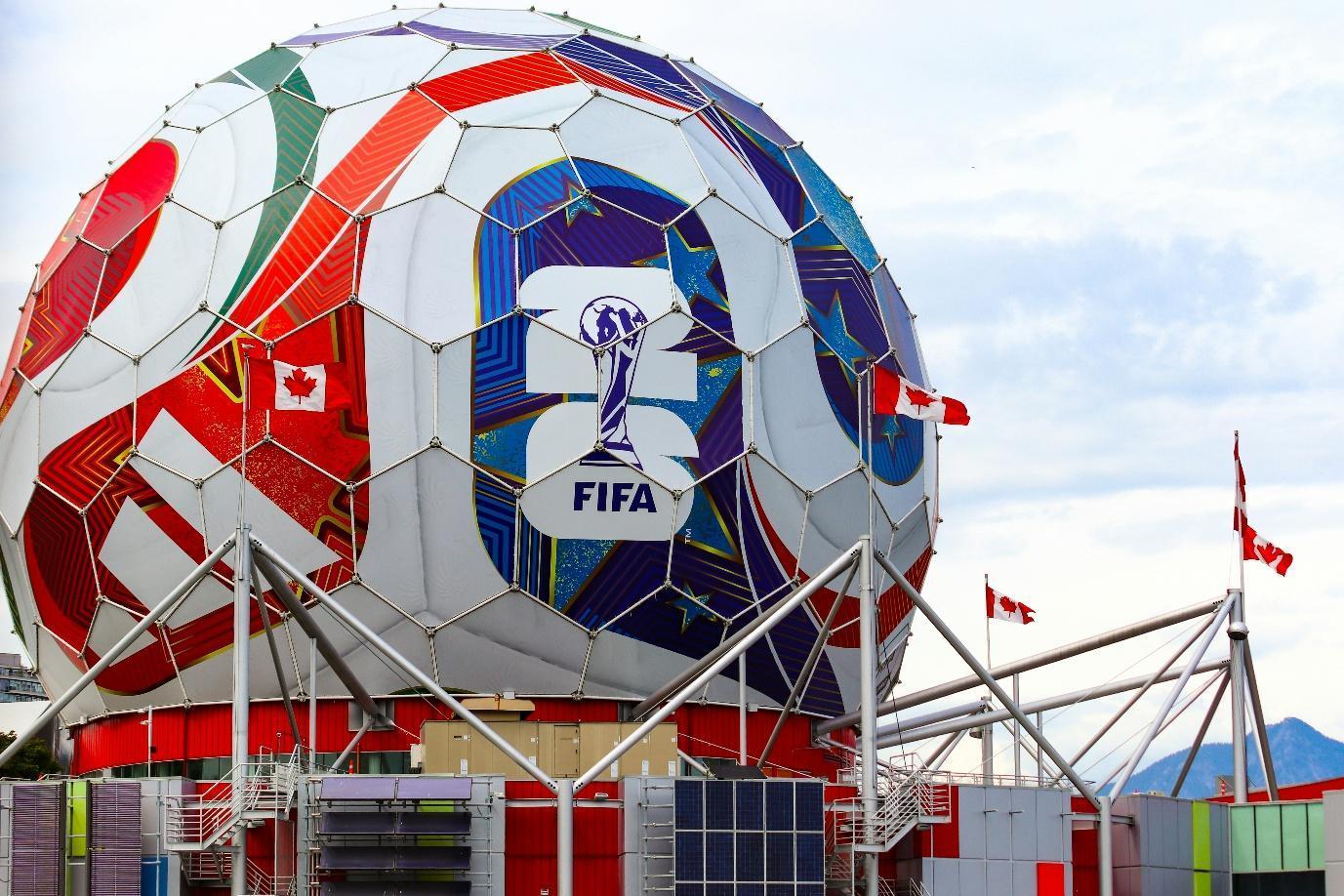
In this very idea, we’re currently seeing a World Cup unfold in a way that we’ve never witnessed before: 48 teams, over 100 matches, and 3rd-placed finishers. Even a new knockout phase is part of the mix these days.
Given that even a single, once in 4 years tournament has increased in heft, making football predictions has become even harder than ever. Quite notably. This applies to both manual and automated methods of doing so, especially if consistency is the primary purpose that can add to the value of correctness.
In this article, we will look at the fact that, despite the increasing number of key competitive matches in international football competitions, any model is markedly different from one that applies to clubs.
The marathon versus sprint dichotomy
While it may feel like a cliche, the idea that some things are marathons rather than sprints is a very easy-to-understand maxim. Moreover, it’s also applicable to anything that requires patience and a distribution of resources that understands that pacing is more important than top speed.
That’s the core premise behind how club and international football require different levels of concentration. Sure, not all competitions are round robins, but even those in tournament formats have very long stages that, in the case of the Champions League, combine both formats.
Club competitions are marathons that showcase that consistency is a matter of endurance and the ability to outlast opponents, not just to finish. Moreover, it’s about having as high a baseline as possible, ensuring that even the hardest spells aren’t disastrous.
In international football, the sprint is all about concentration. Peak talent shines the brightest in the most high-leverage moments, and the ability to improvise in such instances is beyond essential.
Predictions aim to reach a steady understanding
As you can see, assessing them comes with different requirements. For UK football predictions, including those for the Premier League or either of the cups, the large sample size can yield a more unified level of understanding of English football.

In international ones, volatility is much higher, with shocking upsets becoming much likelier, especially on a grand stage like the World Cup. We will talk about some of these details as we go along, but we should remember that a sudden-death elimination game also means that a variable within a single match can be the difference that makes or breaks a pick.
As a season unfolds, it can find similarities with other seasons. Leagues more so than others, but the idea of yearly competitions tends to be the one that can help, especially given the fact that squads don’t suffer as much turnover season by season, especially at high levels.
Given that major international football competitions happen with at least a couple of years of pause, even 4 if we’re talking about a specific one, there is quite a lot of variance. Primes are ending, players retire, and new, relatively unproven talent comes in.
As long as there are unknowns, it’s hard to consider them as reliable data entries that can turn into a trustworthy prediction.
The match sample makes it hard to identify real patterns
If you look into machine learning and the development that it can help with when it comes to predictive models, you’ll quickly understand that the more data it receives for its training, the better it will become. The reason is the usage of information that can lead to pattern recognition.
International football has a very limited number of tournaments, even in the modern era, to assess form. Moreover, the changes in their formats, including the number of participants, throw off any potential way of assessing what’s about to come.
Returning to the volatility we’ve mentioned earlier, it also doesn’t help that upsets and other inexplicable phenomena provide less pattern-driven data, given that they’re outright expectations.
This is in stark contrast with club football, where squad development and relative harmony can lead to somewhat expected results, even if they don’t necessarily lead to pinpoint accuracy, especially if made before the competition begins in earnest.
Motivation varies based on hardly quantifiable details
The human factors that an automated model cannot fathom are very intuitive, which is why they require a keen level of understanding from a psychological standpoint. Even if the talent and recent performance make sense, there’s hardly any way to look at certain match-ups and correctly predict that they can lead to crumbling under pressure.
At the other side of the spectrum of emotions that lead to pressure climbing, we have the undeniable element of motivation that can lead to fascinating results. We use this word because they are inexplicable in many ways, especially if we’re just trying to fathom the results that happen going forward.
Association football usually has pathways to victory that, in many ways, feel very unconventional. There are very defensive sets, but also interesting tactical methodologies that revolve around controlled aggression, tight pressing, and physicality. The more focused the players tend to be via motivation, the more likely it is that they can use those intense tactics.
These details can be quite straightforwardly assessed in a data-driven way, which can lead to prediction. However, in international football, such an attitude is difficult to process consistently, especially due to how hard it is to keep up during an entire tournament and by the same 20-odd squad of players.
Underdogs are more difficult to fathom than ever
We should be sticking to World Cup football and talking about the 2026 side, which has opened up the opportunity for more teams across the confederations to enter the men’s finals. What it has shown us, especially once we’ve gotten to see who advanced in the still-ongoing tournament when writing this article, is that underdogs have shifted the narrative.

In older times, one would expect Europe’s elite to easily advance at the expense of most of the world’s teams, with notable exceptions being South America’s finest (Brazil and Argentina, arguably Uruguay and, sometimes, Colombia). Not that the rest of the teams were always fodder, but the narrative has shifted quite dramatically.
At this edition, 9 of the 10 qualified African teams entered the knockout stage, albeit an expanded one, but at the expense of teams that were supposedly better. It only serves right since a majority of non-European strong squads actually play for European clubs, which means that they have the quality to participate in high-leverage competitions.
Even more, some of these players are actually born and raised in countries where they become embedded in the local football development systems, which means that they know their opponents inside and out. Today’s football shows that this is the great equaliser.
Now, as we’re constantly seeing the fact that old perceptions, even stereotypes, are far from being as real as they used to be, if at all. Given that we’re seeing a vastly different situation, it’s only right that international football is much harder to predict than it used to be.
Club season fatigue brings more variance
The last argument that we needed to point out here is the fact that connects the two to an even more direct degree. International competitions, as we know very well, depend on the energy, form, and fitness of the players once they finish gruelling seasons.
Even more so if they needed to play for clubs that are engaged in both continental and domestic competitions.
At first value, it’s quite clear that we need to remember how accumulated fatigue leads to one essential thing: unpredictability. Players who went through doldrums have a harder time performing at their usual level, while those with less wear are in a better position.
Closing statements
It’s finally time to put a finish to our statements with a very clear conclusion: international football feels quite a lot like it’s changing, and it becomes even less addressable than it used to be. Football is changing at all levels, and sample sizes are starting to both feel and work differently.
As such, if you’re looking to make or use a prediction for the sake of betting, you might think about it twice, especially if it operates with obsolete data points. Just remember to gamble responsibly!