
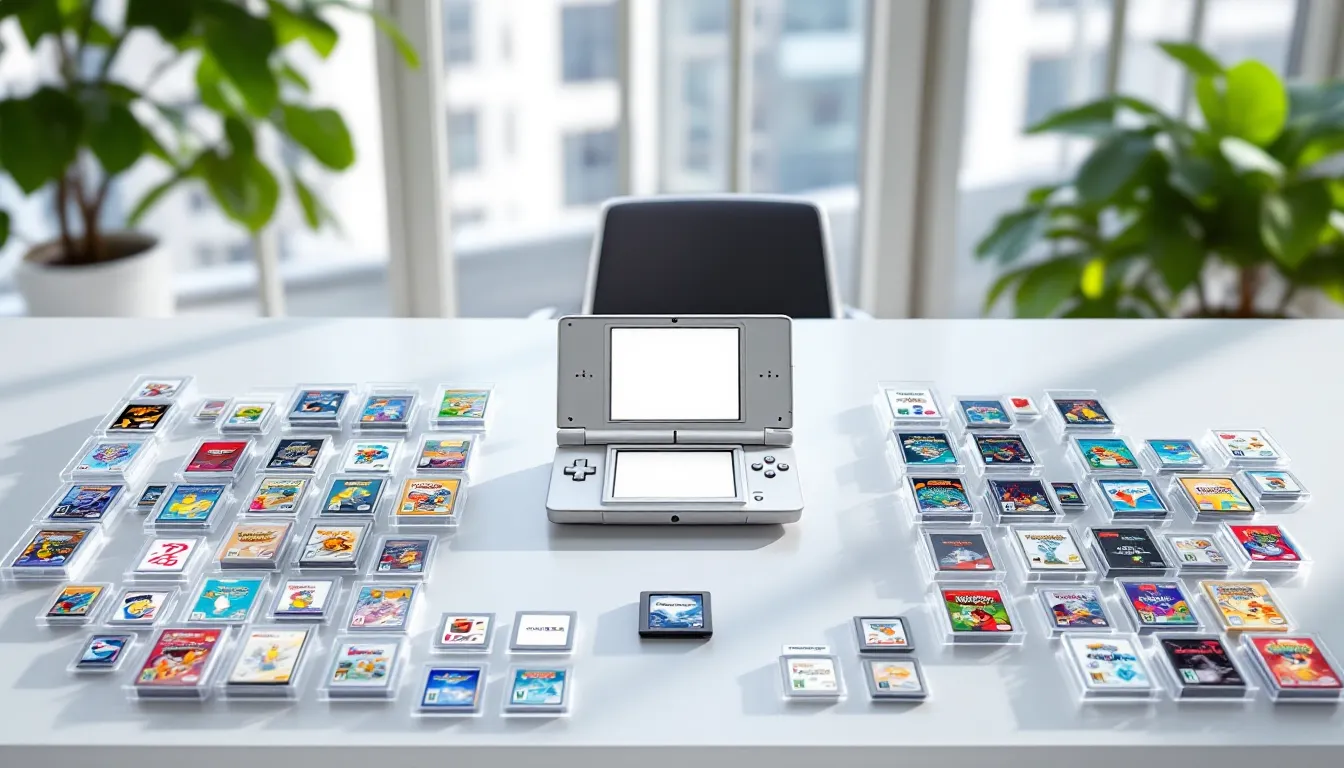
The Nintendo DS didn’t just sell well, it conquered. With over 154 million units moved worldwide, Nintendo’s dual-screen handheld revolutionized portable gaming between 2004 and 2013. But raw sales numbers don’t tell the whole story. What made the DS legendary was its library: a staggering collection of innovative, weird, brilliant, and occasionally bizarre games that pushed the boundaries of what handheld gaming could be.
In 2026, the DS library remains one of the most diverse and creative catalogs in gaming history. Whether you’re a retro enthusiast hunting down physical cartridges or someone rediscovering these classics through modern means, knowing which titles deserve your time is crucial. This list cuts through the noise to highlight the must-play nintendo ds video games across every genre, from system-selling juggernauts to hidden gems that deserve far more recognition than they received.
Key Takeaways
- The Nintendo DS library features over 1,800 titles across diverse genres, establishing it as one of gaming’s most innovative and creative catalogs despite the handheld’s modest hardware compared to competitors.
- Nintendo DS video games achieved massive commercial success through creative use of touch screens and dual displays, with system-selling franchises like Pokémon (Generation IV and V), Mario Kart, and New Super Mario Bros. dominating sales charts.
- Innovative titles like The World Ends With You, Professor Layton, and Ghost Trick demonstrated that the DS platform excelled at experimental gameplay that wouldn’t have been possible on traditional button-based consoles.
- RPG fans can discover deep experiences ranging from remakes like Final Fantasy III and IV to original adventures such as Radiant Historia and Dragon Quest IX, many of which rival modern handheld RPGs in complexity and content.
- Finding authentic Nintendo DS games in 2026 requires vigilance against counterfeit cartridges on online marketplaces, with reputable retro shops and imported specialty retailers offering more reliable sources for both common and rare titles.
- The DS proved that portable gaming could handle ambitious, complex, and experimental games, cementing the platform’s legacy as a turning point that shaped handheld gaming’s evolution toward the modern Switch era.
Understanding the Nintendo DS Gaming Legacy
The DS launched in November 2004 with a risky proposition: dual screens, touch controls, and a design that looked more like a science experiment than a Game Boy successor. Nintendo bet heavily that innovation would trump raw power, and they were vindicated spectacularly.
What separated the DS from every other handheld wasn’t its hardware specs, it was how developers embraced its quirks. The touch screen became a canvas for genres that had never worked on portables: adventure games with point-and-click mechanics, rhythm games requiring precise stylus taps, and strategy titles that finally had room to breathe. The microphone enabled voice commands and breath-based puzzles. The dual screens let developers separate action from maps, inventory from combat, story from gameplay.
The result? A library exceeding 1,800 titles across all regions, spanning every conceivable genre. First-party Nintendo franchises thrived here, Mario, Pokémon, Zelda, and Metroid all received multiple entries. Third-party support was equally robust, with Square Enix, Atlus, Capcom, and Konami delivering some of their best work on the platform.
By the time the 3DS replaced it in 2011, the DS had already cemented its legacy. It proved that gimmicks, when executed with vision, become features. It demonstrated that portables could handle complex RPGs, intricate strategy games, and experimental indie-style titles years before indie games became a movement. Most importantly, it built a library so deep that discovering new favorites remains possible even in 2026.
Best-Selling Nintendo DS Games of All Time
Mario Kart DS and New Super Mario Bros.
Mario Kart DS moved 23.6 million copies, making it the second best-selling game on the platform. It nailed the formula: tight racing mechanics, perfectly balanced items, and robust online multiplayer via Nintendo Wi-Fi Connection. The track selection blended new circuits with remastered classics from SNES and N64 eras. Mission Mode added structure for solo players, while VS and Battle modes kept local multiplayer sessions chaotic.
The kart customization system let players mix chassis and character combinations for different stat distributions, a feature that became standard in later entries. Retro courses like SNES Mario Circuit 1 and N64 Moo Moo Farm were faithfully recreated with DS-era polish.
New Super Mario Bros. topped 30.8 million units, reclaiming the 2D platformer crown Nintendo had largely abandoned since the SNES era. It modernized classic Mario gameplay with wall jumps, triple jumps, and the Mega Mushroom power-up that let Mario demolish everything in his path. The level design struck a balance between accessibility for newcomers and challenge for veterans, with Star Coins hidden in clever locations requiring mastery of Mario’s moveset.
Multiplayer Mario VS mode turned the campaign into competitive chaos. Both titles proved that polished, familiar gameplay still dominated sales charts when executed flawlessly.
Pokémon Diamond, Pearl, and Platinum
Generation IV Pokémon games collectively sold over 25 million copies on DS. Diamond and Pearl launched in 2006 (Japan) and 2007 (worldwide), introducing 107 new Pokémon and the Sinnoh region. The Physical/Special split, where move categories were determined by the move itself rather than its type, fundamentally changed competitive battling and remains in every Pokémon game since.
Platinum, released in 2008, refined the formula with an expanded Pokédex, Battle Frontier for endgame challenge, and the Distortion World sequence featuring Giratina. The online functionality via Wi-Fi Connection enabled global trading and battling, something Pokémon fans had dreamed about since Red and Blue.
The Underground system let players dig for fossils and rare items while creating secret bases, a social feature that rewarded local wireless play. These games laid the groundwork for modern Pokémon competitive scenes and introduced mechanics still used in 2026 releases.
Animal Crossing: Wild World
Wild World sold 11.75 million copies by bringing Nintendo’s life-sim series to a portable format for the first time. The always-on nature of DS meant players could check in on their villages during commutes, lunch breaks, or whenever the mood struck. Real-time clock integration made events like fishing tournaments, bug-catching contests, and holiday celebrations feel organic.
Online play via Wi-Fi Connection transformed the experience. Visiting friends’ towns, trading items, and showing off custom designs created a proto-social network years before smartphones dominated that space. The design tools let players create custom clothing patterns pixel by pixel, some fans recreated famous artwork or brand logos with shocking accuracy.
Wild World’s influence echoes through every subsequent Animal Crossing game. It proved the series worked perfectly as a pick-up-and-play portable experience, paving the way for New Leaf on 3DS and eventually New Horizons on Switch.
Essential RPG Titles Every DS Owner Should Play
The Pokémon Generation IV and V Collection
Beyond Diamond, Pearl, and Platinum, the DS hosted HeartGold and SoulSilver (2009-2010), remakes of the beloved Gold and Silver versions. These weren’t simple graphical updates. They included the Pokéwalker accessory, a pedometer that let players transfer a Pokémon and level it up through real-world walking. The games featured both Johto and Kanto regions, effectively offering two adventures in one cartridge.
Generation V arrived with Black and White in 2010 (Japan) and 2011 (worldwide), then Black 2 and White 2 in 2012. Black and White introduced 156 new Pokémon, the largest single-generation addition, and restricted players to only new species until post-game. This controversial decision forced veterans to experience Pokémon with fresh eyes.
Black 2 and White 2 were true sequels, not enhanced versions. Set two years after the originals, they featured new areas, gym leaders, and story developments. The Pokémon World Tournament let players battle every gym leader and champion from previous generations, a dream matchup mode that competitive battle enthusiasts still celebrate as one of the series’ best post-game features.
Dragon Quest IX: Sentinels of the Starry Skies
Dragon Quest IX did something radical for the series: it went portable-exclusive and added multiplayer co-op. Released in 2009 (Japan) and 2010 (worldwide), it sold over 5 million copies by transforming the traditionally solo JRPG experience into a social one.
The game featured full character customization, letting players design their hero’s appearance and vocations (classes). The vocation system allowed switching between warrior, mage, priest, thief, and more, with skills carrying over between classes. This created deep build diversity rarely seen in Dragon Quest titles.
Local wireless multiplayer supported up to four players tackling dungeons together. Weekly DLC quests distributed via Nintendo’s Tag Mode kept the game alive months after launch, offering new equipment and story content. The grottos, randomized dungeons with scaling difficulty, provided virtually infinite endgame challenge.
DQ9 proved traditional JRPGs could thrive on handhelds with smart design adjustments. Its focus on bite-sized quests and quick save functionality respected portable play sessions while maintaining the depth series fans demanded.
Final Fantasy Remakes and Spin-Offs
Square Enix treated the DS as their RPG testing ground. Final Fantasy III received its first-ever Western release on DS in 2006, completely rebuilt in 3D with expanded story and character development. The original NES version never left Japan, making this many players’ first chance to experience the job system that influenced later FF titles.
Final Fantasy IV got the same treatment in 2008, with enhanced 3D visuals, voice acting in key scenes, and a refined difficulty curve. The Augment system let players customize character abilities by equipping stat boosts and skill modifications.
Final Fantasy: The 4 Heroes of Light (2009) served as a spiritual predecessor to Bravely Default, featuring a job system and AP-based ability mechanics. Final Fantasy Tactics A2: Grimoire of the Rift (2008) expanded on the GBA’s Tactics Advance with 400+ missions, dozens of jobs, and clan management systems that rewarded strategic planning.
These weren’t lazy ports, they were thoughtful reimaginings that introduced classic FF experiences to new audiences while giving veterans reasons to replay familiar stories.
Innovative Touch Screen Games That Defined the DS
The Professor Layton Series
Level-5’s Professor Layton series debuted with Curious Village in 2007 (Japan) and 2008 (worldwide), blending point-and-click adventure with brain-teasing puzzles. Each game featured 100+ puzzles ranging from logic riddles to sliding block challenges, math problems, and visual tricks.
The series’ European storybook aesthetic, full voice acting in cutscenes, and charming mysteries made puzzle-solving feel like interactive literature. Diabolical Box, Unwound Future, Last Specter, and Miracle Mask (the latter on 3DS) continued the formula, each selling millions and proving narrative-driven puzzle games had massive appeal.
The stylus made puzzle interaction intuitive. Circling answers, dragging objects, and sketching solutions felt natural in ways button controls never could. Weekly DLC puzzles extended each game’s lifespan, and the series’ persistent quality never dipped across six mainline entries.
Elite Beat Agents and Rhythm Heaven
Elite Beat Agents (2006) brought iNiS’s Osu. Tatakae. Ouendan concept to Western audiences with a bonkers premise: government agents who motivate people in crisis through interpretive dance routines. The gameplay, tapping, dragging, and spinning the stylus to music beats, created one of the most unique rhythm games ever made.
The soundtrack featured licensed Western rock and pop hits from artists like The Rolling Stones, Queen, and Chicago. The comic-book panel storytelling between songs ranged from heartfelt (helping a girl cope with her father’s death) to absurd (motivating a weather girl to stop a volcano). Difficulty scaled from accessible to genuinely brutal on Hard and Elite Beat difficulty modes.
Rhythm Heaven (2008, known as Rhythm Paradise in Europe) stripped rhythm gaming to pure timing challenges. No on-screen prompts, just audio cues and rhythm memorization. Minigames included chopping vegetables, interviewing wrestlers, and playing badminton with a cat. The deliberately weird aesthetic and tight timing windows made it both accessible and maddeningly difficult to perfect.
Both titles demonstrated that rhythm games didn’t need plastic peripherals or traditional music game structures to work brilliantly.
The World Ends With You
Square Enix’s The World Ends With You (2007) remains one of the most ambitious uses of DS hardware ever attempted. The action RPG forced players to control two characters simultaneously: Neku on the touch screen using stylus swipes and taps for psychic pin attacks, and his partner on the top screen using D-pad inputs for combos.
Mastering both screens at once created a skill ceiling few games dared attempt. The Light Puck system rewarded synchronized attacks between screens, building combo multipliers for players who could manage the multitasking chaos.
Set in a stylized Shibuya district, the game’s urban Japanese aesthetic, hip-hop and J-pop soundtrack, and existential storyline about a teenager forced into a deadly game resonated with players seeking something different from fantasy RPG conventions. The fashion-based equipment system tied stat boosts to clothing brands that gained popularity through battles, a meta commentary on consumer culture built into the mechanics.
TWEWY proved the DS could handle complex, experimental gameplay systems when developers fully committed to the hardware’s unique capabilities. Players seeking deep action RPG mechanics still hold it up as a masterclass in creative game design.
Action and Adventure Games Worth Revisiting
The Legend of Zelda: Phantom Hourglass and Spirit Tracks
Nintendo’s Zelda team went all-in on stylus controls for these entries. Phantom Hourglass (2007) served as a direct sequel to Wind Waker, following Link and Tetra as they searched for the Ghost Ship. The entirely stylus-based controls turned movement, combat, and puzzle-solving into touch interactions, tapping to move, slashing to attack, drawing paths for boomerang throws.
The central Temple of the Ocean King featured a repeating dungeon that players revisited throughout the adventure, with new tools opening shortcuts through previously completed sections. It was polarizing, some loved the evolving puzzle box, others found the repetition tedious.
Spirit Tracks (2009) built on that foundation with an improved central mechanic: a train Link controlled across an overworld map. The train sections featured combat encounters, puzzle elements, and unlockable routes. Zelda herself became a playable character in Phantom form, possessing suits of armor to solve dual-character puzzles.
Both games featured tight, dungeon-focused design with clever touch screen puzzles, blowing into the microphone to activate windmills, closing the DS to transfer map stamps, shouting to get NPCs’ attention. They weren’t traditional Zelda experiences, but they exemplified Nintendo’s willingness to experiment with established franchises on DS hardware.
Castlevania: Dawn of Sorrow and Portrait of Ruin
Konami delivered three exceptional Castlevania titles on DS, continuing the Metroidvania formula perfected in Symphony of the Night. Dawn of Sorrow (2005) followed Soma Cruz from the GBA’s Aria of Sorrow, retaining the soul collection system where defeating enemies granted their abilities. The touch screen added Magic Seal quick-time events to finish bosses, drawing specific patterns under time pressure.
The weapon variety and soul combinations created absurd build potential. Equipping the right souls could turn Soma into a flying, poison-immune tank that shot lasers while summoning demon familiars.
Portrait of Ruin (2006) introduced dual character gameplay with Jonathan Morris and Charlotte Aulin. Players switched between the physical damage-focused Jonathan and spell-slinging Charlotte, or controlled both simultaneously for specific combo attacks. The portrait worlds, paintings that served as gateways to alternate dimensions, provided visual variety beyond gothic castle corridors.
Both games featured robust post-game content, including Boss Rush modes and hidden areas requiring 100% map completion to access. The pixel art remained gorgeous, and the soundtracks delivered the Gothic orchestral rock Castlevania fans expected.
Metroid Prime Hunters
Metroid Prime Hunters (2006) attempted something audacious: bringing the FPS mechanics of the Prime series to a handheld with stylus-based aiming. The touch screen controlled camera and aiming while the D-pad handled movement, mimicking dual-analog controls as closely as DS hardware allowed.
The single-player campaign featured Samus hunting bounty hunters across the Alimbic Cluster, with each rival possessing unique abilities and weapons. The Morph Ball sections, scan visor puzzles, and exploration-focused structure felt authentically Metroid even though the platform limitations.
Multiplayer supported up to four players locally or online, with seven playable hunters beyond Samus. Competitive matches featured standard deathmatch, capture-the-flag variants, and unique modes leveraging each character’s special weapons. The online scene was active for years, with players mastering advanced techniques like jump-shot aiming and strafe movement patterns.
While it didn’t achieve the atmospheric depth of console Prime games, Hunters proved FPS gameplay could work on DS with smart control adaptations.
Hidden Gems and Underrated DS Titles
Radiant Historia and 999: Nine Hours, Nine Persons, Nine Doors
Radiant Historia (2010, Japan: 2011, worldwide) flew under most players’ radars even though being one of the finest JRPGs on the platform. Developed by Atlus with staff from Megami Tensei and Chrono Trigger, it featured a time-travel narrative where protagonist Stocke jumped between two parallel timelines to prevent his nation’s destruction.
The White Chronicle granted Stocke the power to revisit nodes in a branching timeline, allowing players to explore different narrative paths and carry knowledge or items between timelines. Choices mattered, some led to dead ends requiring backtracking to earlier nodes to try alternate approaches. The grid-based combat system rewarded positioning, with abilities that pushed enemies into different grid squares to set up combo attacks.
The soundtrack, composed by Yoko Shimomura (Kingdom Hearts, Street Fighter II), delivered sweeping orchestral tracks that elevated every story beat. A 3DS remake in 2017 introduced more content, but the original DS version remains the definitive experience for purists.
999: Nine Hours, Nine Persons, Nine Doors (2009, Japan: 2010, worldwide) kicked off the Zero Escape series with a visual novel structure wrapped around escape room puzzles. Nine people trapped on a sinking ship must solve puzzle rooms and uncover why they were chosen for this deadly game.
The dual-screen layout brilliantly separated narrative on the top screen from puzzle-solving on the bottom. The multiple endings system required replaying sections with new information to unlock the true conclusion. The story’s twists leveraged the DS hardware itself, the final reveal incorporated the dual screens in a way that wouldn’t work on any other platform.
Both titles reward patient players willing to engage with complex narratives and systems. They’re criminally underplayed compared to their quality.
Ghost Trick: Phantom Detective
Ghost Trick (2010) came from Shu Takumi, creator of Phoenix Wright: Ace Attorney, and showcased his knack for inventive puzzle design and sharp writing. Players controlled Sissel, a ghost with no memory of his death, using time-manipulation powers to prevent murders by possessing objects and altering events.
Each puzzle level featured a character’s death playing out in real-time. Sissel could rewind to four minutes before death, then possess lamps, bicycles, phones, and other objects to create chain reactions that changed outcomes. Solutions required observing the scene, identifying key moments, and manipulating objects in the correct sequence.
The rotoscoped animation style gave characters fluid, lifelike movement. The jazzy soundtrack and noir-inspired plot, complete with hitmen, detective investigations, and conspiracies, created an atmosphere unlike anything else on the platform. It’s a must-play for anyone who appreciates clever puzzle design and narrative cohesion.
Advance Wars: Dual Strike
Advance Wars: Dual Strike (2005) brought Intelligent Systems’ turn-based strategy series to DS with dual-front battles that utilized both screens simultaneously. Players commanded units across two connected battlefields, with actions on one front affecting the other.
The CO system returned, with commanding officers providing unique passive bonuses and powerful CO Powers activated by building meter through combat. Tag Teams let players pair two COs, combining their abilities for devastating effect. The unit variety, infantry, tanks, artillery, air units, and naval vessels, created rock-paper-scissors dynamics requiring careful positioning and resource management.
The campaign featured 28 missions with escalating difficulty, while War Room mode offered puzzle-like challenge maps. Multiplayer supported up to four players via hot-seat local play or Wi-Fi Connection. Combat Simulator let players design custom maps and scenarios.
Dual Strike remains one of the best entry points to turn-based strategy, with a learning curve that teaches fundamentals while offering depth for veterans optimizing turn counts and CO Power timing. Many discussions about tactical strategy games point to this era of Advance Wars as the series’ peak.
Brain Training, Casual, and Lifestyle Games
Brain Age Series and Nintendogs
Dr. Kawashima’s Brain Age series became a cultural phenomenon, selling over 33 million copies combined. The premise, daily mental exercises to keep your brain young, appealed to demographics that never considered themselves gamers. Sudoku puzzles, math problems, reading comprehension tests, and memory challenges used the microphone for voice answers and stylus for handwritten input.
The brain age calculation, a score from 20 to 80+ based on performance, gave players a tangible metric to improve. Daily training became a habit for millions, with the software tracking streaks and progress over weeks. Brain Age 2 added new exercises and a Virus Buster mini-game that played like Dr. Mario.
Critics questioned the scientific validity of “brain training” claims, but the software’s accessibility couldn’t be denied. It sold DS units to people who’d never owned a game system.
Nintendogs (2005) simulated pet ownership with shocking depth. Players raised puppies by petting (via stylus strokes), teaching voice commands through the microphone, walking them for exercise, entering competitions, and buying accessories. The dogs reacted realistically to touch and voice, creating genuine attachment.
The Bark Mode feature used wireless communication to detect other nearby DS systems running Nintendogs, allowing virtual dogs to meet and exchange items. Three versions, Labrador & Friends, Chihuahua & Friends, and Dachshund & Friends, featured different starting breeds, encouraging collecting. It moved over 24 million copies, proving virtual pet sims still had massive appeal in the mid-2000s.
Cooking Mama and Scribblenauts
Cooking Mama (2006) turned food preparation into frantic mini-games. Chopping vegetables, cracking eggs, stirring batter, and grilling meat all required specific stylus motions with tight timing windows. Mama judged performance, offering encouraging praise or disappointed disapproval based on your technique.
The sequel Cooking Mama 2: Dinner with Friends expanded the recipe count and added competitive multiplayer. The series became a multi-platform franchise, but the original DS entries nailed the tactile feel of cooking through touch screen interactions.
Scribblenauts (2009) introduced a mechanic that felt like magic: solving puzzles by writing any object into existence. Need to reach a high ledge? Summon a ladder, jetpack, or dinosaur. Need to defeat a monster? Spawn a sword, gun, or black hole. The game’s massive dictionary recognized tens of thousands of nouns and adjectives.
The physics-based puzzle levels encouraged creative solutions. While the controls were sometimes frustrating, Maxwell, the protagonist, moved awkwardly, the core concept was revolutionary. Super Scribblenauts (2010) refined the formula by adding adjectives, letting players create “tiny purple flying elephants” or “invincible robot ninjas.”
Both games demonstrated that casual-focused titles could innovate as boldly as hardcore experiences when developers embraced the DS’s unique input methods.
Where to Find and Play Nintendo DS Games in 2026
Physical Cartridges: Retro Shops and Online Marketplaces
The DS cartridge market thrives in 2026, though prices vary wildly by title. Common games like Nintendogs or Brain Age float around $5-10, while sought-after titles like Radiant Historia or Pokémon HeartGold complete-in-box command $80-150+. Rare or limited releases push even higher.
Retro game shops remain the most reliable physical source. Staff often authenticate cartridges and offer return policies if games don’t work. Chain stores like GameStop phased out DS trade-ins years ago, but local independent shops frequently stock robust DS selections.
Online marketplaces, eBay, Mercari, and Facebook Marketplace, offer wider selection with higher risk. Counterfeit cartridges plague the market, especially for Pokémon games. Telltale signs include incorrect font on labels, overly glossy cart plastic, and suspiciously low prices for expensive titles. Requesting photos of the circuit board (visible through the cartridge gap) helps verify authenticity.
Japan-exclusive titles can be imported via Play-Asia or similar specialty retailers. Many DS games are region-free, though language barriers limit accessibility for non-Japanese speakers. Translation patches exist for some titles, though applying them requires specific hardware.
For those exploring handheld gaming options beyond original DS hardware, several alternatives exist in 2026.
Digital Preservation and Compatibility Options
Nintendo’s official support for DS games is effectively dead. The Wii U eShop, which offered a limited selection of DS titles, closed in March 2023. The 3DS family remains the last official hardware with native DS backward compatibility, all 3DS, 3DS XL, 2DS, New 3DS, and New 2DS models play DS carts natively.
Finding working 3DS systems in good condition is increasingly difficult. Battery degradation affects older units, and replacement parts become scarcer yearly. Prices for refurbished systems hover around $100-200 depending on model and condition.
Third-party preservation efforts fill the gap Nintendo left. Emulation on PC, Android, and other platforms allows DS games to run with graphical enhancements, save states, and fast-forward functionality. Accuracy varies by software, but mature emulators handle the vast majority of the library without major issues.
Physical DS hardware remains plentiful. DS Lite models are considered the ideal way to play on original hardware, they feature GBA backward compatibility (original DS models lacked), excellent build quality, and bright screens. DSi and DSi XL models dropped GBA slots but added cameras and SD card slots. All DS family systems run the entire DS game library.
Batteries in older systems require replacement, and hinge cracks plague heavily-used units. Refurbished consoles from reputable sellers typically include fresh batteries and housing replacements. For those interested in Nintendo’s broader handheld legacy, exploring the DS library connects directly to the company’s evolution from Game Boy through modern Switch.
Conclusion
The Nintendo DS library represents a unique moment in gaming history, a period when innovation trumped raw power, when touch screens and styluses opened design possibilities that button-only controllers couldn’t match, and when developers took creative risks that resulted in some of the medium’s most memorable experiences.
From the system-selling might of Pokémon and Mario to the experimental genius of The World Ends With You and Ghost Trick, the DS catalog offers something for every type of player. RPG enthusiasts can lose hundreds of hours in Dragon Quest IX or Radiant Historia. Puzzle fans have Professor Layton and Scribblenauts. Action gamers can tackle Castlevania or Metroid Prime Hunters. Even the “casual” titles like Brain Age and Nintendogs showcase thoughtful design that respects players’ time and intelligence.
In 2026, these games haven’t just aged well, many remain unmatched in their specific niches. The DS proved that portables could handle ambitious, complex, weird, and wonderful experiences. Whether you’re revisiting old favorites or discovering the library for the first time, the nintendo ds video games catalog rewards exploration. Dust off that DS Lite, track down those cartridges, and rediscover why this dual-screen oddity became one of the best-selling consoles ever made.


