
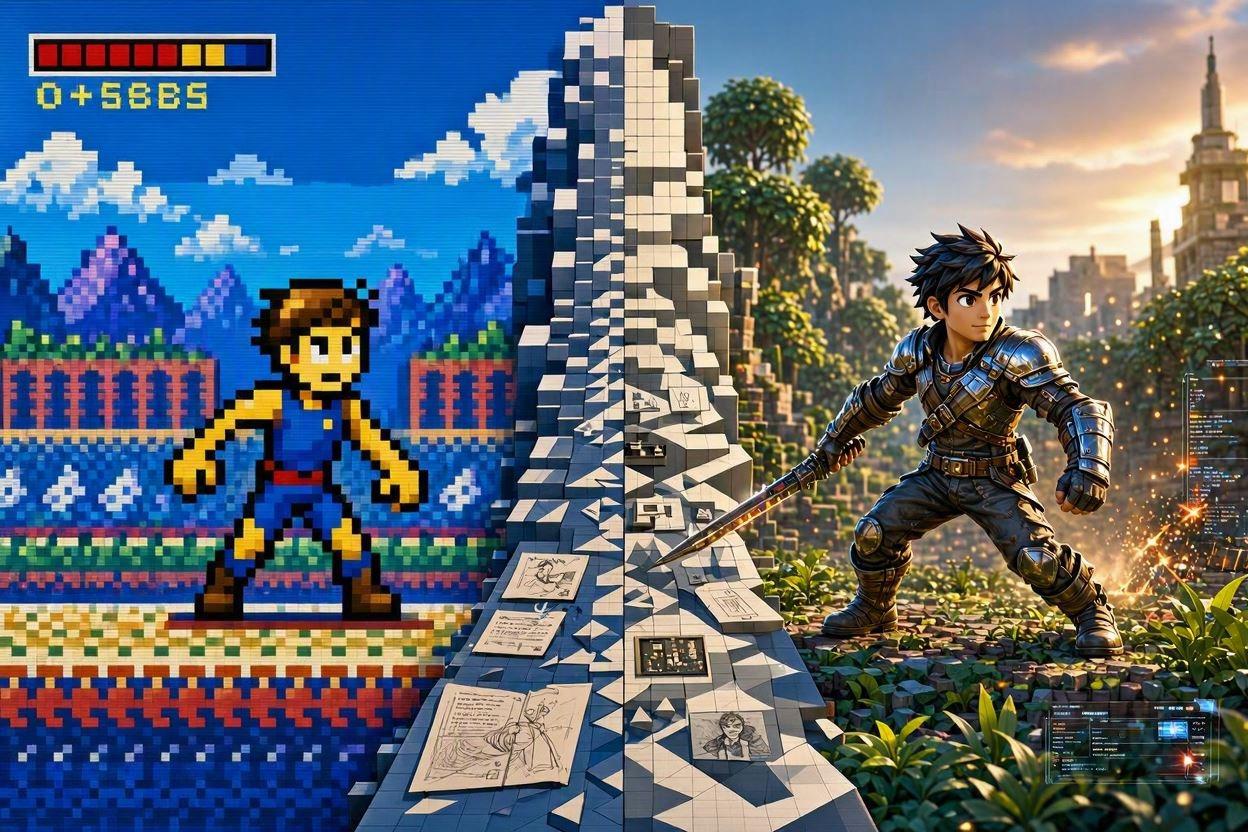
The most innovative games often emerged from severe constraints. Developers with massive budgets and unlimited computational power sometimes create forgettable experiences. Meanwhile, developers working with minimal resources created gaming's most memorable moments. This paradox reveals a fundamental truth: constraints force creative thinking. When exploring how innovative games leverage strategic design like platforms featuring 1xbet, you see how limitations transform into advantages.
The Tetris Principle
Tetris launched in 1984 on primitive hardware with severe memory limitations. The developer couldn't create complex graphics or realistic animations. Instead, he created a perfect game with a single mechanic: fitting falling blocks. Those constraints forced elegance. Tetris became one of gaming's most influential titles by doing one thing perfectly rather than many things adequately.
The constraint wasn't accidental—it was fundamental. Early computer hardware simply couldn't support complex games. Developers adapted by crafting focused experiences. This focus created genius. Each design decision mattered because resources were limited.
When Limitation Forces Excellence
Limited memory forces code efficiency. Developers must write optimized code doing more with less. This discipline produces better code and more elegant solutions. Similarly, limited processing power forces developers to think creatively about what's computationally possible. They discover elegant solutions that resource-rich development teams would never consider.
Storage limitations create focused game design. With kilobytes of storage rather than gigabytes, games must be mechanically simple yet experientially rich. This constraint forces designers to create depth through rules rather than content. One simple mechanic explored thoroughly produces more engagement than dozens of half-developed features.
Graphical limitations spawn creativity. Early pixel art wasn't limitation—it was artistic choice born from constraint. When developers couldn't create realistic graphics, they developed distinctive visual styles. Developers learned to convey information through limited visual vocabulary. This forced clarity and creativity.
Modern Indie Success Through Constraint
Today's indie game developers deliberately embrace constraints. Game jams—competitions requiring games be created in 48 hours—produce remarkably innovative games. Limited time forces focus. Developers cut features ruthlessly and perfect core mechanics. The result often exceeds triple-A productions in creativity and engagement.
Indie developers working with small budgets must be creative. They can't outspend competition. Instead, they out-create. This forces innovation. Games like Hollow Knight, Stardew Valley, and Celeste achieved massive success partly because constraints forced focused, polished experiences rather than feature-bloated but shallow games.
Small teams move faster and make decisions more clearly. Communication doesn't require lengthy meetings. Pivots happen without bureaucratic approval. This agility, born from constraint, enables experimentation that large teams can't match.
The Psychology of Limitation
Constraints reduce decision paralysis. With infinite options, designers struggle with choices. "Which mechanic should we focus on?" becomes impossible with unlimited possibilities. Constraints force prioritization. Designers must identify what matters most and focus there.
Constraints also create memorable experiences. Games that do one thing well become classics. Games attempting everything often achieve nothing memorable. Forced focus creates distinctiveness. In a sea of complex games, a perfectly executed simple game stands out.
Breaking Through Constraints
The most innovative games often break constraints in ways developers didn't anticipate. Speedrunners discovered techniques developers never intended. Players found creative solutions to puzzles using unintended methods. These discoveries often surpassed developer imagination, demonstrating how constraints can fuel unexpected brilliance.
Modern Triple-A Bloat
Contemporary large-budget games often suffer from constraint elimination. With unlimited budgets, developers add features constantly. The result: bloated games with unfocused experiences. Players drown in features. Core gameplay gets lost among peripheral systems. These games sometimes disappoint despite massive investment.
Successful modern games often maintain focused design despite large budgets. Red Dead Redemption 2 succeeds not through feature bloat but through focused narrative and polished mechanics. Games that constrain scope despite having resources to expand often outperform those that don't.
The Creativity Paradox
Constraint paradoxically enables creativity. Unlimited options overwhelm rather than liberate. Artists throughout history discovered that constraints produce their best work. Poets working within strict meter and rhyme scheme constraints created masterpieces. Painters working within palette constraints developed distinct styles.
Gaming proves this principle repeatedly. The most innovative games often emerged from or embraced limitation. Developers forced to think creatively within constraints discovered solutions resource-rich teams never imagined.
Conclusion
Gaming history repeatedly demonstrates that constraints breed innovation. Early developers created legendary games with minimal resources through focused creativity. Modern indie developers achieve success by deliberately embracing constraints. Meanwhile, resource-rich development sometimes produces bloated, unfocused experiences. The principle holds: when forced to do more with less, humans innovate. When resources are unlimited, decision paralysis sets in. The greatest game designers understood this truth and leveraged constraints as creative fuel rather than viewing them as obstacles to overcome.