
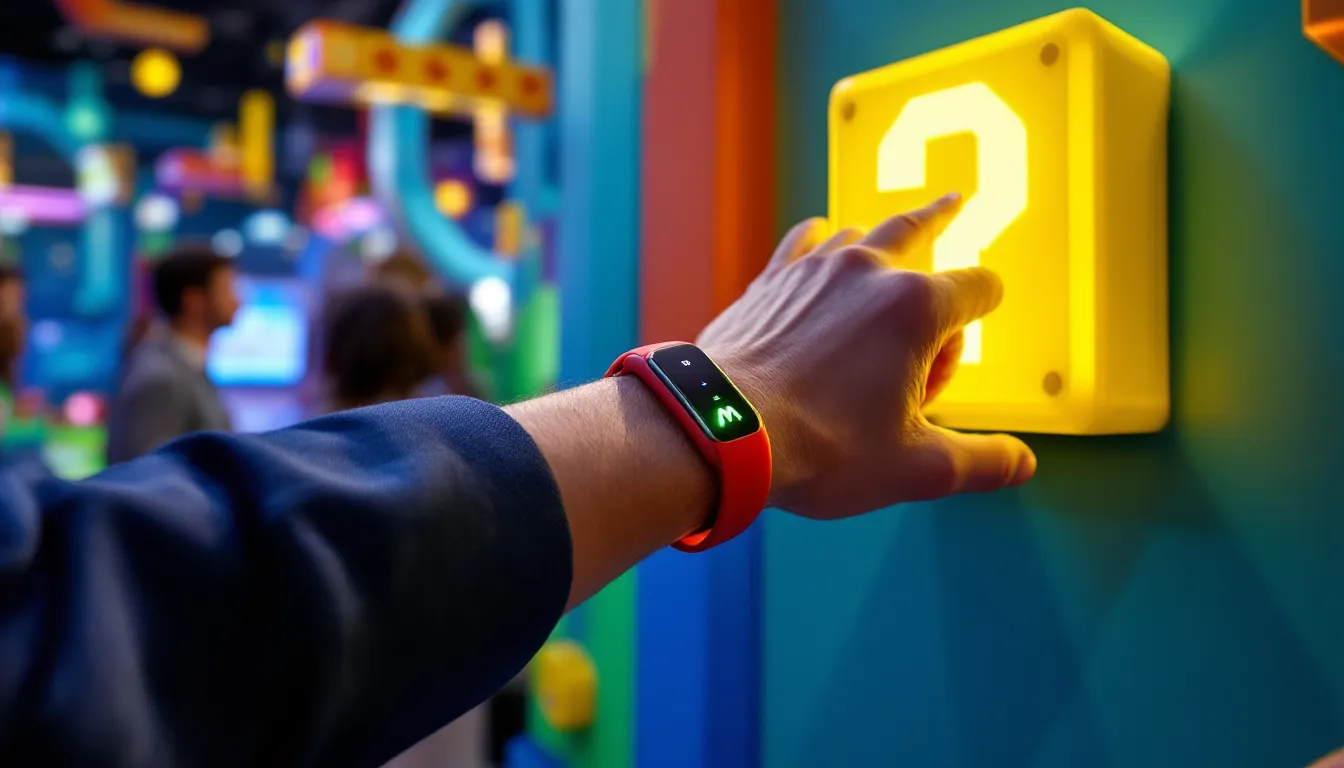
Theme parks and gaming have finally merged into something gamers actually dreamed about for decades. Super Nintendo World delivers on that promise with its Power-Up Band system, a wearable tech accessory that transforms the park into a massive, real-world video game. Instead of just riding attractions and snapping photos, visitors punch question blocks, battle Bowser Jr., rack up digital coins, and compete on global leaderboards.
Whether someone’s planning their first visit to Universal Studios Japan, Hollywood, or Orlando, understanding how the Power-Up Band works can drastically change their experience. This guide breaks down everything from activation and character designs to strategic tips for maximizing scores during peak hours. It’s not just a souvenir, it’s the difference between spectating and actually playing.
Key Takeaways
- The Super Nintendo World Power-Up Band is an NFC wristband that unlocks 30-40 interactive challenges, mini-games, and leaderboard competitions throughout the theme park, transforming it into a real-world video game experience.
- Without a Power-Up Band, visitors miss approximately 60% of Super Nintendo World’s interactive content, including Key Challenges like Piranha Plant Nap Mishap and the exclusive Bowser Jr. Shadow Showdown boss encounter.
- The Power-Up Band retains persistent progression across multiple park visits, syncing coins, stamps, and challenge completions to the cloud so players can track personal stats and compete on global leaderboards.
- At $34.99 USD, the band pays for itself in extended gameplay for anyone planning multiple visits or seeking completionist achievements, though single-day visitors may find it a premium add-on.
- Strategic timing—visiting during early morning or late evening hours and prioritizing high-value challenges first—can maximize coin collection efficiency and minimize wait times during peak hours.
What Is the Super Nintendo World Power-Up Band?
The Power-Up Band is a wearable NFC wristband that functions as both a collectible accessory and an interactive game controller throughout Super Nintendo World. It’s essentially a physical DLC pass for the theme park, unlocking hidden content, tracking stats, and enabling participation in timed challenges scattered across the land.
The band itself resembles the iconic power-up bracelets from Super Mario games, complete with LED lights that flash during successful interactions. It connects wirelessly to sensors embedded in question blocks, pipes, and interactive set pieces throughout the park. When visitors tap their band against these sensors, they trigger animations, collect virtual coins, earn digital stamps, and progress through achievement-based challenges.
Unlike passive theme park souvenirs, the Power-Up Band creates a persistent progression system. Every interaction feeds into a personal score that syncs with the Universal Studios app, allowing visitors to view stats, compare rankings, and continue their progress across multiple park visits. Think of it as a player profile that persists between sessions.
How the Power-Up Band Works
The technology behind the band relies on near-field communication (NFC), the same tech used in contactless payment systems and amiibo figures. Each band contains a unique identifier that links to a visitor’s profile in the Universal Studios database.
When someone taps their band against a sensor node, the system registers the interaction instantly. Question blocks light up, play sound effects from the games, and sometimes dispense physical props like keys or stamps. The band’s LEDs change color based on activity type, green for successful hits, red for failed attempts, and rainbow patterns for rare achievements.
The sensor network covers dozens of interactive points. Some trigger simple coin collection, while others initiate multi-step puzzles requiring specific sequences or timing. The system tracks everything: total coins collected, stamps earned, challenge completion times, and head-to-head battle results. This data feeds into both the mobile app and physical leaderboards displayed throughout the park.
Battery life isn’t a concern, the NFC chip is passive, drawing power from the sensors themselves during interactions. The LED lights run on a small watch battery that typically lasts 12-18 months of regular use.
Available Character Designs and Versions
As of March 2026, Super Nintendo World offers six core character designs for Power-Up Bands:
• Mario – Red band with the signature M logo
• Luigi – Green band with the L emblem
• Princess Peach – Pink band with crown iconography
• Daisy – Orange band with flower accents
• Toad – Blue band with mushroom spots
• Yoshi – Green band with Yoshi egg pattern
Limited-edition variants rotate seasonally. Past releases have included Gold Mario (50th anniversary edition), Cat Mario (based on Super Mario 3D World), and Builder Mario (tied to the Super Mario Maker franchise). These special editions don’t offer gameplay advantages, all bands have identical functionality, but they do feature unique LED color patterns and collectible packaging.
Each band costs the same regardless of character choice. The decision comes down to personal preference, though some visitors coordinate with their group to form full character teams for multiplayer challenges. The bands are adjustable and fit wrists ranging from child to adult sizes.
Why You Should Get a Power-Up Band for Your Visit
Super Nintendo World is technically accessible without a Power-Up Band, but skipping it means missing approximately 60% of the interactive content. The land was designed with the band system as its core engagement loop, not as an optional add-on.
First, the band unlocks access to key challenges, timed mini-games that require physical interaction with the environment. These aren’t passive photo ops: they’re actual gameplay scenarios with win/fail states, leaderboards, and unlockable rewards. Without a band, visitors can watch others play but can’t participate themselves.
Second, the progression system adds replayability. Collecting all stamps and achieving top-tier rankings takes multiple visits. The band remembers progress across sessions, creating long-term goals beyond a single day’s visit. For anyone planning return trips or holding an annual pass, the band pays for itself in extended engagement.
Third, the competitive element appeals directly to gaming instincts. Real-time leaderboards display top scores for each challenge, and the Universal Studios app shows global rankings. Speedrunners and completionists have already formed communities around optimizing routes and maximizing coin collection efficiency. The meta is real.
Finally, the band enhances the Mario Kart: Koopa’s Challenge attraction. While the ride functions without a band, having one equipped adds a scoring layer that tracks player performance and feeds into overall park stats. It’s similar to how some arcade games offer basic play but unlock extra features with a membership card.
For casual visitors spending only one day in the park, the band might feel like an expensive optional accessory. For anyone with even mild completionist tendencies or multiple planned visits, it’s practically essential.
Interactive Activities and Games You Can Play
The Power-Up Band system ties into roughly 30-40 interactive nodes spread throughout Super Nintendo World, divided into several activity types. Each category offers different gameplay mechanics and rewards.
Key Challenges and Question Blocks
Key Challenges are the flagship activities, multi-step mini-games that require puzzle-solving, timing, or physical dexterity. As of 2026, three major Key Challenges are active:
Piranha Plant Nap Mishap – Players tap question blocks in a specific sequence to lull Piranha Plants to sleep. The sequence randomizes with each attempt, forcing players to memorize and execute quickly. Completing it under 60 seconds earns a Gold Key stamp.
Goomba Crazy Crank – A timing-based challenge where visitors turn a physical crank at the correct RPM to raise platforms and collect coins. Too slow and the platforms drop: too fast and the mechanism jams. The sweet spot requires rhythmic consistency similar to QTE sequences in action games.
Koopa Troopa POW Block Toss – Players punch POW blocks in rapid succession to create shockwaves that flip Koopa shells. Each successful flip adds to a combo multiplier. High-level players can chain 20+ flips for maximum coin rewards.
Each Key Challenge awards one of three collectible keys (Gold, Silver, Bronze) based on performance. Collecting all three unlocks the Bowser Jr. Shadow Showdown, a special boss encounter that only activates for players who’ve completed the prerequisite challenges.
Standard question blocks are scattered everywhere, on walls, pillars, and hidden alcoves. Tapping them awards 5-20 coins depending on rarity. Some blocks are hidden behind environmental details, rewarding exploration. Gaming communities have already mapped optimal routes for coin farming, similar to speedrunning strategies documented for other interactive attractions.
Collecting Digital Coins and Stamps
Coins function as the primary currency for scoring. Every interaction awards coins, from simple block punches (5 coins) to completing Key Challenges (500+ coins). The app tracks lifetime totals, daily totals, and per-challenge totals.
Stamps work like achievements. There are approximately 25 unique stamps available, each tied to specific actions:
• Completing all three Key Challenges
• Collecting 10,000 lifetime coins
• Winning 10 head-to-head battles
• Finding all hidden blocks in a specific zone
• Achieving a perfect score on Bowser Jr. Shadow Showdown
Stamps don’t offer tangible rewards, they’re purely for completionists. But they do appear on visitor profiles in the app, and some players treat them as bragging rights similar to Xbox achievements or PlayStation trophies.
Coin totals feed into daily, weekly, and all-time leaderboards. Top performers often optimize their runs using frame-perfect timing and exploit knowledge of spawn patterns, the same min-maxing mentality found in MMO raids or roguelike speedruns.
Boss Battles and Special Events
Bowser Jr. Shadow Showdown is the crown jewel activity, locked behind the three Gold Keys. Players face off against a projected Bowser Jr. in a timed battle that combines elements from all three Key Challenges. Success requires executing learned mechanics under pressure, with a strict 120-second time limit.
The showdown takes place in a dedicated arena space that accommodates 4-6 players simultaneously. Each player’s band tracks individual performance, but group coordination improves overall success rates. It’s designed as a cooperative raid encounter, not a solo challenge.
Winning the showdown awards a rare Bowser Jr. Stamp and a massive coin bonus (2,000+ coins). Losing doesn’t penalize players, they can retry immediately, but only winners appear on the special Showdown leaderboard.
Seasonal events introduce limited-time challenges. Past events have included Halloween-themed Boo hunts and holiday coin multiplier weeks. Universal Studios typically announces these events through their official channels and gaming news outlets, giving frequent visitors reasons to return.
These timed events often adjust the meta temporarily, offering bonus stamps or exclusive LED light patterns for bands. Competitive players track event schedules and plan visits accordingly, treating them like live-service content drops.
How to Purchase and Activate Your Power-Up Band
Getting a Power-Up Band is straightforward, but timing the purchase strategically can save wait times and improve the overall experience.
Where to Buy Your Band
Power-Up Bands are sold at several locations within each Universal Studios park:
• 1-UP Factory – The primary merchandise shop directly inside Super Nintendo World. This location stocks all six standard designs plus any active limited editions. Expect heavy crowds immediately after park opening and during midday peaks.
• Universal Studios Store (main park entrance) – Carries a smaller selection of standard designs. Useful for purchasing bands before entering Super Nintendo World, allowing immediate activation upon arrival.
• Online pre-order – The Universal Studios website and official app offer pre-orders with in-park pickup at designated kiosks. This option bypasses retail lines entirely. Orders must be placed at least 24 hours in advance.
• Resort hotel gift shops – Guests staying at on-site Universal hotels can purchase bands at their hotel’s gift shop, often with early-morning availability before general park admission.
Pricing is fixed across all locations. Limited-edition variants may cost slightly more depending on packaging and bonus items (collector’s boxes, exclusive pins, etc.).
The best strategy is purchasing online with pickup or buying at hotel shops the night before. Waiting until entering Super Nintendo World adds 15-30 minutes of shopping time during peak hours, cutting into actual gameplay.
Step-by-Step Activation Process
Activation is required before the band functions for interactive elements. The process takes about 3-5 minutes:
1. Locate an activation terminal – Green kiosks labeled “Band Activation” are positioned near the Super Nintendo World entrance and inside the 1-UP Factory. Each terminal can handle one user at a time.
2. Tap your band on the sensor – Place the wristband against the marked NFC pad. The screen displays a unique activation code.
3. Create or link a profile – First-time users create a profile by entering a username (visible on leaderboards) and selecting privacy settings. Returning visitors can log into existing accounts using email or phone number.
4. Confirm character selection – The system asks users to verify their chosen character (Mario, Luigi, etc.). This choice affects avatar appearance in the app but doesn’t impact gameplay.
5. Complete tutorial – A brief 30-second animation explains how to tap blocks and view progress. Skipping this is an option but not recommended for first-timers.
6. Test activation – The terminal prompts users to tap a nearby test block to confirm the band is synced properly.
Once activated, the band remains linked to that profile permanently. Deactivation or transfer isn’t officially supported, though the band can be registered to a different Universal Studios account if needed by contacting guest services.
Activation terminals can develop queues during morning rushes (9-10 AM) and early afternoon (1-2 PM). Arriving at park opening or activating during late afternoon (after 4 PM) typically offers the shortest wait times.
Linking Your Band to the Universal Studios App
The Universal Studios app (available on iOS and Android) serves as the command center for Power-Up Band progression. Linking the band to the app is optional but unlocks significant quality-of-life features.
After activating the band at an in-park terminal, open the Universal Studios app and navigate to the “My Power-Up Band” section. The app prompts users to enter the unique 8-digit code printed on the band’s inner wristband. Alternatively, scanning a QR code displayed on the activation terminal during setup auto-links the band.
Once linked, the app displays:
• Real-time coin totals – Updates after each interaction, with a 5-10 second sync delay.
• Collected stamps – Visual gallery showing earned achievements with completion percentages.
• Challenge progress – Step-by-step tracking for multi-stage activities like Key Challenges.
• Active quests – Daily and weekly objectives that award bonus coins upon completion.
The app also provides a park map overlay highlighting interactive nodes. Icons indicate which blocks have been tapped, which challenges are available, and estimated wait times for Bowser Jr. Shadow Showdown. This feature mimics the minimap functionality found in open-world games, helping players plot efficient routes.
Tracking Your Progress and Leaderboards
Leaderboards are divided into multiple categories:
• Daily rankings – Resets at midnight local park time. Top 10 players receive a special in-app badge.
• All-time rankings – Cumulative lifetime scores across all visits.
• Challenge-specific rankings – Individual leaderboards for each Key Challenge and the Bowser Jr. Showdown.
• Friend rankings – Private leaderboards for connected users, similar to how console gaming communities track competitive stats.
Players appear on leaderboards using their chosen username. Privacy settings allow users to opt out of public rankings while still tracking personal progress.
The competitive scene around Power-Up Band leaderboards has grown surprisingly robust. Some players optimize coin routes down to the second, share strategies in online forums, and coordinate group runs to maximize collective scores. It mirrors the speedrunning and high-score communities that exist for arcade classics and modern roguelikes.
The app also tracks performance metrics like average coins per challenge, success rates, and completion times. These stats help players identify weak points and refine strategies, essentially the theme park equivalent of reviewing match replays.
Syncing Data Across Multiple Visits
One of the Power-Up Band’s strongest features is persistent progression. Coins, stamps, and challenge completions carry over indefinitely. Visitors who return weeks or months later pick up exactly where they left off.
The app syncs data automatically when the band interacts with any sensor in the park. There’s no manual save function, every tap writes progress to the cloud instantly. This eliminates concerns about lost progress or forgotten achievements.
For annual pass holders or locals who visit frequently, this system creates long-term goals. Some players aim to crack the all-time top 100. Others focus on perfect completion rates across all challenges. The metagame extends well beyond a single park day.
The band itself stores minimal data locally. If the wristband is lost or damaged, contacting guest services allows account recovery using the registered email or phone number. Progress remains intact because it’s tied to the cloud profile, not the physical band.
Multiple bands can link to a single Universal Studios account, though only one can be active per profile at a time. Families often create separate profiles for each member to track individual progress while coordinating group activities.
Tips and Strategies to Maximize Your Power-Up Band Experience
Getting the most out of a Power-Up Band requires the same strategic thinking applied to loot farming, raid coordination, or battle pass completion. Here’s how to optimize efficiency and maximize returns.
Prioritizing Activities During Peak Hours
Super Nintendo World experiences heavy crowds between 10 AM and 4 PM, especially on weekends and holidays. During these windows, interactive nodes develop queues, and Key Challenges can have 20-30 minute waits.
Optimal routing for peak hours:
1. Hit Key Challenges first – Arrive at park opening and immediately head for Piranha Plant Nap Mishap or Goomba Crazy Crank. These are the longest waits during midday.
2. Farm hidden blocks during queue times – While waiting in line for Mario Kart or other attractions, scan the environment for question blocks. Many are positioned within queue areas specifically for this purpose.
3. Save Bowser Jr. Showdown for late afternoon – This activity requires all three Gold Keys, which takes time to acquire. By late afternoon (4-6 PM), crowds thin, and showdown wait times drop significantly.
4. Exploit off-peak windows – Early morning (8-9 AM with early entry) and evening (7-9 PM) offer the fastest interaction times. Coin farming is 2-3x more efficient during these periods.
For coin maximization, focus on high-value targets. Key Challenges award 500-1,000 coins per completion versus 5-20 coins for standard blocks. Spending 10 minutes on three Key Challenges nets more coins than 30 minutes of random block tapping.
Team Play vs. Solo Challenges
Some activities benefit heavily from coordination. Bowser Jr. Shadow Showdown, in particular, scales difficulty based on group size and rewards synchronized play. Four coordinated players can achieve perfect scores that are nearly impossible solo.
Team strategies for the Showdown:
• Assign roles – Designate one player to focus on POW blocks, another on crank timing, and others on Piranha Plants. Specialization improves overall success rates.
• Communicate timing – Many mechanics require simultaneous inputs. Voice coordination or simple hand signals prevent mistimed interactions.
• Share Key Challenge completions – If one group member struggles with a particular challenge, others can help by providing strategy tips or demonstrating optimal techniques.
Solo play offers advantages too. Single players move faster between nodes, don’t need to coordinate schedules, and can retry challenges immediately without waiting for group consensus. For leaderboard grinding and coin farming, solo runs are generally more efficient.
Casual groups benefit most from a hybrid approach: tackle Key Challenges together for the cooperative experience, then split up for individual coin farming during downtime.
Advanced players often form dedicated Power-Up Band guilds, informal groups that coordinate visits, share optimization strategies, and compete for top leaderboard spots. It’s theme park gaming as an esport, complete with meta discussions and patch note analysis whenever Universal tweaks challenge difficulty or coin payouts.
Power-Up Band Pricing and Value Analysis
As of March 2026, Power-Up Bands retail for $34.99 USD at Universal Studios Hollywood and Orlando, with equivalent pricing (¥3,500) at Universal Studios Japan. Limited-edition variants typically cost $39.99-$44.99 depending on packaging.
That price point sits firmly in the “premium souvenir” category, more expensive than a standard theme park T-shirt but cheaper than high-end collectibles or photo packages. The question is whether the gameplay value justifies the cost.
Breaking down the value proposition:
Immediate gameplay access – The band unlocks roughly 30-40 interactive elements across Super Nintendo World. If each interaction provides even 30 seconds of engagement, that’s 15-20 minutes of additional content beyond standard attractions. For a single-day visit, that’s measurable added value.
Replayability – Unlike consumable souvenirs, the band retains functionality across unlimited future visits. Anyone with an annual pass or multiple planned trips amortizes the cost over several park days. At three visits, the effective cost per use drops to under $12.
Collectibility – Limited-edition bands hold resale value. Gold Mario variants from 2024 currently sell for $80-$120 on secondary markets. Standard designs don’t appreciate significantly but hold value better than typical theme park merchandise.
Comparative analysis – Disney’s MagicBand+ (the closest competitor) costs $34.99-$44.99 and offers similar NFC functionality for interactive elements and PhotoPass integration. The Power-Up Band lacks some of Disney’s ecosystem integration but offers deeper gameplay mechanics specific to Super Nintendo World.
For casual visitors spending one day in the park with no return plans, the band is a luxury add-on rather than essential. The core attractions (Mario Kart, Yoshi’s Adventure) function fully without it. But for anyone with completionist tendencies, multiple visits planned, or interest in the competitive leaderboards, the band pays for itself in extended engagement.
Families face a tougher decision. At $35 per band, equipping a family of four costs $140, a significant upcharge on top of park admission and food. But, only active participants need bands. One or two bands shared among family members can still unlock most content, though challenge progress won’t sync to individual profiles.
Budget-conscious visitors can maximize value by:
• Purchasing online during promotional periods (Universal occasionally offers 10-15% discounts through the app)
• Buying used bands from eBay or resale groups (bands transfer between accounts via guest services)
• Coordinating with friends to share bands during separate park days
Eventually, value depends on engagement level. For someone treating Super Nintendo World as a walk-through photo op, the band is overpriced. For anyone approaching it as an interactive gaming experience, it’s reasonably priced DLC that significantly expands content.
Do You Need a Power-Up Band to Enjoy Super Nintendo World?
Short answer: No. Long answer: It depends on what “enjoy” means.
Super Nintendo World’s marquee attractions, Mario Kart: Bowser’s Challenge and Yoshi’s Adventure, operate independently of the Power-Up Band system. Visitors without bands can experience these rides fully, take photos with themed set pieces, dine at Toadstool Cafe, and explore the land’s impressively detailed environment.
The land itself is worth visiting for the environmental design alone. The level of detail in recreating the Mushroom Kingdom, from warp pipes to ? blocks to Bowser’s Castle looming overhead, delivers fan service that resonates even without interactive elements. It’s a theme park adaptation that respects the source material.
But here’s the reality: without a Power-Up Band, visitors are effectively spectating rather than participating. Question blocks don’t respond. Key Challenges remain locked. Leaderboards stay empty. It’s like visiting an arcade and only watching others play.
For families with young children who won’t engage with challenge mechanics or players on extremely tight budgets, skipping the band is defensible. The cost savings are real, and the core attractions still deliver value.
For anyone who grew up playing Super Mario games, enjoys theme park interactivity, or has even moderate interest in gamification mechanics, the band transforms the experience. It shifts Super Nintendo World from a static environment to an active gameplay space.
The difference mirrors the gap between watching a Let’s Play and actually playing the game. Both offer value, but only one delivers agency. The Power-Up Band is that agency, it’s the controller that makes the world respond.
Some visitors adopt a middle-ground approach: exploring the land without a band on their first visit to gauge interest, then purchasing one on a return trip if the interactive elements seem appealing. This strategy works well for locals or annual pass holders who can afford to test the waters.
Universal Studios doesn’t mandate the band for good reason, it wants to keep base admission accessible. But the land’s design philosophy clearly assumes band ownership. The interactive nodes aren’t afterthoughts: they’re core content. Skipping them means skipping a substantial portion of the experience.
If someone’s visiting Super Nintendo World once and won’t return for years, they should buy the band. If they’re making a quick stop with zero interest in leaderboards, collectibles, or mini-games, they can skip it. For everyone else, it’s a judgment call based on budget and playstyle preferences.
The band isn’t a cash grab, it’s the admission ticket to the game layer. And in a land explicitly designed as a real-world video game, that layer is what separates Super Nintendo World from being just another themed area.
Conclusion
The Power-Up Band represents a successful execution of what theme parks have attempted for years: turning passive observation into active gameplay. It’s not perfect, the price point is steep for families, some challenges suffer from balancing issues, and server sync delays occasionally frustrate competitive players, but it delivers on the core promise of making visitors feel like they’re inside a Mario game.
For gamers accustomed to progression systems, leaderboards, and achievement hunting, the band scratches familiar itches in an unexpected venue. It’s a battle pass for a theme park, a physical loot grind, a real-world speedrun challenge. The fact that it works as well as it does is a testament to Universal’s understanding of what makes gaming engaging.
Anyone planning a visit should approach the band decision like evaluating DLC: Does this add enough content to justify the cost? For a single visit, maybe. For multiple trips or anyone with completionist tendencies, absolutely. It’s an investment in an extended gameplay loop that persists as long as the parks remain open.
The meta will continue evolving. Universal regularly tweaks challenge difficulty, adds seasonal events, and releases new limited-edition designs. The competitive scene around leaderboards shows no signs of slowing. For players who enjoy optimization, coordination, and chasing high scores, the Power-Up Band offers a surprisingly deep system wrapped in a deceptively simple wristband.
It’s not just a souvenir. It’s a game save file, a player profile, and a high-score tracker rolled into one. And in a world where gaming increasingly blurs the line between digital and physical spaces, that feels exactly right.


