
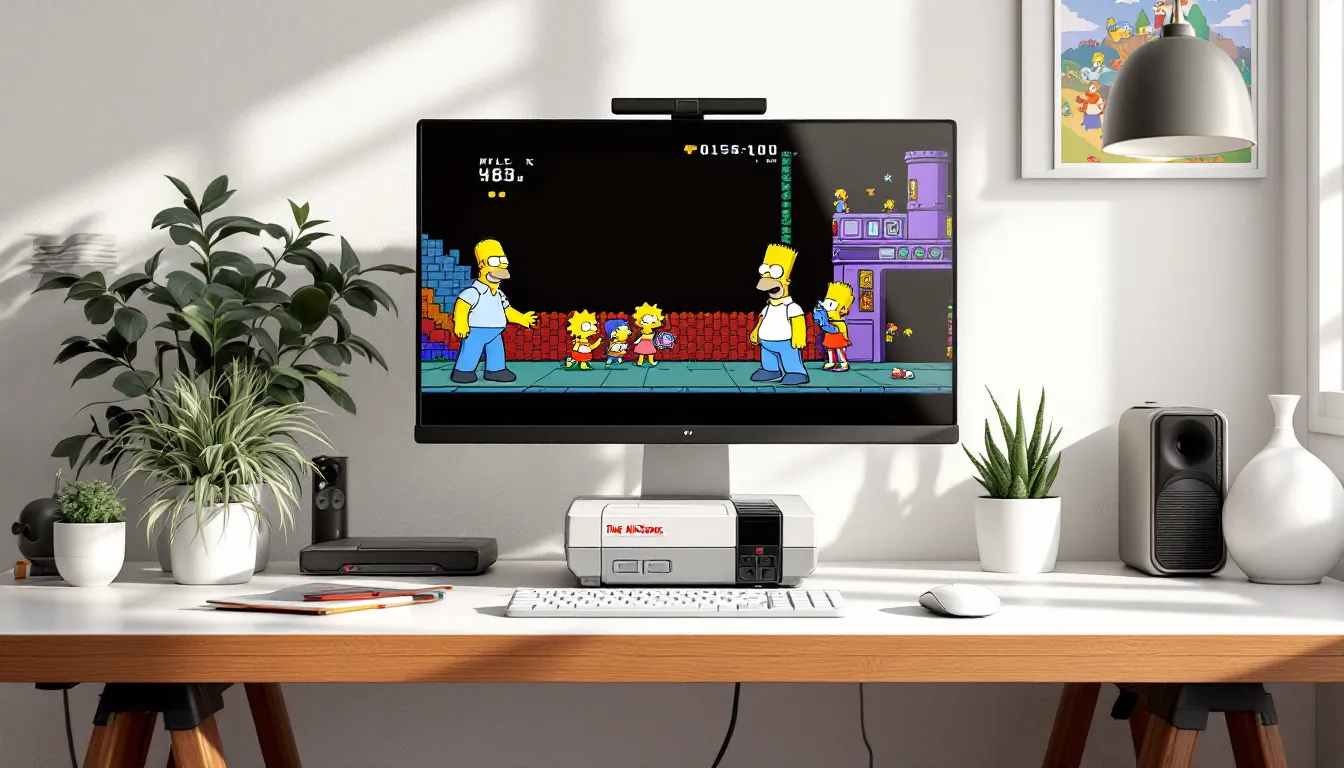
There’s something magical about a joke that bridges two generations of pop culture. “Super Nintendo Chalmers” is one of those rare memes that landed perfectly at the intersection of ’90s nostalgia, gaming culture, and The Simpsons’ golden era. What started as a throwaway line from Superintendent Chalmers in a 1996 episode has somehow evolved into a persistent inside joke that gamers still reference across forums, streams, and Discord servers three decades later. It’s not just a callback, it’s become shorthand for a specific kind of retro gaming affection, a signal that you were there when both The Simpsons and Nintendo defined entertainment. This deep dive explores how a two-word phrase became one of gaming’s most enduring memes, why it resonates with players who weren’t even born when the episode aired, and how it continues to pop up in modern gaming communities with the persistence of a well-placed Easter egg.
Key Takeaways
- Super Nintendo Chalmers is a mishearing from The Simpsons’ 1996 ‘Steamed Hams’ episode that became a persistent meme bridging ’90s gaming nostalgia and pop culture.
- The meme gained traction in early 2000s gaming forums like NeoGAF and GameFAQs, where it served as shorthand for gamers who grew up with both the SNES and The Simpsons’ golden age.
- Super Nintendo Chalmers experienced a renaissance during the 2014-2017 Steamed Hams meme explosion and resurged with retro gaming releases like the SNES Classic and Nintendo Switch Online.
- The phrase resonates across modern platforms—Reddit, Discord, Twitch, and YouTube—where it functions as a low-stakes nostalgia signal and community in-joke for millennial gamers.
- The meme’s durability stems from gaming culture’s unique relationship with its past, where physical media, appointment entertainment, and scarcity created deeper emotional connections to the SNES era.
- Creative interpretations including fan art, ROM hacks, and crossover memes prove that Super Nintendo Chalmers continues to inspire original content within gaming communities decades after the original episode aired.
What Is Super Nintendo Chalmers?
Super Nintendo Chalmers refers to a misheard greeting from The Simpsons Season 7, Episode 21 (“22 Short Films About Springfield,” aired April 14, 1996). In the “Skinner and the Superintendent” segment, later immortalized as the “Steamed Hams” meme, Superintendent Chalmers arrives at Principal Skinner’s house for lunch. When Skinner greets him with “Superintendent Chalmers.” viewers noticed that with the right cadence and a bit of audio compression, it sounds remarkably like “Super Nintendo Chalmers.”
The mishearing isn’t accidental. The emphasis Skinner places on “Superintendent” and the quick delivery creates an auditory illusion that gamers latched onto immediately. It’s the kind of thing you can’t unhear once it’s pointed out.
What makes this particularly sticky in gaming circles is the timing. The episode aired during the Super Nintendo’s twilight years, just as the N64 was launching. For a generation of gamers, “Super Nintendo” wasn’t just a console, it was the console. The phrase became a Rorschach test: once you heard “Super Nintendo” instead of “Superintendent,” you were in on the joke.
The meme exists in that sweet spot between mishearing and intentional wordplay. It’s not quite a mondegreen (like “excuse me while I kiss this guy”), but it’s close enough that gamers adopted it as deliberate headcanon. In gaming communities, calling someone “Super Nintendo Chalmers” became a way to signal both your Simpsons knowledge and your Nintendo credentials in one efficient package.
The Origins of the Super Nintendo Chalmers Meme
Breaking Down the Original Scene
“22 Short Films About Springfield” was one of The Simpsons‘ most experimental episodes, structured as vignettes showcasing Springfield’s supporting cast. The “Skinner and the Superintendent” segment runs roughly three minutes and follows Principal Skinner’s disastrous attempt to host Superintendent Chalmers for lunch after burning the roast.
The scene opens with Chalmers arriving at Skinner’s door. Skinner, panicked and covered in smoke, throws open the door and enthusiastically announces: “Superintendent Chalmers. Welcome. I hope you’re prepared for an unforgettable luncheon.” The formal title delivered with forced enthusiasm is what triggers the audio illusion.
Harry Shearer voices both characters, which adds another layer. The contrast between Skinner’s nervous energy and Chalmers’ deadpan delivery became comedic gold. The segment itself, now known universally as “Steamed Hams”, became one of The Simpsons’ most remixed and referenced scenes online, but the “Super Nintendo” mishearing predates the Steamed Hams explosion by years.
Early gaming forums in the late ’90s and early 2000s began documenting the phenomenon. Gamers would share audio clips, debate whether it was intentional, and create ASCII art combining Chalmers’ face with SNES imagery. The scene’s absurdist humor meshed perfectly with gaming culture’s appreciation for the ridiculous.
Why the Line Became Iconic
The longevity of “Super Nintendo Chalmers” comes down to perfect convergence. First, timing: the episode aired when the SNES still dominated many households, making “Super Nintendo” a phrase gamers said daily. Second, the golden age of The Simpsons (seasons 3-8) coincided with Nintendo’s peak cultural penetration in the mid-’90s.
The mishearing also benefits from being simple and repeatable. Unlike complex inside jokes that require explanation, “Super Nintendo Chalmers” works instantly once someone points it out. You can drop it in a Twitch chat during a retro stream, and half the viewers immediately get it.
There’s also something deeply satisfying about finding unintentional meaning in media. Gamers love Easter eggs, hidden references, and secret messages, this felt like discovering one in real-time, even though it was purely accidental. According to gaming culture observers at GameSpot, memes that combine audio illusions with nostalgic properties have exceptional staying power in online communities.
The phrase became a shibboleth. If you laughed at “Super Nintendo Chalmers,” you were likely in your late twenties or older, had grown up with both The Simpsons and Nintendo, and spent time in gaming forums. It filtered for a specific demographic without being exclusionary, younger gamers who discovered it later could still join in once they watched the episode.
How Super Nintendo Chalmers Infiltrated Gaming Culture
Gaming Forums and Early Internet Adoption
The meme’s first documented appearances came from gaming forums like NeoGAF, SomethingAwful, and early GameFAQs boards around 2001-2003. Users would create threads with titles like “Can’t unhear: Superintendent = Super Nintendo” accompanied by audio clips or YouTube links (once YouTube launched in 2005).
These forums were where gaming culture crystallized in the early 2000s. Memes spread slower then, no Twitter, limited image hosting, and dial-up speeds meant viral content took weeks or months to proliferate. “Super Nintendo Chalmers” benefited from this slow burn, building credibility through repeated mentions rather than explosive virality.
GameFAQs message boards for Nintendo titles like Super Mario World, The Legend of Zelda: A Link to the Past, and Chrono Trigger saw regular references. Players would use “Super Nintendo Chalmers” as a signature line or incorporate it into forum avatars. The joke evolved into shorthand for “I’m a Nintendo fan who appreciates absurdist humor.”
Flash animation sites like Newgrounds featured parodies combining the audio clip with pixel art of SNES cartridges or 16-bit versions of Chalmers. These animations circulated through email chains and early social media platforms like MySpace, gradually expanding the joke’s reach beyond hardcore gaming forums.
The Connection Between The Simpsons and Nintendo Nostalgia
The Simpsons and Nintendo share uncommon cultural overlap. Both defined entertainment for millennials and Gen X kids in the ’90s. Watching The Simpsons at 8 PM on Sundays, then booting up Super Mario Kart or Donkey Kong Country afterward was a quintessential childhood experience for millions.
The show itself frequently referenced video games, though not always accurately. Episodes like “Marge Be Not Proud” (featuring the fictional Bonestorm) and “Lisa’s Substitute” (with its Game Boy reference) showed writers who understood gaming culture. This made the “Super Nintendo Chalmers” mishearing feel almost deliberate, like the writers had hidden it for gamers to discover.
Nintendo’s brand also aligned perfectly with The Simpsons‘ all-ages appeal. Both were family-friendly but sophisticated enough for adults. The SNES library included kid-friendly platformers alongside deeper RPGs like Final Fantasy VI and EarthBound, the same way The Simpsons worked for children and adults simultaneously.
As noted by retro gaming coverage on Nintendo Life, SNES nostalgia peaked in the mid-2000s when millennials entered adulthood with disposable income and internet access. “Super Nintendo Chalmers” rode that wave perfectly, becoming a rallying cry for gamers who wanted to celebrate their childhood without seeming childish.
Super Nintendo Chalmers in Modern Gaming Communities
Reddit, Discord, and Social Media Usage
The meme experienced a renaissance around 2014-2017 when “Steamed Hams” itself became a major meme format. Subreddits like r/gaming, r/TheSimpsons, and r/NintendoSwitch saw regular “Super Nintendo Chalmers” references, often paired with SNES-related posts.
On Reddit, the joke functions as a comment section staple. Post anything about retro Nintendo gaming, and there’s a decent chance someone replies with “Superintendent Chalmers” or a variant. It’s become a low-key way to earn upvotes from fellow ’90s kids without dominating the conversation.
Discord servers dedicated to retro gaming have entire channels for Simpsons/gaming crossover memes. Server emojis featuring Chalmers with an SNES controller or pixel art versions of the character are common. The joke works particularly well in Discord because it’s synchronous, someone drops “Super Nintendo Chalmers” during a Mario speedrun discussion, and the room immediately vibes with it.
Twitter (now X) saw the meme peak during Nintendo’s various retro releases: the NES Classic (2016), SNES Classic (2017), and Nintendo Switch Online’s expansion packs. Any announcement related to classic Nintendo games triggered waves of “Super Nintendo Chalmers” tweets. The SNES Classic launch was particularly ripe, with gaming journalists and influencers using the phrase in headlines and social posts.
Streaming Culture and Twitch Chat References
Twitch chat adopted “Super Nintendo Chalmers” as part of its deep catalog of gaming in-jokes. It appears most frequently during retro game streams, speedruns of SNES titles, or whenever a streamer mentions The Simpsons.
The phrase works well in Twitch’s rapid-fire chat environment because it’s compact and immediately understood by the demographic most likely to watch retro gaming content. Streamers like Vinesauce, Games Done Quick participants, and retro-focused channels often acknowledge the joke, either with a knowing laugh or by incorporating it into overlays and alerts.
YouTube gaming channels have featured the meme in video titles and thumbnails. Channels covering SNES retrospectives, Simpsons video game reviews, or ’90s gaming culture often use “Super Nintendo Chalmers” as a hook. It signals to viewers that the content understands the intersection of gaming and pop culture nostalgia.
The meme also appears in emote form across streaming platforms. Custom emotes combining Chalmers’ face with SNES imagery or the purple-and-gray console color scheme are popular subscriber rewards. It’s become embedded enough that newer gamers encounter it organically and adopt it without necessarily watching the original episode first.
The Best Super Nintendo Chalmers Memes and Variations
Fan Art and Creative Interpretations
The creative output surrounding “Super Nintendo Chalmers” has been surprisingly robust. DeviantArt, ArtStation, and Twitter feature countless illustrations reimagining Superintendent Chalmers as a Nintendo character or mascot.
Popular variations include:
- Chalmers as a playable character in Super Smash Bros., complete with moveset descriptions and Final Smash concepts
- 16-bit sprite versions of the Steamed Hams scene rendered in SNES graphics, often as mock-ups of fictional adventure or RPG games
- SNES cartridge label designs featuring Chalmers’ face with titles like “Steamed Hams Deluxe” or “Superintendent Chalmers’ Unforgettable Luncheon”
- Pixel art animations recreating the entire Steamed Hams scene in the style of EarthBound or Chrono Trigger
One particularly popular piece shows Chalmers wearing the purple-and-gray color scheme of the SNES controller as a suit. Another depicts him as a boss battle in a 16-bit RPG, complete with attack patterns based on dialogue from the scene (“Seymour, the house is on fire.” as an AOE fire attack).
The meme also inspired ROM hacks. Modders have inserted Chalmers into Super Mario World as an NPC or boss, complete with audio clips from the episode. These aren’t official releases, obviously, but they circulate through retro gaming communities as proof-of-concept love letters to the meme.
Crossover Memes With Other Gaming References
“Super Nintendo Chalmers” has merged with other gaming memes to create increasingly layered jokes. Some notable crossovers include:
Steamed Hams x Nintendo game parodies: The entire Steamed Hams scene recreated in various Nintendo games, Animal Crossing: New Horizons players staged it with custom furniture, Super Mario Maker 2 levels spelled it out with blocks, and The Legend of Zelda: Breath of the Wild players recreated Skinner’s house using the construction system.
“Aurora Borealis” gaming references: Chalmers’ famous line “Aurora Borealis? At this time of year, at this time of day, in this part of the country, localized entirely within your kitchen?” has been repurposed for gaming contexts. Rare loot drops, shiny Pokémon encounters, and improbable RNG moments often get the aurora borealis treatment in meme format.
Mod menus and Easter eggs: Indie developers have hidden “Super Nintendo Chalmers” references in their games. Small text files, secret dialogue options, or achievement names occasionally reference the meme. It’s become a subtle way for developers to signal their gaming culture literacy.
Coverage from outlets like Siliconera has highlighted how Japanese gaming communities also picked up on the meme, translating it and incorporating it into their own Nintendo-focused humor. The universality of both The Simpsons and Nintendo means the joke transcends language barriers more easily than most Western memes.
Why This Meme Resonates With Gamers Decades Later
The Psychology of Gaming Nostalgia
Nostalgia is gaming culture’s most powerful currency, and “Super Nintendo Chalmers” taps directly into it. The meme doesn’t just reference the SNES, it evokes a specific era when gaming meant couch co-op, cartridge blowing, and saving up allowance for the next release.
Psychologically, the meme works because it combines two distinct nostalgic anchors: The Simpsons at its creative peak and Nintendo during its 16-bit dominance. Both represent a time perceived as simpler and more genuine than today’s fragmented media landscape. Using the phrase triggers a dopamine response similar to hearing a childhood theme song or smelling a familiar scent from the past.
The SNES itself holds a special place in gaming history. Released in 1990 (1991 in North America), it represented the pinnacle of 2D gaming before the industry’s awkward transition to 3D. Games like Super Metroid, Final Fantasy VI, and Super Mario RPG are still considered masterpieces. Referencing “Super Nintendo” isn’t just about a console, it’s about an entire philosophy of game design that prioritized tight mechanics and artistic creativity over graphical horsepower.
“Super Nintendo Chalmers” also benefits from being low-stakes nostalgia. It’s not trying to sell you anything or prove a point about “games today vs. games then.” It’s just a silly joke that happens to land perfectly for people of a certain age and gaming background.
The Simpsons’ Unique Place in Gaming History
The Simpsons has a complicated relationship with video games. The franchise has spawned dozens of licensed titles across every platform imaginable, with quality ranging from genuinely excellent (The Simpsons: Hit & Run on PS2, Xbox, and GameCube) to aggressively mediocre (The Simpsons Wrestling on PS1).
But beyond licensed games, The Simpsons influenced gaming culture through its commentary and references. The show’s writers, many of whom were self-professed nerds, understood gaming well enough to parody it effectively. Episodes touched on arcade culture, gaming addiction, and the social dynamics of video game fandom before most mainstream media took gaming seriously.
The timing of The Simpsons‘ golden age (roughly 1990-1998) aligns almost perfectly with the SNES lifespan (1990-1996 prime years, with support extending to 2000 in North America). For kids and teens in the ’90s, both were appointment entertainment. You couldn’t binge-watch or download, you caught The Simpsons when it aired and played SNES games when you could rent or afford them.
This scarcity created deeper emotional connections. “Super Nintendo Chalmers” endures because it represents a specific moment when both properties were at their peak and culturally inescapable. It’s a time capsule compressed into three words, a reminder of when entertainment required patience, scheduling, and physical media.
Other Gaming Memes Born From The Simpsons
The Simpsons has generated a surprising number of gaming-adjacent memes beyond “Super Nintendo Chalmers.” The show’s 35+ seasons and cultural ubiquity mean it’s touched nearly every aspect of pop culture, including gaming.
“Buy me Bonestorm or go to Hell.” from “Marge Be Not Proud” became shorthand for entitled gamer behavior and the pressure parents felt during the ’90s gaming boom. The episode’s depiction of Bart stealing a video game remains one of TV’s most accurate portrayals of game store culture from that era.
“It’s just a little airborne, it’s still good.” gets repurposed for glitchy games or broken releases. The image of Homer’s roast pig floating away perfectly captures the feeling of watching a hyped game launch in a disastrous state.
“I used to be with ‘it,’ but then they changed what ‘it’ was” from Grampa Simpson has become the unofficial motto for gamers aging out of current trends. It appears frequently in discussions about battle royales, live-service games, and microtransactions, topics where older gamers feel left behind by industry evolution.
“Am I out of touch? No, it’s the children who are wrong” (Principal Skinner) gets deployed whenever gaming discourse turns generational. Whether it’s debates about difficulty settings, accessibility options, or graphics vs. gameplay, this line captures the defensive posture of gamers resistant to change.
Homer’s “In Theory” PowerPoint presentation has been memed extensively for patch notes, balance changes, and developer explanations that sound good on paper but fail in practice. The format works perfectly for gaming because it captures the gap between intended design and player experience.
The show’s gaming references have aged remarkably well because they focused on the social and emotional aspects rather than specific technology. An episode about gaming addiction or sibling rivalry over a console feels just as relevant in 2026 as it did in 1995, even if the hardware has changed. That timelessness is why Simpsons memes continue to circulate in gaming spaces, they’re flexible frameworks that can be updated with current context while retaining their original humor.
Conclusion
“Super Nintendo Chalmers” shouldn’t work as well as it does. It’s based on a mishearing, references a console three decades old, and comes from a TV show that’s long past its creative peak. Yet here we are in 2026, and gamers still drop the phrase in streams, forums, and Discord servers like it’s fresh.
That persistence says something about how gaming culture processes nostalgia. We don’t just remember the games, we remember the entire ecosystem around them. The TV shows we watched between sessions, the friends we played with, the sound of a cartridge clicking into place. “Super Nintendo Chalmers” wraps all of that into one accidental phrase.
The meme’s longevity also reflects gaming’s unique relationship with its past. Other entertainment mediums move on: gaming constantly revisits, remasters, and reimagines its history. Every retro collection, classic console re-release, or spiritual successor brings new opportunities for “Super Nintendo Chalmers” to resurface. As long as people keep discovering the SNES library and stumbling across The Simpsons‘ golden-age episodes, the joke will find new audiences.
It’s a small thing, really, just three words that probably shouldn’t go together. But in those three words lives an entire era of gaming culture, preserved perfectly and ready to be passed down to whoever’s willing to listen closely enough.


