
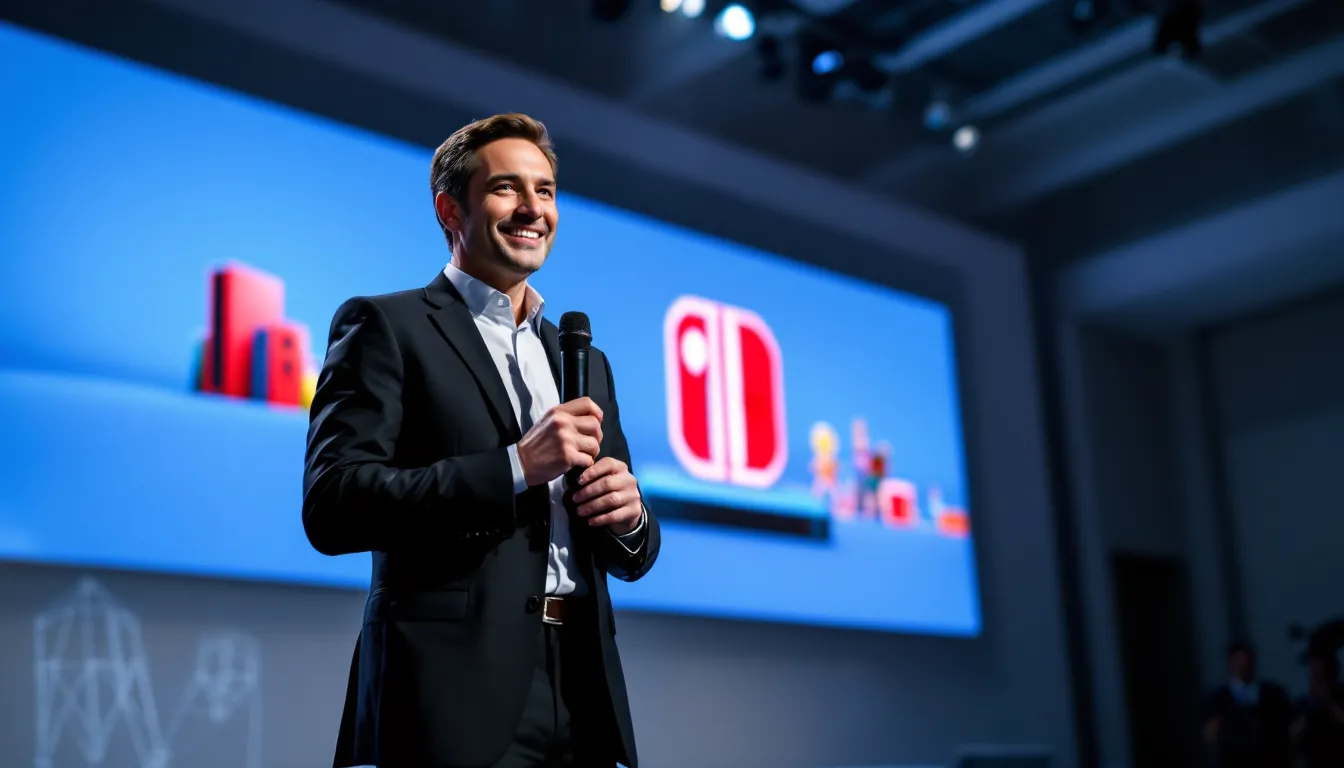
In the mid-2000s, Nintendo was struggling. The GameCube had been overshadowed by PlayStation 2 and Xbox, and the gaming giant needed a new voice, someone who could bridge the gap between corporate Nintendo and the gaming community. Enter Reggie Fils-Aimé, a charismatic executive who didn’t just present products, he became part of gaming culture itself. His legendary E3 2004 debut, where he introduced himself with “My name is Reggie,” instantly became a cultural touchstone. Unlike the stiff, rehearsed presentations gamers had grown used to, Reggie brought personality, confidence, and genuine enthusiasm. Over his 15-year tenure as President and COO of Nintendo of America, he helped steer the company through the Wii phenomenon, weathered the Wii U’s challenges, and celebrated the Switch’s massive success. But more than sales figures and quarterly reports, Reggie transformed how gaming executives connect with their audience, proving that authenticity beats corporate polish every time.
Key Takeaways
- Reggie Fils-Aimé transformed Nintendo’s corporate image through authentic leadership, proving that personality and genuine passion resonate far more effectively than traditional corporate polish in gaming PR.
- As President and COO of Nintendo of America for 15 years, Reggie Nintendo steered the company through major hardware transitions—from the GameCube struggles through the Wii’s revolutionary success, the Wii U’s challenges, and the Nintendo Switch’s triumph.
- His legendary E3 2004 debut statement ‘My name is Reggie, I’m about kickin’ ass, I’m about takin’ names, and we’re about makin’ games’ fundamentally changed how gaming companies communicate with audiences, shifting the industry toward direct, authentic connection with gamers.
- Reggie embraced internet meme culture rather than distancing himself from it, famously leaning into moments like ‘my body is ready,’ which strengthened his connection with the gaming community and demonstrated that corporate leaders can participate authentically in fan culture.
- His post-Nintendo career—including publishing his memoir ‘Disrupting the Game,’ joining corporate boards, and mentoring emerging leaders—shows his lasting influence as a bridge between corporate strategy and gaming industry values.
Who Is Reggie Fils-Aimé?
Reggie Fils-Aimé isn’t just a former Nintendo executive, he’s a gaming icon whose influence extends far beyond boardrooms and balance sheets. Born in the Bronx, New York, to Haitian immigrants, Reggie brought a unique perspective to an industry that desperately needed fresh voices.
Early Life and Career Before Nintendo
Before becoming the face of Nintendo of America, Reggie built an impressive resume in marketing and business development. He graduated from Cornell University with a degree in applied economics and later earned an MBA from Wake Forest University. His career path took him through major corporations including Procter & Gamble, where he honed his marketing skills, and Pizza Hut, where he served as Senior Director of National Marketing.
But it was his role at VH1 and later at Panda Management Company (a consulting firm) that really prepared him for the gaming industry. At VH1, he learned how to connect with younger, media-savvy audiences, a skill that would prove invaluable at Nintendo. He also spent time at Guinness Import Company as Senior Director of Marketing, where he developed expertise in brand revitalization.
What made Reggie different wasn’t just his marketing chops, it was his ability to understand what consumers actually wanted, not what focus groups said they should want. He had a track record of breathing new life into established brands, which is exactly what Nintendo needed in 2003.
Joining Nintendo of America
Reggie joined Nintendo of America in December 2003 as Executive Vice President of Sales and Marketing, right when the company was preparing to make a major push back into relevance. The GameCube was struggling to compete, and Nintendo needed someone who could reshape the company’s image in North America.
His hiring was unconventional. Nintendo had traditionally promoted from within or hired executives with deep gaming industry roots. Reggie came from outside the gaming world entirely, but he brought something more valuable: an outsider’s perspective on how to make Nintendo matter to mainstream audiences again.
Within months of joining, Reggie was thrust into the spotlight at E3 2004, where he’d deliver one of the most memorable introductions in gaming history. Nintendo took a gamble on his unorthodox style, and it paid off in ways nobody could have predicted.
The Legendary E3 2004 Debut: “My Name Is Reggie”
E3 2004 changed everything. While competitors delivered safe, predictable presentations, Reggie walked onto the stage and immediately commanded attention. “My name is Reggie,” he said with absolute confidence. “I’m about kickin’ ass, I’m about takin’ names, and we’re about makin’ games.”
The gaming world collectively lost its mind. Here was a corporate executive who didn’t sound like one, who wasn’t reading from a script with lifeless enthusiasm, and who seemed genuinely pumped about what he was presenting. He announced the Nintendo DS with the kind of energy usually reserved for indie devs talking about passion projects, not multinational corporations unveiling hardware.
The phrase “my body is ready” would come later, but the foundation was set in 2004: Reggie was different. Publications like Kotaku immediately picked up on the cultural shift his presentation represented, recognizing that gaming PR had entered a new era.
Why That Moment Changed Gaming Presentations Forever
Before Reggie, E3 presentations followed a formula: executives in suits awkwardly reading teleprompters, developers who clearly didn’t want to be on stage, and pre-recorded trailers doing the heavy lifting. Authenticity was scarce.
Reggie’s approach shattered that mold. He spoke directly to gamers, not shareholders. He used language that felt natural, not focus-grouped. Most importantly, he appeared to actually enjoy gaming, a rarity among executives at that level.
His impact rippled across the industry. Within a few years, other companies started putting more charismatic figures front and center. Sony brought out executives with more personality. Microsoft started emphasizing human connection in their presentations. The entire tone of gaming events shifted toward authenticity and direct communication with the gaming community.
It wasn’t just about being quotable, though Reggie certainly was. It was about respect. By speaking to gamers as peers rather than consumers to be managed, Reggie helped rebuild trust in Nintendo as a brand that understood its audience.
Reggie’s Leadership Era at Nintendo of America
In May 2006, Reggie was promoted to President and Chief Operating Officer of Nintendo of America, taking the reins during one of the most transformative periods in gaming history. His tenure would see dramatic highs, challenging lows, and eventually a triumphant return to dominance.
The Wii Revolution and Expanding Gaming’s Audience
The Wii launched in November 2006, and it was a massive gamble. Motion controls weren’t new, but building an entire console around them, and deliberately avoiding the graphics arms race with PS3 and Xbox 360, was risky. Reggie sold it brilliantly.
He positioned the Wii not as a gaming console for gamers, but as an entertainment device for everyone. Suddenly, grandparents were playing Wii Sports at nursing homes. Families were having bowling tournaments in their living rooms. The gaming industry expanded beyond its traditional demographic in ways that seemed impossible just years earlier.
Under Reggie’s leadership, Nintendo of America marketed the Wii with surgical precision. TV spots showed families playing together, not lone gamers in dark rooms. Retail demos let non-gamers try the intuitive motion controls firsthand. The message was clear: this isn’t your kids’ gaming console, it’s for you too.
The Wii sold over 101 million units worldwide, with North America representing a huge portion of that success. Games like Wii Fit, Mario Kart Wii, and Super Smash Bros. Brawl became cultural phenomena, not just gaming hits.
Navigating the Wii U Challenges
Not everything went smoothly. The Wii U, launched in November 2012, struggled from day one. The marketing was confusing, many consumers thought it was just an accessory for the Wii, not a new console. Third-party support evaporated quickly. Sales were disappointing compared to the Wii’s explosive success.
Reggie faced intense criticism during this period, but he remained steadfast in defending Nintendo’s vision. He acknowledged the marketing missteps while emphasizing the quality of first-party titles like Super Mario 3D World, Mario Kart 8, and Splatoon. According to coverage by The Verge, Reggie worked tirelessly to reframe the Wii U’s narrative, even as sales figures told a difficult story.
The Wii U eventually sold only 13.56 million units worldwide, a stark contrast to its predecessor. But the lessons learned during this period would prove invaluable. Nintendo realized it had lost touch with its core gaming audience while chasing the casual market, and that marketing clarity was just as important as innovation.
The Nintendo Switch Triumph
March 2017 brought redemption: the Nintendo Switch launched to massive acclaim and even bigger sales. The hybrid console concept, playing both on TV and portables, clicked with consumers in ways the Wii U’s dual-screen approach never did.
Reggie’s marketing emphasized versatility and freedom. The iconic launch trailer showed young adults taking the Switch to rooftop parties, playing on planes, and seamlessly transitioning between home and portable gaming. It positioned the Switch as a device for modern lifestyles, not just gaming sessions.
He also championed the Nintendo Switch 64 Controller and other nostalgia-driven accessories that connected longtime fans with the new platform. Launch titles like The Legend of Zelda: Breath of the Wild and Super Mario Odyssey delivered the quality that justified the hardware innovation.
By the time Reggie retired in April 2019, the Switch had sold over 34 million units. Today, it’s surpassed 140 million units, making it one of the best-selling consoles of all time. Reggie laid the groundwork for that success with smart positioning and relentless advocacy for Nintendo’s unique approach to gaming.
Reggie’s Unique Leadership Style and Public Persona
What separated Reggie from typical corporate executives wasn’t just charisma, it was his willingness to be himself publicly, even when that meant becoming a meme or facing mockery.
Meme Culture and Internet Fame
Reggie didn’t just tolerate internet culture, he embraced it. When he said “my body is ready” during a 2007 Wii Fit demonstration, the internet ran wild with it. Instead of distancing himself from the meme, Reggie leaned in, referencing it in later presentations and interviews.
He appeared in promotional videos doing ridiculous things: competing in Mario Kart tournaments against fans, participating in Super Smash Bros. exhibition matches (though he admitted he wasn’t particularly good), and even appearing in comedy sketches that poked fun at his own image. When he played as his Mii character in Super Smash Bros. Ultimate alongside other Nintendo executives, fans loved it.
This wasn’t calculated corporate social media strategy, at least, it didn’t feel like it. Reggie genuinely seemed to enjoy the playfulness of gaming culture. He understood that being a meme wasn’t an insult: it was a form of affection from a community that finally had an executive who felt like one of them.
Connecting With Gamers Beyond Corporate Speak
Reggie’s communication style was refreshingly direct. When asked tough questions about game delays, hardware shortages, or competitive pressures, he didn’t hide behind PR jargon. He acknowledged problems, explained Nintendo’s thinking, and trusted gamers to understand nuance.
During the amiibo shortage in 2015, when certain figures were impossible to find, Reggie didn’t make excuses. He admitted Nintendo had underestimated demand and explained what they were doing to fix it. That honesty built credibility even when Nintendo couldn’t immediately solve the problem.
He also advocated internally for what gamers wanted. While he couldn’t always deliver, Nintendo’s stubbornness on certain issues like online infrastructure persisted, Reggie pushed for features like more robust third-party support, better digital storefronts, and localization of cult-favorite titles.
Most importantly, Reggie treated gaming as something that mattered, not just as a product category. He understood that for millions of people, Nintendo games were tied to childhood memories, family traditions, and personal identity. That respect came through in how he communicated.
Memorable Reggie Moments and Quotes
Reggie’s tenure produced countless quotable moments that still circulate in gaming communities. Here are some that defined his legacy:
“My name is Reggie. I’m about kickin’ ass, I’m about takin’ names, and we’re about makin’ games.” The quote that started it all at E3 2004. Bold, confident, and completely unexpected from a corporate VP.
“My body is ready.” Said during a 2007 Wii Fit demonstration, this became one of gaming’s most enduring memes. Reggie never lived it down, and he never tried to.
“What’s wrong with being unique?” Reggie’s response when asked why Nintendo didn’t chase graphical parity with competitors. It encapsulated the company’s philosophy during his entire tenure.
“If it’s not fun, why bother?” This simple philosophy guided Nintendo’s approach to game development and hardware design under Reggie’s leadership in North America.
Playing as himself in Super Smash Bros. Ultimate. When Nintendo added Mii Fighter costumes and allowed characters to be based on real people, Reggie’s Mii became an official part of the game. Watching him “fight” in promotional materials was surreal and perfect.
His reactions at E3 presentations. Whether it was looking genuinely shocked at a surprise announcement or playfully bantering with developers on stage, Reggie’s facial expressions and body language became as anticipated as the games themselves.
The puppet bit at E3 2015. Reggie appeared alongside Nintendo executives Satoru Iwata and Shigeru Miyamoto in a bizarre, hilarious puppet show that introduced Star Fox Zero. It was weird, it was wonderful, and it showed Nintendo’s willingness to take creative risks in how they communicated.
Each of these moments reinforced that Reggie wasn’t just performing a role, he was genuinely invested in making Nintendo presentations entertaining and memorable.
Retirement and Life After Nintendo
On April 15, 2019, Reggie retired from Nintendo after 15 years with the company. His farewell was emotional, with tributes pouring in from fans, industry colleagues, and even competitors. Doug Bowser (yes, really) succeeded him as President of Nintendo of America, inheriting huge shoes to fill.
“Disrupting the Game” and Continued Influence
In May 2022, Reggie published his memoir “Disrupting the Game: From the Bronx to the Top of Nintendo.” The book offered behind-the-scenes insights into major Nintendo decisions, his leadership philosophy, and the challenges of navigating corporate politics while staying true to his values.
The book wasn’t just nostalgia, it was a business strategy guide wrapped in gaming history. Reggie detailed how he approached marketing challenges, managed relationships with Japanese headquarters, and balanced Nintendo’s traditional values with American market demands. Reviews across platforms like Nintendo Life praised its candor and practical wisdom.
He’s remained active in gaming discourse through interviews, podcasts, and speaking engagements. Reggie regularly appears on gaming industry panels discussing leadership, marketing innovation, and the future of interactive entertainment. His perspective as someone who successfully bridged corporate and community interests makes him a sought-after voice.
Board Positions and Gaming Industry Impact
Post-retirement, Reggie joined several corporate boards, including GameStop (2020-2021, during its wild stock volatility period), Brunswick Corporation, and Spin Master. He also joined the board of Rogue Games, an indie game publisher, showing his continued commitment to the industry.
His GameStop tenure was particularly interesting. He joined the board during a period of massive transformation for the struggling retailer, though he stepped down before the Reddit-driven stock surge made headlines. His involvement signaled an attempt to bring gaming expertise to a company desperately trying to find relevance in digital-first gaming.
Reggie has also become an advocate for diversity in gaming leadership, frequently speaking about how his background as the son of Haitian immigrants shaped his perspective and how the industry needs more diverse voices at executive levels.
He’s consulted with gaming companies, mentored emerging leaders, and maintained his status as an elder statesman of the industry, someone whose opinion carries weight because it’s earned, not given.
Reggie’s Lasting Legacy on Nintendo and Gaming Culture
Reggie’s impact on Nintendo and gaming culture extends far beyond sales figures or successful product launches. He fundamentally changed how gaming companies communicate with their audiences.
Before Reggie, corporate executives were faceless suits who appeared briefly during investor calls or stilted presentations. After Reggie, personality became expected. Gamers started demanding that companies put forward representatives who understood and respected gaming culture, not just people who could recite marketing bullet points.
His success proved that authenticity matters more than polish. Some of Reggie’s most memorable moments came when things went slightly off-script, awkward pauses, genuine surprise at announcements, or candid admissions about challenges. That vulnerability made him relatable in ways traditional corporate communication never could.
For Nintendo specifically, Reggie helped the company navigate its identity crisis. During the mid-2000s, Nintendo was struggling to define itself: were they the family-friendly company, the innovation leader, or the nostalgia brand? Reggie helped them become all three simultaneously by focusing on unique experiences rather than competing directly on specs or demographics.
The Nintendo Reggie era also demonstrated that regional leadership matters. While Nintendo of Japan made the final decisions on hardware and major franchises, Reggie ensured that North American voices were heard. He advocated for localizations, pushed for games that resonated with Western audiences, and explained cultural differences that affected how products should be marketed.
Younger gaming executives frequently cite Reggie as an influence. His approach to leadership, combining business acumen with genuine passion, respecting your audience while still making tough decisions, and never taking yourself too seriously, has become a template for how to succeed in gaming leadership.
Even today, years after his retirement, fans still reference “Reggie Nintendo” when discussing the company’s golden moments. He’s synonymous with a specific era when Nintendo felt exciting, unpredictable, and connected to its community in ways that transcended traditional corporate-consumer relationships.
Conclusion
Reggie Fils-Aimé didn’t just work for Nintendo, he became part of its identity during one of the most transformative periods in gaming history. From his legendary E3 2004 debut through the Wii phenomenon, the challenging Wii U years, and the Switch’s triumphant launch, Reggie represented something rare in corporate leadership: authenticity that couldn’t be faked.
His legacy isn’t just about the millions of consoles sold or the successful marketing campaigns. It’s about proving that gaming executives can connect with their audience as people, not just consumers. He showed that memes and corporate success aren’t mutually exclusive, that admitting mistakes builds trust, and that passion for your product matters more than any focus group.
The gaming industry is better because Reggie was in it. Companies communicate more authentically. Executives are more willing to show personality. And gamers expect, demand, even, that the people representing gaming companies actually understand and respect gaming culture.
That’s the real disruption Reggie brought to the game: making corporate leadership human again. His body was ready, and so was gaming culture for someone exactly like him.


