
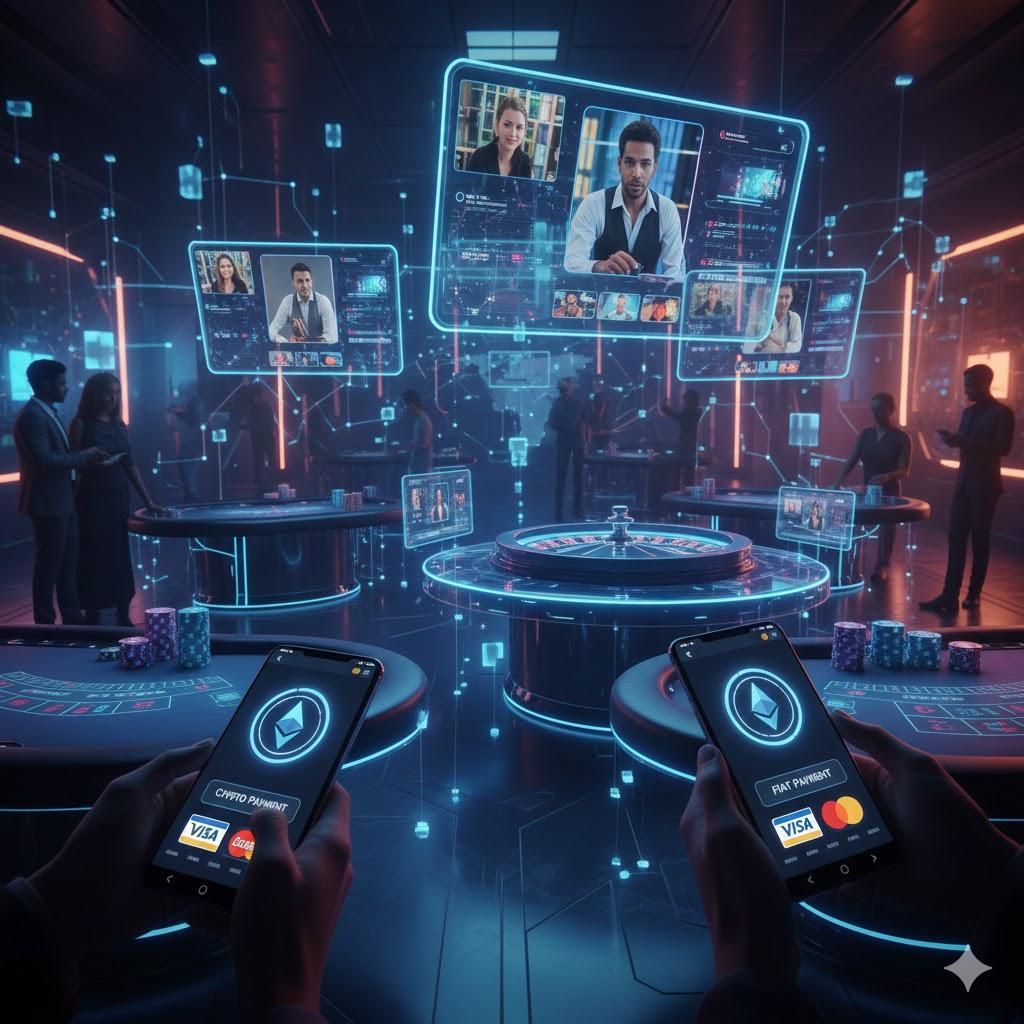
The online casino industry is no longer evolving in isolation. Many of its most noticeable innovations now mirror trends that have already reshaped modern video games — from immersive environments to player-centric design and adaptive systems. As expectations grow, casinos are increasingly borrowing mechanics, technologies, and UX principles from the broader gaming world to remain competitive.
One of the most significant shifts is how payment systems are being integrated into the overall player experience. Cryptocurrencies and digital wallets are no longer treated as purely financial tools but as part of seamless onboarding and progression flows. Faster transactions, reduced friction, and enhanced privacy align closely with what players already expect from modern online games, especially those built around instant access and global audiences.
Immersion has also become a defining focus. Live dealer games now resemble interactive multiplayer experiences rather than traditional broadcasts. High-quality streaming, real-time interaction, and emerging augmented reality elements are transforming familiar casino formats into experiences that feel closer to social gaming environments. Virtual reality casinos, while still developing, show clear influence from VR game design — emphasizing spatial presence, social interaction, and intuitive controls rather than simple visual novelty.
Mobile-first design further reinforces this crossover between games and casinos. Today’s players approach casino platforms much like mobile games: sessions are shorter, interfaces must be intuitive, and performance expectations are high. Platforms that prioritize responsive layouts, fast load times, and simplified navigation — such as https://www.wildfortune.io/ — reflect the same design priorities found in successful mobile gaming products.
Another area of convergence is player retention and responsible engagement. Instead of relying solely on bonuses or promotions, modern casino platforms increasingly use behavioral analytics, session management tools, and adaptive limits. These systems echo techniques used in game design to balance engagement and sustainability, ensuring players remain in control while still enjoying rewarding experiences.
Viewed through a gaming lens, the future of online casinos is less about isolated technological features and more about cohesive experience design. By adopting proven concepts from video games — immersion, accessibility, feedback loops, and player well-being — casino platforms are positioning themselves as interactive entertainment products rather than static gambling interfaces. This convergence is likely to define how players engage with casinos in the years ahead.