
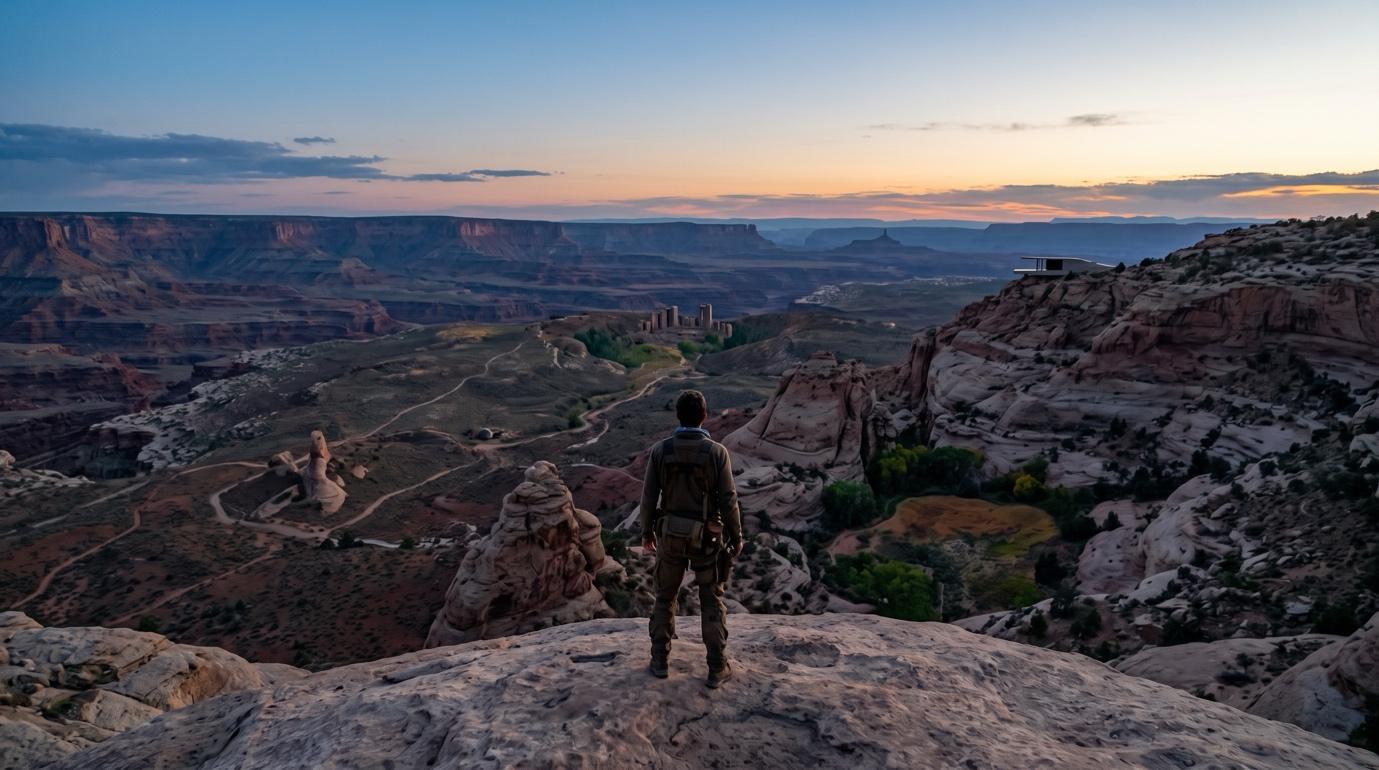
Some of the best moments in a game are the ones the player was never told to expect.
A narrow path behind a building leads somewhere interesting. A strange sound comes from a room that seemed unimportant. A distant mountain turns out to be reachable. Sometimes, even a completely ordinary-looking corner of a game world contains something worth finding.
That feeling of discovery is one of the reasons exploration has become such an important part of modern game design. Developers have become increasingly good at creating spaces that make players curious without constantly telling them where to go.
The Appeal Of Finding Things Yourself
There is a big difference between being shown something and discovering it.
When a game places a collectible directly in front of the player, there is little mystery involved. But when that same item is hidden behind a broken wall, at the end of an optional path or somewhere that requires paying attention to the surroundings, finding it feels personal.
The reward does not even have to be particularly valuable. A small piece of environmental storytelling can be enough.
A photograph, an abandoned room or a short conversation between two characters can explain something about the world without interrupting the main story. The player gets the satisfaction of putting the pieces together rather than having everything explained through a long dialogue sequence.
Open Worlds Changed Expectations
The growth of open-world games has pushed this idea much further.
Large maps are now common across many genres, but simply making a world bigger does not automatically make it more interesting. A huge map filled with identical activities can quickly become tiring.
Good exploration needs variation. A player should have reasons to wonder what is around the next corner.
That can come from unusual architecture, changing landscapes, hidden shortcuts, unexpected enemies or locations that look insignificant until the player gets closer. The strongest worlds often make the player forget that they are following a carefully designed path.
The experience also increasingly happens across different devices. Players may look up a map, watch a gameplay clip or check information about a game while away from their console or PC. For those using an iPhone on public or unfamiliar networks, they can see ExpressVPN's iOS download page for details.
Good Level Design Does Not Need To Shout
One of the more interesting developments is how quietly games can guide players.
A shaft of light through a doorway can suggest where to look. A character walking toward a distant structure can make the player curious about it. A change in colour, sound or architecture can indicate that something different is nearby.
None of these techniques require a large arrow pointing at the destination.
This is where careful game design becomes important. Small details can influence where players look and what they decide to investigate, often without them consciously noticing the work happening behind the scenes.
Exploration Can Change The Pace
Exploration also gives players room to breathe.
A game filled entirely with combat, missions and timed objectives can become exhausting. Walking through a quiet village, climbing a hill or searching an abandoned building creates a different rhythm.
These slower moments can actually make the more intense sections feel stronger. After spending time wandering through a peaceful area, entering a dangerous location can have a greater impact.
This is particularly effective when exploration is optional. The player chooses when to slow down rather than being forced into a lengthy detour.
Not Every Secret Needs A Reward
Modern games have also started challenging the idea that exploration must always lead to loot.
Sometimes the reward is simply seeing something unusual.
A developer might hide a tiny reference to another game, create a strange scene that has no practical purpose or place an unexpected view somewhere far away from the main route. These moments can become memorable precisely because they do not feel like another item on a checklist.
Players share screenshots and stories of these discoveries because they feel like their own experiences. Two people can finish the same game while remembering completely different details.
Why Curiosity Still Works
Technology will continue allowing developers to create larger worlds, better graphics and more complex systems. But the basic reason exploration works has not changed much.
People are curious.
Give players a door that looks slightly out of place and many will want to know what is behind it. Put something interesting on the horizon and they will wonder whether they can reach it. Leave part of a story unexplained and someone will start looking for answers.
The best exploration does not force that curiosity. It simply gives it somewhere to go.
And as games continue to grow in scale, that may become even more important. A memorable game world is not necessarily the one with the most content. It is the one that makes players want to look around and ask, “What is over there?”