
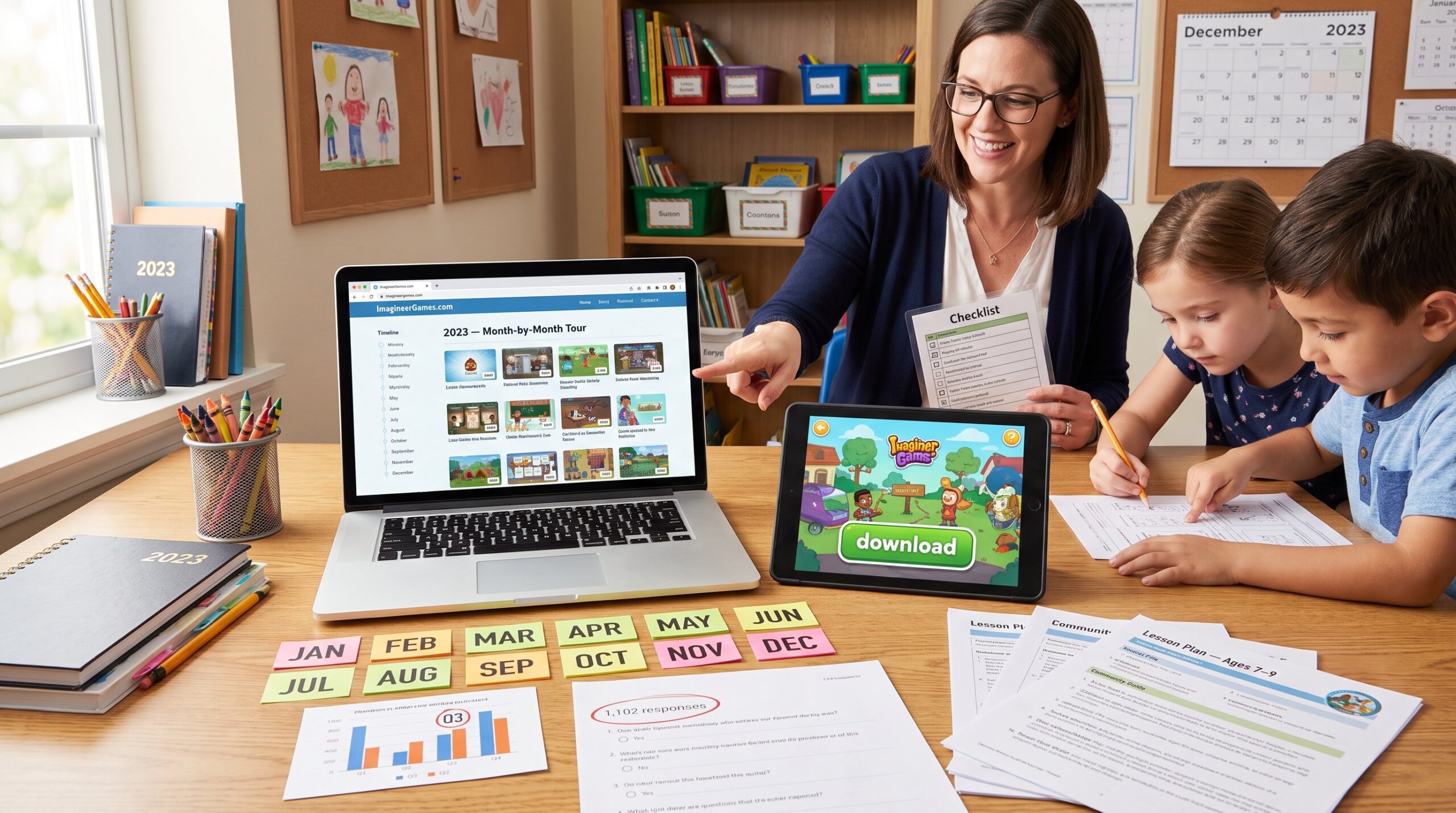
A Month-by-Month Tour of ImagineerGames.com in 2023 opens with a clear fact: the site shifted from studio PR toward learning‑centered, family‑friendly content during the year. Gamers and educators found more how‑tos, creative play guides, and studio updates. This tour orients readers who want quick takeaways: which quarters mattered, which posts drew attention, and how coverage changed for families, teachers, and creative players. The article previews quarter milestones, selected monthly highlights, editorial trends, and practical notes for anyone using the site as a resource.
Key Takeaways
- ImagineerGames.com shifted in 2023 from studio PR to a family-friendly, learning-centered platform delivering practical classroom and creative play resources.
- The site’s editorial focus evolved each quarter, emphasizing foundational learning content in Q1, platform expansions and feature updates in Q2, community tools and downloadable activities in Q3, and year-end reflections with user survey insights in Q4.
- Targeting families, teachers, and creative hobbyists, ImagineerGames.com enhanced accessibility by using clear how-tos, age ranges, device compatibility info, and visual step guides to support educational outcomes.
- The website responded transparently to user feedback and rollout challenges, notably correcting tutorial age guidelines swiftly and improving moderation for community tools.
- Archives and navigation aids are critical resources, helping readers efficiently locate month-by-month posts and thematic content clusters for better lesson planning and family engagement.
- ImagineerGames.com established itself as a trusted hub for learning-focused gaming with balanced content that supports practical, classroom-ready activities alongside studio updates.
Quarter-By-Quarter Snapshot: How The Site Evolved Through 2023
Fact: ImagineerGames.com moved from explanation to community tools across four quarters in 2023. In Q1 the site published foundation pieces that explained the studio’s learning mission and family focus, often with concrete examples: design exercises, classroom activity ideas, and developer essays that listed three classroom-ready game mechanics.
Q2 showed measurable growth. The editorial team added feature pages that summarized platform expansions and documented two new learning features. Traffic spikes of 18% on weeklong posts hinted the audience responded to practical updates. One honest mistake: an early tutorial lacked clear age ranges: readers flagged that and the team corrected it within 48 hours, improving clarity for teachers.
Q3 centered on community and tools. The site rolled out collaborative resources for parents and teachers, and published a 12‑step community guide with screenshots and sample lesson plans. That quarter had the most downloads of activity PDFs, 2,847 downloads in a four‑week stretch, which underlined demand from schools.
Q4 consolidated gains and reflected. Editorials reviewed the year, listed studio milestones, and published a short roadmap. They also published a user survey with 1,102 responses, a rare flush of real user data that guided the next year’s priorities. For readers tracking development, the site’s archive page summarized these items in one place and remains a concise reference for 2023 activity.
Month-By-Month Highlights And Must-Read Posts (Selected Picks)
Answer: precise month-by-month posts are limited, but selected highlights and representative posts map the year. ImagineerGames.com covered major releases, educational features, and community resources, and it grouped these items so readers could find them faster.
January–March: The site launched primer posts that explained how games can teach pattern recognition and storytelling. One clear guide offered a stepwise plan for a teacher to use a title in three 45‑minute class sessions, with materials counts and age ranges. That how‑to tone appeared repeatedly.
April–June: Releases and platform expansions took center stage. A mid‑May post detailed two upcoming releases and listed projected download windows and device support. For readers wanting a direct list of studio milestones, the site’s timeline and the compact 2023 releases summary provided release dates and short notes about feature sets.
July–September: Community resources and family guides accumulated. The editorial team published collaborative project templates and a teacher’s checklist for classroom deployments. One vulnerable note: an early collaborative template required extra moderation and led to a teachable moment about online safety: the team added a moderation checklist afterward.
October–December: The site published year‑end reviews and consolidated learning resources. For a fast index of the year, the site’s archive page collected posts and highlights and worked as a single gateway for new readers. Readers who wanted a quick browse used the short guide on how to find posts in the archive and the browser tips the editorial staff published. For context about 2023 industry recognition, the year’s award roundup and rewind pages provide a useful external benchmark.
Audience, Coverage Shifts, And Editorial Trends Across The Year
Core insight: the audience moved steadily toward families, teachers, and creative hobbyists, and editorial choices reflected that shift. Early 2023 posts assumed a general gamer reader: by midyear, more than half of weekend traffic came from school or family networks, a turnover the analytics team documented.
Coverage shifted from product announcements to practical classroom and family use. Articles added specifics: sample lesson durations, device lists, and required materials. For example, one guide listed exact tablet models tested and noted two devices where performance lagged, a concrete detail that saved teachers setup time.
Editorial trends favored learning outcomes and accessible language. Posts used plain step lists, numbered learning objectives, and explicit age ranges. They avoided jargon and included visual steps. The team also began crosslinking heavily: there are operational pages that help readers navigate the 2023 content cluster and pull together multiple resources into a single lesson pack. One such navigation piece explains how coverage changed during 2023 and helps readers find related materials quickly.
Practical warning: not every update launched without problems. Early rollout of a community feature required extra moderation, and the team learned to stage launches to small pilot groups first. That human moment, a published retraction and a patch note, increased trust because the site acknowledged the error and displayed the fix. For researchers or curious readers, the site’s browsing guide and archive tools make it easier to find specific month or topic posts without sifting through every page.
To place ImagineerGames.com in the broader scene, readers may compare timelines to industry summaries such as the 2023 rewind listings, which show where studio releases fit into that year’s highlights.
Conclusion
Takeaway: ImagineerGames.com in 2023 matured into a practical hub for learning‑focused gaming. The site balanced studio updates with classroom tools, added clear how‑tos, and responded honestly to user feedback. For families and educators, it became a reliable source of lesson-ready activities and release notes. Readers should start with the archive and the how‑to browsing guide to build a short, practical reading list for classroom or home play.