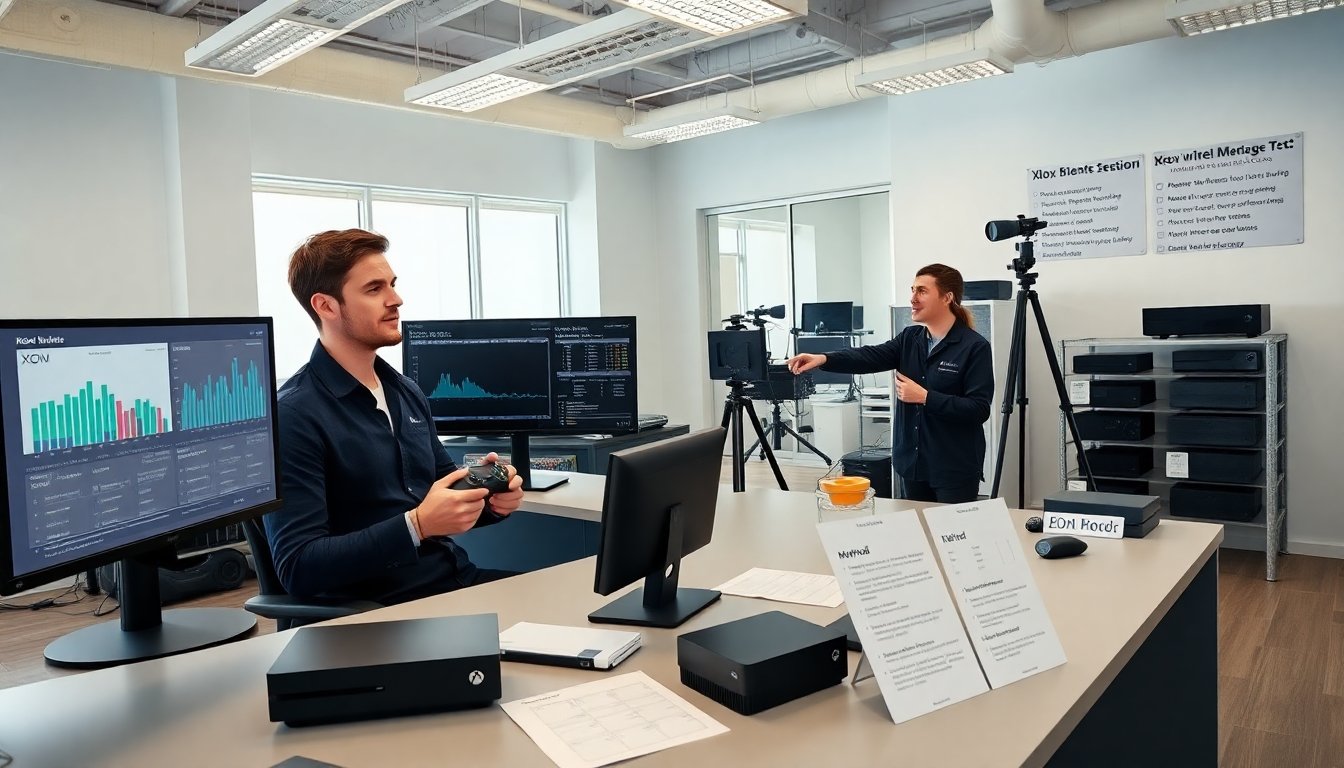

PlayStation ImagineerGames appear as Sony’s in-house studios that build experimental titles. They aim to test new ideas for hardware, social play, and storytelling. The teams ship small projects fast. They measure player response and refine features. The studio model shifts risk away from big-budget releases and toward steady innovation.
Key Takeaways
- PlayStation ImagineerGames are Sony’s in-house studios focused on rapid, experimental game development to innovate hardware, social play, and storytelling.
- These studios emphasize short cycles, player feedback, and data analytics to refine gameplay and quickly iterate on new ideas.
- ImagineerGames use tactile controls, adaptive triggers, and spatial audio to create unique, human-scale gaming experiences that evolve over time.
- Small teams test risky concepts in public betas, allowing players to enjoy fresh titles and developers to learn fast with low risk.
- The ImagineerGames model offers a new industry approach by enabling steady innovation and varied game catalogs without reliance on big budgets.
- For players, ImagineerGames deliver evolving, engaging experiences; for developers, they provide creative freedom; and for the industry, they inspire new development and update practices.
What PlayStation Imagineer Games Are And Their Mission
PlayStation ImagineerGames operate as creative labs inside Sony. They focus on short development cycles and bold experiments. The teams push hardware features and fresh interaction models. They also explore new camera uses, controller input, and live services. Their mission states that small teams can try risky ideas and learn quickly. Sony funds prototypes and watches player data. The studio leaders test features in public betas. They iterate based on real use. Players get unique experiences and quicker updates. Developers gain a place to fail fast and learn fast.
Signature Titles And Core Gameplay Innovations
PlayStation ImagineerGames often emphasize tactile controls and human-scale stories. They deliver games that use haptic feedback, spatial audio, and adaptive triggers in novel ways. Titles pair simple loops with layered systems that grow over time. The studios favor modular systems that allow live adjustments. They also build strong tools for creators inside the studios. Those tools speed up iteration and lower cost. PlayStation ImagineerGames release standalone experiments and seasonal modes. They rely on analytics to track retention, engagement, and monetization signals. The studios convert the best experiments into larger projects or persistent live games. This approach reduces waste and raises hit potential.
Case Study: A Deep Dive Into A Standout Imagineer Title
One Imagineer release combined motion control, shared rooms, and short story arcs. The game placed players in cooperative puzzles that required timing and touch. The team built a physics layer that responded to the controller’s pressure. Players reacted strongly to the tactile feedback. The studio rolled updates every two weeks and fixed balance issues quickly. The title grew from a demo to a 20-hour campaign with recurring events. PlayStation ImagineerGames used player data to tune difficulty and add new tools. The result showed how small teams can scale an experimental idea into a full product.
How Imagineer Studios Approach Creative Development
Imagineer teams work in short cycles. They prototype features in days and ship playable builds within weeks. They use clear metrics to decide which ideas continue. Teams keep scope small and focus on one core mechanic. They document experiments and share learnings across studios. Leaders run playtests and gather direct feedback from players. They use internal sandboxes to test hardware features early. The studios also partner with external creators for fresh voices. PlayStation ImagineerGames encourage cross-discipline collaboration between designers, engineers, and sound teams. This setup speeds learning and increases creative output.
What Imagineer Games Mean For Players, Developers, And The Industry
For players, PlayStation ImagineerGames offer fresh play styles and steady updates. Players find short experiences that evolve over time. For developers, the studios provide low-risk spaces to try new systems. Teams learn fast and build proof points. For the industry, the model shows a different path to innovation. Publishers can fund experiments without huge budgets. The model also creates more varied game catalogs and new talent pathways. PlayStation ImagineerGames may push other studios to adopt similar lab structures. They may also change how players expect updates and community input in game design.