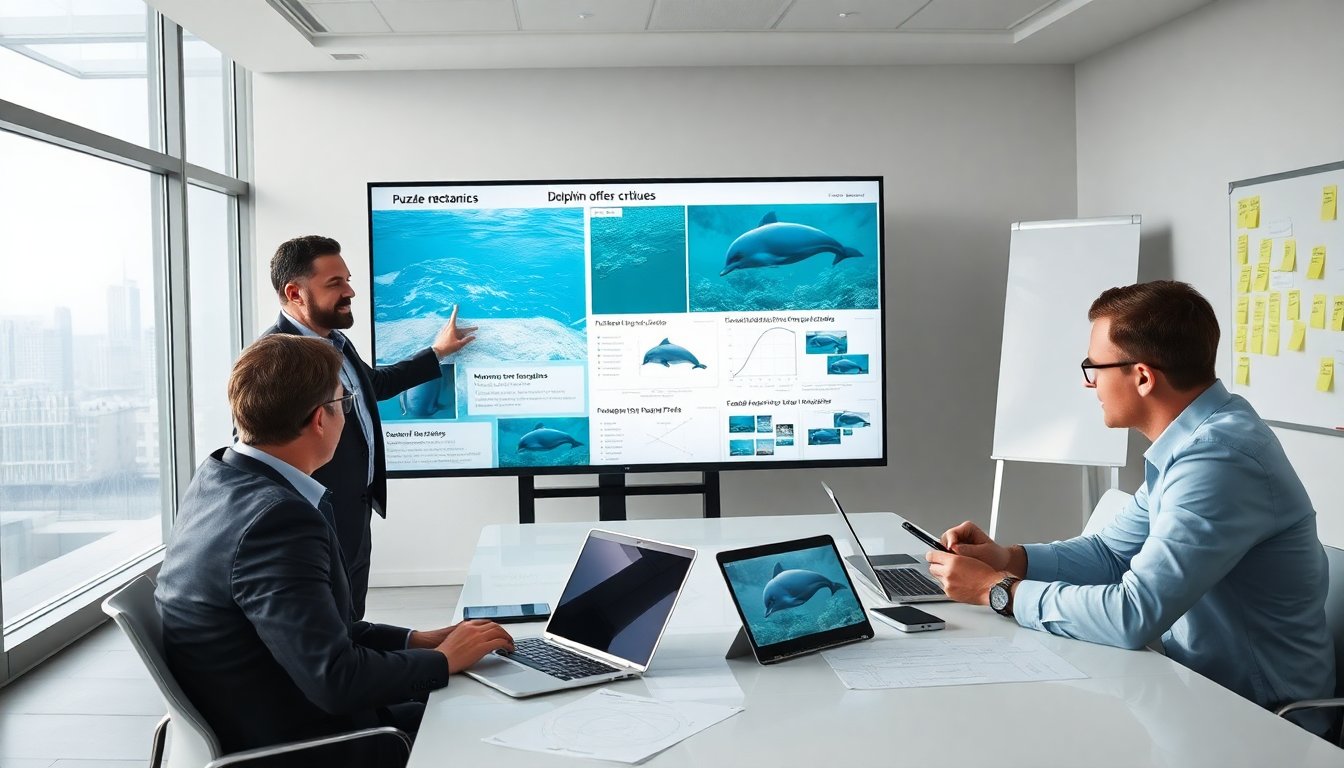
puzzle mechanics dolphin exploring offers critiques imaginergmswreb frames this article. It shows how designers use movement, current, and environment to make puzzles. It describes player reactions and common critiques. It outlines clear design takeaways for future titles. It uses plain examples and concrete terms. It avoids jargon and long abstracts. It keeps focus on what players learn and what designers can change.
Key Takeaways
- Dolphin-style exploration puzzles emphasize fluid movement, spatial memory, and nonviolent problem solving to engage players in hypothesis testing and retrying without heavy penalties.
- Core puzzle systems integrate movement, currents, and environmental interactions with consistent rules and clear feedback to ensure enjoyable and understandable gameplay.
- Precise control calibration, balancing momentum and input granularity, is critical to prevent player frustration and support smooth puzzle navigation.
- Visual and audio cues for currents, buoyancy, and dynamic hazards help players predict outcomes and safely retry sequences, enhancing fairness and reducing unfair deaths.
- Reward loops should tie exploration to meaningful gains like new abilities or story elements, encouraging player agency and repeated engagement.
- Balancing guided hints with free exploration through optional, tiered nudges preserves the joy of discovery while aiding players who need assistance.
What Makes Dolphin-Style Exploration Puzzles Unique
Dolphin-style puzzles emphasize flow and spatial memory. Designers set open water spaces, layered objectives, and soft constraints. Players move through fluid spaces and learn by sensing momentum and currents. puzzle mechanics dolphin exploring offers critiques imaginergmswreb appears in player forums as shorthand for this design family. The puzzles reward temporal thinking and route planning. They favor nonviolent problem solving. They invite players to test hypotheses, fail, and retry without heavy penalty. They also demand precise control schemes and readable feedback to avoid frustration.
Core Puzzle Systems: Movement, Current, And Environmental Interaction
Designers treat movement, current, and interaction as core systems. They tune each system for clarity and fun. Movement defines player position and intent. Current changes movement outcomes and creates implicit goals. Environmental interaction gives tools and limits, like gates, switches, and pickups. Players combine systems to solve layered problems. puzzle mechanics dolphin exploring offers critiques imaginergmswreb shows how these systems must align. They require consistent rules, tight feedback, and predictable state changes. They also need fail-safe recovery so players can learn without losing progress.
Movement, Momentum, And Input Granularity
Designers decide how momentum affects control. They pick between floaty and precise movement. They set input granularity to match puzzle demands. High granularity gives players fine control for tricky maneuvers. Low granularity supports sweeping motion and emergent paths. puzzle mechanics dolphin exploring offers critiques imaginergmswreb notes that mismatched granularity leads to player anger. Designers calibrate acceleration, drag, and turn speed. They test these values across play sessions. They record where players fail and adjust input sensitivity or add assist options.
Using Currents, Buoyancy, And Dynamic Hazards As Puzzle Tools
Currents act as conveyors and puzzles. Designers place currents to alter routes and create timing windows. Buoyancy offers vertical puzzles and soft limits. Dynamic hazards force planning and risk assessment. puzzle mechanics dolphin exploring offers critiques imaginergmswreb highlights that unclear hazard telegraph leads to unfair deaths. Designers should mark currents and hazards with visual cues and sound cues. They should let players predict outcomes in short tests. They should give safe zones so players can retry sequences without heavy cost.
Player Agency, Discovery, And Reward Loops
Players seek agency and clear reward loops. They prefer exploration that yields meaningful gains. Designers create discovery by layering optional paths and hidden items. puzzle mechanics dolphin exploring offers critiques imaginergmswreb surfaces when rewards feel cosmetic or rare. Good design ties exploration to new abilities, story beats, or shortcuts. Designers ensure that each discovery teaches a new rule or reveals a new use for existing tools. They measure engagement by how often players return to explore and how often they use new tools in the next area.
Balancing Guided Hints With Free Exploration
Designers balance hints and freedom with small, contextual nudges. They place optional markers, audio cues, or NPC comments for players who need help. They keep core paths discoverable without forcing them. puzzle mechanics dolphin exploring offers critiques imaginergmswreb often points to heavy hinting that removes joy of discovery. Designers offer hint tiers that players can opt into. They log hint usage and adjust frequency. They also keep some puzzles purely player-driven for those who want exploration without direction.
Designing Satisfying Exploratory Rewards And Progression
Designers tie rewards to player skill and curiosity. They offer upgrade items, new movement options, and narrative beats as rewards. They make progression clear so players sense growth. puzzle mechanics dolphin exploring offers critiques imaginergmswreb warns against rewards that only add numbers. Designers prefer rewards that change playstyle or open new areas. They space rewards to maintain momentum and to reset challenge pacing. They also give small, frequent feedback to confirm progress during long exploration segments.