
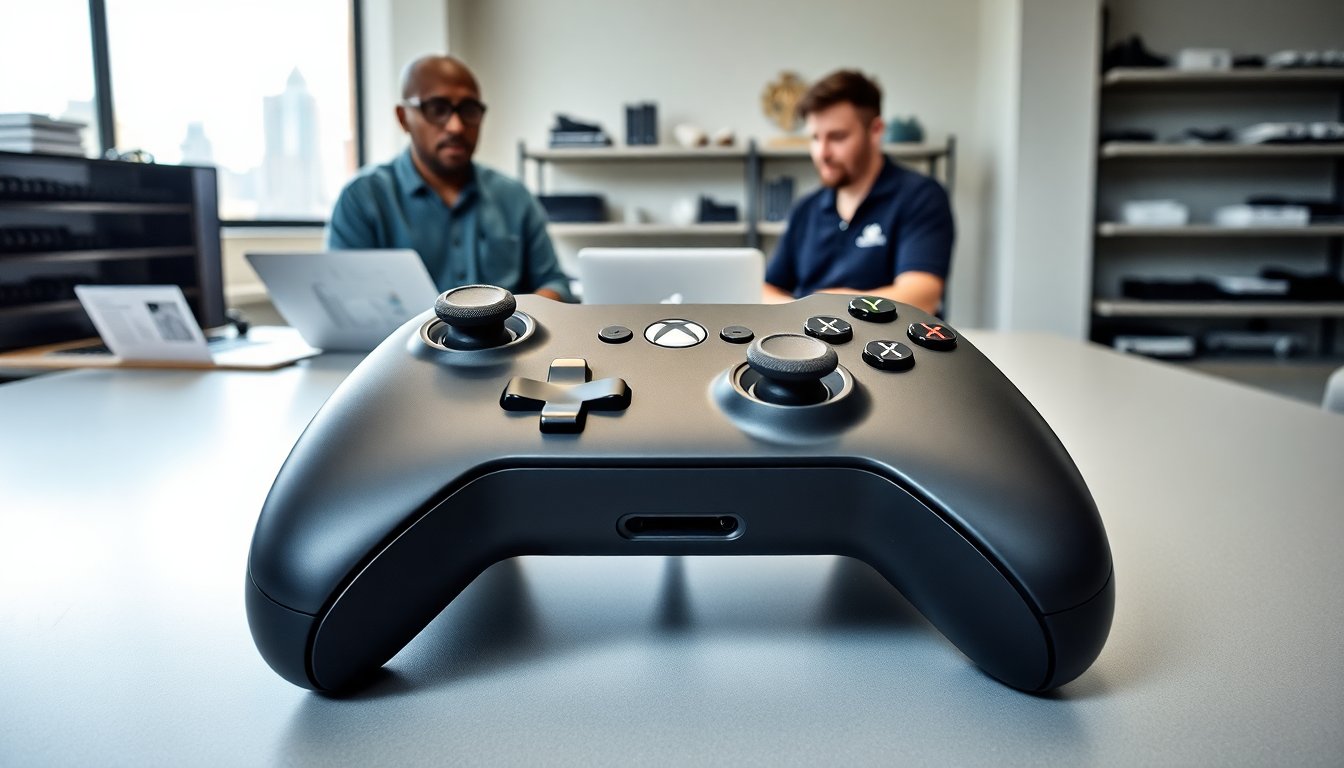
Xbox controller design appears early in this guide. It sets the expectations for comfort, input, and tech. The text tracks changes from the first pads to 2026 models. It shows how designers balance shape, materials, and features. It highlights choices that affect feel, latency, and accessibility. The reader will get clear examples and practical facts.
Key Takeaways
- Xbox controller design has evolved through iterative improvements focusing on comfort, input precision, and low latency across generations since 2001.
- Modern Xbox controllers use ergonomic shapes, textured plastics, and advanced materials to optimize grip, weight balance, and durability.
- Input layout remains consistent with thoughtful placement of sticks, buttons, and triggers to enhance natural hand positioning and responsiveness.
- Customization grows with modular Elite models allowing players to swap parts and program controls to personalize their experience.
- Accessibility features like remappable buttons, adaptive triggers, and software adjustments broaden play for diverse users.
- Future Xbox controller design emphasizes sustainability, advanced haptics, machine learning integration, and longer device lifespans to balance performance and eco-friendliness.
Evolution Of Xbox Controller Design: Key Milestones And Design Philosophy
The original Xbox controller design launched in 2001. Microsoft aimed to match console power with a strong input device. The hefty first controller taught designers that size matters. They redesigned the pad into the more compact S controller. Xbox controller design shifted again with the 360 model. It focused on better ergonomics and tighter button spacing. The Xbox One controller refined analog triggers and vibration feedback. The company added wireless stability and improved D-pad control. The Xbox Series controller kept core thumbstick placement. It reduced input latency and made small ergonomic tweaks. Each generation showed a constant design goal. Designers sought comfortable hold, consistent reach, and clear feedback. They measured hand sizes and tested grips. They used player tests and lab data. They adjusted stick tension, trigger travel, and bumper shape. They traded radical change for steady improvement. The term “Xbox controller design” became associated with iterative refinement. By 2026, the focus moved to modularity and low-latency wireless. The Elite line pushed customization. The Elite controllers let players swap sticks, change triggers, and program buttons. That move broadened the concept of controller design. It made hardware more personal and more varied.
Anatomy Of A Modern Xbox Controller: Materials, Ergonomics, And Input Layout
A modern Xbox controller design uses several materials. The shell often uses textured plastic for grip. Soft-touch coatings appear on high-end models. Internal frames use lightweight composites to keep weight low. Designers place components to balance the device. They position batteries and motors near the center. They place circuit boards to avoid flex and to reduce noise. Ergonomics drives the outer shape. Engineers model hand positions. They choose thumbstick height for natural thumb angles. They select trigger curve to match finger motion. They size the grips for common hand lengths. Input layout follows a consistent scheme. Left stick sits higher and closer to the d-pad. Right stick sits lower to match thumb rest. Face buttons follow the A-B-X-Y pattern with minimal travel. Shoulder buttons sit above the index fingers. Triggers use hall-effect sensors in newer models. Those sensors reduce wear and improve response. Haptic motors vary by model. Some controllers use multiple motors for nuanced feedback. Others include adaptive triggers for resistance changes. Connectivity affects design choices. Wired controllers focus on low latency and power. Wireless controllers add antennas and batteries. Designers place these parts to preserve balance. Battery doors and USB ports sit where the hands do not rest. They reduce accidental presses. The phrase “xbox controller design” applies to each choice. Each material and layout choice changes feel and function. They test for durability, drop resistance, and button lifespan. They also run environmental tests for temperature and humidity. The result aims for a controller that feels familiar and precise.
Design Trade-Offs, Accessibility, And The Future Of Xbox Controller Innovation
Designers face clear trade-offs in xbox controller design. They balance weight against durability. They balance feature count against simplicity. They choose between fixed shapes and modular parts. Modularity adds cost and complexity. Simpler designs lower cost and improve reliability. Accessibility shapes modern choices. Microsoft added the Adaptive Controller to expand play access. Designers now include remappable buttons and back paddles in mainstream models. They add adjustable trigger sensitivity and shorter actuation options. They add software options for button mapping and stick dead zones. These features reduce barriers for players with different needs. Battery life and latency remain top concerns. Designers optimize power draw and radio efficiency. They adopt low-latency wireless protocols and fast recharge options. They experiment with new haptics and force feedback to increase immersion. Future xbox controller design will likely include more on-device processing. Designers may include machine learning to adapt input curves to player style. They may also expand biometric sensing for comfort and control adjustments. Sustainability will influence material choices. Manufacturers will use recycled plastics and easier disassembly for repair. They will design controllers for longer life and easier part replacement. The Elite line and third-party makers will continue to push customization. That trend will let pro players and hobbyists tune their controllers deeply. Overall, xbox controller design will keep balancing comfort, performance, and access. Designers will keep testing real players and real use to guide each change.