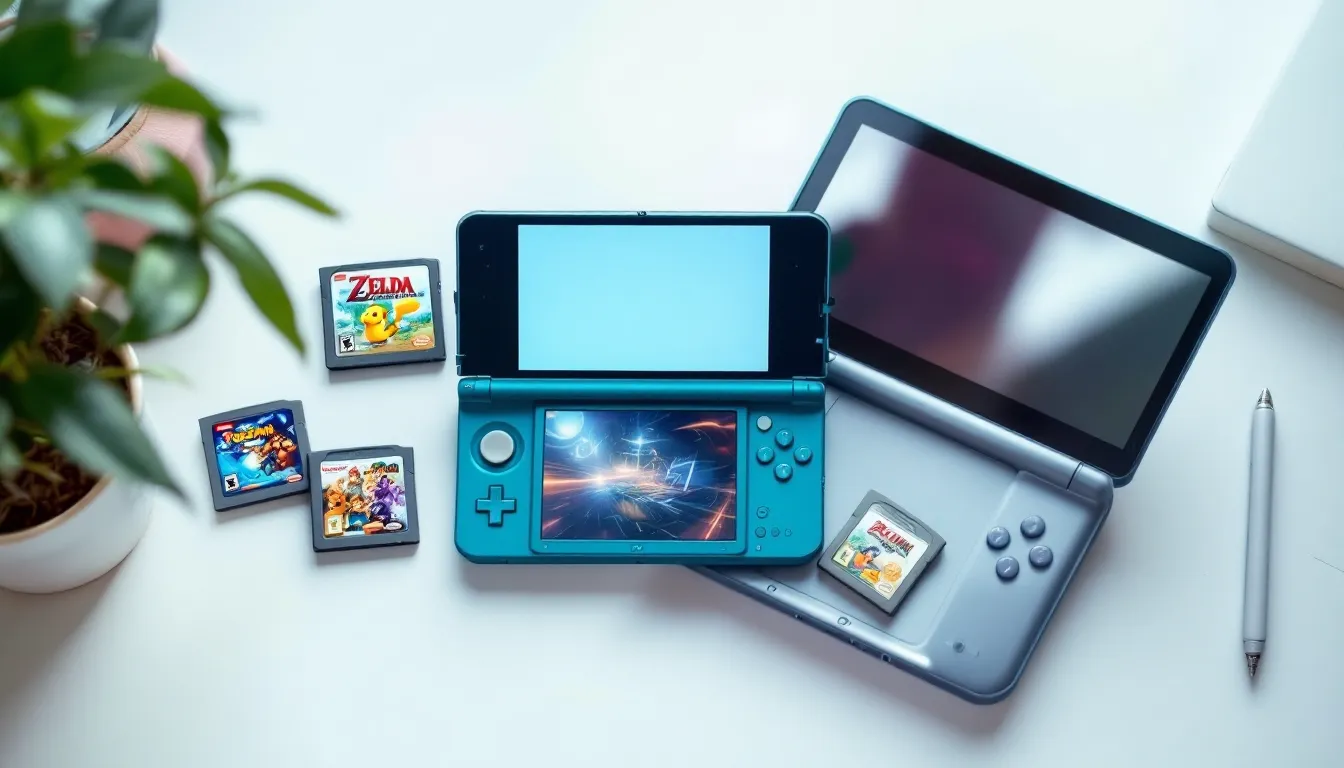
The Nintendo 3DS might not be in production anymore, but its library remains one of the most beloved in handheld gaming history. With over 1,000 titles spanning genres from tactical RPGs to mind-bending puzzle games, the 3DS earned its place as a cornerstone of Nintendo’s portable legacy. Whether you’re dusting off your old system or hunting for deals on the eShop before it’s gone, knowing which games deserve your time, and your storage space, matters more than ever.
This guide cuts through the noise to highlight the absolute best Nintendo 3DS games you can play in 2026. We’re talking genre-defining RPGs, inventive platformers, hidden gems that flew under the radar, and exclusives you literally can’t experience anywhere else. If you’ve got a 3DS sitting in a drawer or you’re building a collection from scratch, these are the titles that justify powering on that dual-screen wonder.
Key Takeaways
- The best Nintendo 3DS games showcase exclusive experiences like A Link Between Worlds, Fire Emblem Awakening, and Kid Icarus: Uprising that remain unmatched on modern platforms due to unique dual-screen and 3D mechanics.
- The 3DS eShop is on life support with no direct credit card purchases allowed since 2022, making 2026 the critical time to build your collection before digital access becomes impossible.
- Action-adventure and RPG standouts including Metroid: Samus Returns, Bravely Default, and Pokémon Ultra Sun and Ultra Moon deliver deep, skill-based gameplay and rich narratives that justify revisiting the handheld system.
- Physical cartridges remain the safest long-term investment for 3DS preservation, as prices are gradually climbing but haven’t reached full retro pricing—making now the optimal window to acquire must-play titles.
- Hidden gems and lesser-known titles like Pushmo, Shovel Knight, and Fantasy Life prove the 3DS library extends far beyond first-party franchises, offering diverse genres and innovative gameplay that rival current-generation offerings.
Why the Nintendo 3DS Library Still Matters in 2026
In an era dominated by the Switch and Steam Deck, you’d think the 3DS would fade into obscurity. But it hasn’t. The system’s library is packed with experiences you simply can’t get on modern hardware, stereoscopic 3D gameplay, dual-screen mechanics, and a roster of exclusives that Nintendo hasn’t bothered (or been able) to port.
The 3DS also sits at a unique crossroads in gaming history. It bridged the gap between the DS’s experimental touch controls and the Switch’s hybrid model. Games like Kid Icarus: Uprising and The Legend of Zelda: A Link Between Worlds used both screens in ways that made perfect sense on 3DS but would require total redesigns elsewhere.
Plus, let’s be real: the eShop’s days are numbered. Nintendo officially shut down the ability to add funds via credit card back in 2022, and while you can still redownload purchases, the writing’s on the wall. If you’re going to build or complete your collection, 2026 is the time to do it. Physical carts are still affordable for most titles, and the aftermarket hasn’t hit retro pricing yet, though it’s creeping that direction for certain heavy hitters.
The 3DS library also rewards patient gamers. Many of its best titles are slow burns, deep RPGs, narrative-driven adventures, and strategy games that don’t respect your time in the best way possible. It’s the anti-mobile gaming experience, which is ironic given it’s a handheld.
Best Action-Adventure Games for Nintendo 3DS
The Legend of Zelda: A Link Between Worlds
This is the gold standard for 3DS action-adventure, and it’s not even close. A Link Between Worlds takes the top-down Zelda formula from A Link to the Past and flips it inside out, literally. Link’s ability to merge into walls as a 2D painting transforms exploration and puzzle-solving in ways that feel fresh even a decade after release.
What makes it stand out? The game ditches the traditional linear dungeon progression. You can tackle most dungeons in any order you want by renting (or buying) key items from Ravio’s shop. This nonlinear structure respects player choice and replayability in a way few Zelda games do. The difficulty curve is tuned perfectly for both newcomers and veterans, and Lorule, the dark mirror world, delivers some genuinely clever environmental storytelling.
Performance is buttery smooth at 60fps, even in 3D mode. The art style, a painterly take on classic Zelda aesthetics, has aged beautifully. If you only play one action-adventure game on 3DS, make it this one.
Metroid: Samus Returns
MercurySteam’s remake of Metroid II: Return of Samus is a masterclass in modernizing a Game Boy classic. Metroid: Samus Returns introduces the melee counter mechanic that would later define Metroid Dread, and it completely changes combat pacing. Enemies telegraph attacks, you counter, blow them away with a point-blank shot, it’s visceral and satisfying.
The game also adds Aeion abilities (temporary powers like scan pulses and shields) that layer new strategic depth onto exploration. SR388’s labyrinthine caves feel claustrophobic and hostile in the best Metroid tradition, and the 3D effect actually enhances depth perception during platforming sequences.
Fair warning: this one’s tough. Boss fights, especially against the Metroid variants, demand pattern recognition and precise timing. It’s not Dread-level punishing, but casual players might bounce off the difficulty spikes. Still, for fans of tight, skill-based action-adventure, it’s essential.
Top RPGs That Define the 3DS Experience
Pokémon Ultra Sun and Ultra Moon
Gen 7’s definitive edition remains the pinnacle of Pokémon on 3DS. Pokémon Ultra Sun and Ultra Moon refine the Alola experience with expanded post-game content, the Rainbow Rocket episode, and the Ultra Wormhole minigame for hunting legendaries and shinies. The tropical setting, trial system (replacing traditional gyms), and Alolan forms inject freshness into a formula that was starting to feel stale.
What puts Ultra Sun/Moon over the original versions? The tweaked story is more coherent, the difficulty is slightly higher (still not hard, but you’ll actually need to think about type matchups), and Mantine Surfing is oddly addictive. Plus, the Rotom Dex is less annoying here, marginally.
The one major caveat: performance. The 3DS hardware struggles during double battles and Totem fights, with frame drops that can be jarring. Play on a New 3DS if you can: the improved CPU helps smooth things out. Even though technical hiccups, this is the most fully-featured Pokémon RPG on the platform.
Fire Emblem Awakening
This game saved Fire Emblem from obscurity in the West. Fire Emblem Awakening nails the balance between accessibility and tactical depth, introducing Casual Mode (permadeath off) alongside Classic Mode for purists. The marriage and child unit mechanics add long-term strategic planning, pair the right units, and their offspring inherit killer skill combinations.
The story leans into anime tropes hard (amnesiac protagonist, time travel, the power of friendship), but it’s earnest enough to work. Characters like Chrom, Lucina, and Tharja have become franchise icons for good reason, they’re written with enough personality to make you care when they’re in danger.
Replay value is massive thanks to multiple difficulty tiers, support conversation variations, and the addictive loop of min-maxing unit builds. The DLC maps (if you can still grab them) extend playtime significantly. Even in 2026, Awakening holds up as one of the best entry points into tactical RPGs.
Bravely Default
Square Enix’s love letter to classic JRPGs like Final Fantasy V is a breath of fresh air if you’re tired of action RPG bloat. Bravely Default builds its entire combat system around the Brave and Default mechanics: bank turns by defending, then unleash multiple actions in a single turn. It’s simple on paper but opens up wild strategic possibilities, especially in boss fights.
The job system is deep, with 24 classes to mix and match. Want a knight who can cast black magic? A white mage with thief abilities? Go for it. The game encourages experimentation, and breaking encounters wide open with optimized job combos is half the fun.
The plot has some pacing issues, Chapter 5 through 8 involve repetitive backtracking that tests patience, but the payoff is worth it. The soundtrack, composed by Revo, is phenomenal. Tracks like “That Person’s Name Is” are instant classics. If you can stomach the mid-game slog, Bravely Default delivers one of the richest JRPG experiences on 3DS.
Must-Play Platformers and Side-Scrollers
Super Mario 3D Land
Nintendo’s first attempt at fusing 2D Mario design philosophy with 3D movement is a showcase for what the 3DS could do. Super Mario 3D Land uses stereoscopic 3D not as a gimmick but as a core gameplay tool, judging jump distances and spotting hidden platforms is noticeably easier with the slider cranked up.
The level design is immaculate. Each stage is bite-sized (perfect for handheld play) but packed with secrets, Star Medals, and alternate paths. The difficulty ramps beautifully from breezy early worlds to the genuinely challenging Special Worlds unlocked after beating Bowser. Special 8-Crown is a legit test of platforming skill.
Tanooki Mario returns as the signature power-up, and the game’s obsession with flagpole-top finishes adds a speedrunning layer for perfectionists. It’s not the deepest Mario, but it’s one of the most polished. If you’re showing someone what the 3DS can do, this is a top contender.
Donkey Kong Country Returns 3D
Retro Studios’ Wii classic got a stellar 3DS port that adds a new world (Cloud) and tweaks difficulty with an optional extra heart. Donkey Kong Country Returns 3D is punishingly hard in the best way, precise platforming, relentless enemy placement, and mine cart levels that demand frame-perfect inputs.
The visual downgrade from Wii to 3DS is noticeable but not deal-breaking. What matters is the level design, which remains some of the best in any 2D platformer. Collecting KONG letters and puzzle pieces requires exploration and skill in equal measure. The game also ditches waggle controls for button inputs, which is a massive improvement if you hated the Wii version’s motion gimmicks.
Co-op is gone in this version, so it’s a solo experience. But for anyone who wants a meaty, challenging platformer that doesn’t hold your hand, DKC Returns 3D delivers.
Best Story-Driven and Narrative Games
Phoenix Wright: Ace Attorney Trilogy
Capcom’s visual novel courtroom drama series remains one of the most engaging narrative experiences in gaming. Phoenix Wright: Ace Attorney Trilogy bundles the first three games, each featuring multiple cases where you investigate crime scenes, interview witnesses, and cross-examine testimonies to expose contradictions.
The writing is sharp, funny, and occasionally heartbreaking. Characters like Maya Fey, Miles Edgeworth, and Franziska von Karma are instantly memorable, and the cases range from lighthearted (defending a mascot accused of murder) to genuinely dark (the final case of the first game is a masterclass in narrative payoff).
Gameplay is straightforward, present evidence, press statements, shout “Objection.” at the right moments, but the real hook is the storytelling. The games respect your intelligence, rarely hand-holding through solutions. If you’ve never played Ace Attorney, this trilogy is the definitive way to experience it. Critical reception from outlets like IGN consistently highlights the series as a benchmark for narrative-driven games.
Professor Layton and the Miracle Mask
Level-5’s puzzle-adventure series hit the 3DS with Professor Layton and the Miracle Mask, blending brain-teasers with a charming story about a masked villain terrorizing the city of Monte d’Or. The shift to 3D character models was divisive among longtime fans, but the core formula, explore environments, solve self-contained puzzles, unravel the mystery, remains intact.
The puzzles range from logic grids to sliding block challenges to visual riddles. Some are genuinely tough: others feel like filler. But the presentation is top-tier. Animated cutscenes (fully voiced) punctuate key story beats, and the European setting oozes charm.
What elevates Miracle Mask is its narrative structure. The game alternates between present-day Layton and flashbacks to his school days, slowly revealing the connection between past and present. It’s not as tight as Unwound Future, but it’s a worthy entry that shows how well puzzle games can tell stories when they commit to it.
Hidden Gems and Underrated Titles
Pushmo/Pullblox
Intelligent Systems’ eShop exclusive is proof that you don’t need a massive budget to create something brilliant. Pushmo (called Pullblox in Europe) is a puzzle game where you manipulate colorful blocks to create platforms, reaching a goal at the top of each structure. The concept is dead simple: the execution is genius.
Early puzzles ease you in, but later stages demand spatial reasoning that’ll make your brain hurt in the best way. The 3D effect is perfectly utilized here, depth perception is crucial when figuring out which blocks to push or pull. The game also includes a level editor with QR code sharing, which spawned a community of custom puzzle creators.
For a budget eShop title, Pushmo has an absurd amount of content. Hundreds of puzzles, increasing complexity, and that “one more puzzle” loop that keeps you playing way past bedtime. If you skipped it because it looked like a kid’s game, you missed out on one of the 3DS’s smartest experiences.
Shovel Knight
Yacht Club Games’ Kickstarter darling is an NES throwback done right. Shovel Knight nails the feel of 8-bit classics like Mega Man and DuckTales while adding modern quality-of-life tweaks, checkpoints that you can optionally destroy for extra rewards, tight controls, and a bouncing shovel attack that feels incredible.
The 3DS version includes all the DLC campaigns, Plague of Shadows, Specter of Torment, King of Cards, making it one of the most complete packages available. Each campaign remixes the core game with new playable characters, movesets, and storylines. The pixel art is gorgeous, and Jake Kaufman’s chiptune soundtrack is an all-timer.
It’s worth noting that Shovel Knight is available on pretty much every platform at this point. But the 3DS version has a certain charm, playing it on the system that shares its spiritual DNA with the NES just feels right. Plus, according to GameSpot, the portable format suits the game’s level-based structure perfectly.
Best Multiplayer and Party Games
Mario Kart 7
The first portable Mario Kart with proper online multiplayer remains a blast in 2026. Mario Kart 7 introduced gliding and underwater segments that added verticality to track design. Tracks like Maka Wuhu and Rainbow Road (both the new and SNES versions) are franchise highlights, with shortcuts and alternate routes that reward exploration.
Online play is surprisingly still active, though you’ll run into the occasional hacker. Local multiplayer supports Download Play, so only one person needs a cart for up to eight players, a killer feature for road trips or game nights. The kart customization system (mix-and-match bodies, wheels, and gliders) adds a light meta-game for stat optimization.
Item balance is mostly solid, though the dreaded Blue Shell and Lightning combos can still ruin a lead. The 3D effect works well here, helping with depth perception on jumps and glider sections. It’s not Mario Kart 8 Deluxe, but it’s the best kart racer the 3DS has, and that counts for a lot.
Super Smash Bros. for Nintendo 3DS
Bringing Smash to a handheld was ambitious, and Sakurai’s team mostly pulled it off. Super Smash Bros. for Nintendo 3DS packs the full roster from the Wii U version, 49 fighters if you grabbed all the DLC, into a portable package. The controls take adjustment (Circle Pad instead of a full analog stick is rough for precise inputs), but muscle memory kicks in after a few matches.
Smash Run mode is a 3DS exclusive: a five-minute dungeon crawl where you power up your fighter before a final showdown. It’s chaotic and random, but fun in short bursts. Classic Mode, All-Star, and online play round out the modes. Online can be laggy depending on connections, but local multiplayer is rock-solid.
The biggest knock? Lack of proper stage builder and the limited stage selection compared to Wii U. But for Smash on the go, it’s hard to beat. It’s wild that a handheld was running a full-fledged Smash game back in 2014, and it still holds up. If you’re debating between handheld platforms, the Nintendo Switch 2 will obviously offer more power, but the 3DS version has its own charm.
Exclusive Games You Can Only Play on 3DS
This is where the 3DS library really shines, games that haven’t been ported and probably never will be due to hardware quirks or licensing limbo.
Kid Icarus: Uprising is the poster child for 3DS exclusivity. Sakurai’s on-rails shooter/ground combat hybrid uses stylus aiming, gyro controls, and AR card battles in ways that make it nearly impossible to port without a total redesign. The controls are divisive (hand cramps are real), but the gameplay is frenetic and the dialogue is genuinely funny. It’s also one of the few games where the 3D effect enhances aiming.
Theatrhythm Final Fantasy: Curtain Call is the ultimate Final Fantasy music game, featuring over 200 tracks from across the series. Rhythm gameplay is mapped to stylus swipes and taps, and the Quest Medley mode is absurdly addictive. Square Enix hasn’t brought this to modern platforms, so if you want the definitive FF rhythm experience, 3DS is your only option.
WarioWare Gold compiles the best microgames from the entire series and adds full voice acting. It’s pure, condensed chaos, five-second challenges that demand instant reflexes and pattern recognition. The variety is insane, and the Warioware aesthetic is in full force. Other platforms have WarioWare games, but Gold is stuck on 3DS.
Fantasy Life is Level-5’s underrated life sim/action RPG hybrid. You pick from 12 Life classes (Paladin, Wizard, Blacksmith, Angler, etc.) and explore a vibrant world, completing quests, crafting gear, and battling monsters. The DLC expansion adds significant post-game content. It’s got cult classic status, and fans have been begging for a port for years.
These exclusives are part of why the 3DS library is worth preserving. Once the eShop is fully shuttered and physical carts become scarce, access to these games will rely on the secondhand market and, let’s be honest, emulation.
How to Build Your 3DS Game Collection in 2026
Building a 3DS collection in 2026 requires strategy. The eShop is on life support, you can’t add funds directly anymore, but you can still use Nintendo Account balance from the Switch eShop (merge your accounts if you haven’t). Digital games are still downloadable if you bought them previously, but new purchases are tricky. Act fast if there’s something you want digitally.
Physical carts are the safer long-term bet. GameStop, local game stores, and online marketplaces still have solid stock for most titles. Prices are creeping up for heavy hitters like Fire Emblem Fates: Special Edition, Pokémon HeartGold/SoulSilver (DS, but plays on 3DS), and Yo-Kai Watch 3. Common advice: buy now before retro pricing kicks in fully.
Prioritize these categories when building your library:
- First-party Nintendo exclusives: Zelda, Mario, Pokémon, Fire Emblem, Metroid. These are system-sellers for a reason.
- Genre staples: Grab at least one top-tier RPG, platformer, and action-adventure. Variety keeps the system fresh.
- Hidden gems and eShop titles: Download Pushmo, BoxBoxBoy., Pocket Card Jockey, and SteamWorld Dig before the eShop closes for good.
- Backward compatibility: Don’t forget DS games. Classics like The World Ends With You, Chrono Trigger, and Pokémon Black/White all play on 3DS hardware.
Region locking is still a thing on 3DS, so if you’re importing, make sure your system matches the cart’s region. Homebrew can bypass this, but that’s a rabbit hole with its own risks and considerations.
Condition matters for physical carts. Check for label damage, test the cart before buying if possible (especially from local sellers), and keep an eye on seller ratings for online purchases. Reproductions and bootlegs are creeping into the market, particularly for high-value titles.
If you’re curious about expanding your collection beyond 3DS, exploring titles for platforms like the Nintendo Switch can offer a natural next step. For serious collectors, tracking down complete-in-box copies with inserts and Club Nintendo codes (though those are long expired) adds value. But if you just want to play the games, loose carts are fine and significantly cheaper.
Finally, consider system condition. The New 3DS XL is the best hardware revision, better 3D tracking, faster CPU, and the C-stick for camera control in compatible games. Standard 3DS and 2DS models work fine, but the New series offers the optimal experience for titles like Hyrule Warriors Legends and Monster Hunter 4 Ultimate. Resources like Twinfinite often publish updated buying guides for retro hardware and where to find deals.
Conclusion
The Nintendo 3DS library isn’t just nostalgia bait, it’s a legitimate treasure trove of games that still hold up in 2026. From the genre-defining brilliance of A Link Between Worlds and Fire Emblem Awakening to hidden gems like Pushmo and Shovel Knight, the system offers experiences you can’t get anywhere else. The dual screens, stereoscopic 3D, and sheer variety of exclusive titles ensure the 3DS remains relevant even as newer hardware dominates the conversation.
Whether you’re revisiting old favorites or discovering the library for the first time, now’s the moment to act. Physical games are still accessible, the eShop is hanging on by a thread, and the community around 3DS preservation is stronger than ever. If you’ve been sleeping on this library, it’s time to wake up. The best Nintendo 3DS games aren’t just worth playing, they’re essential pieces of handheld gaming history.