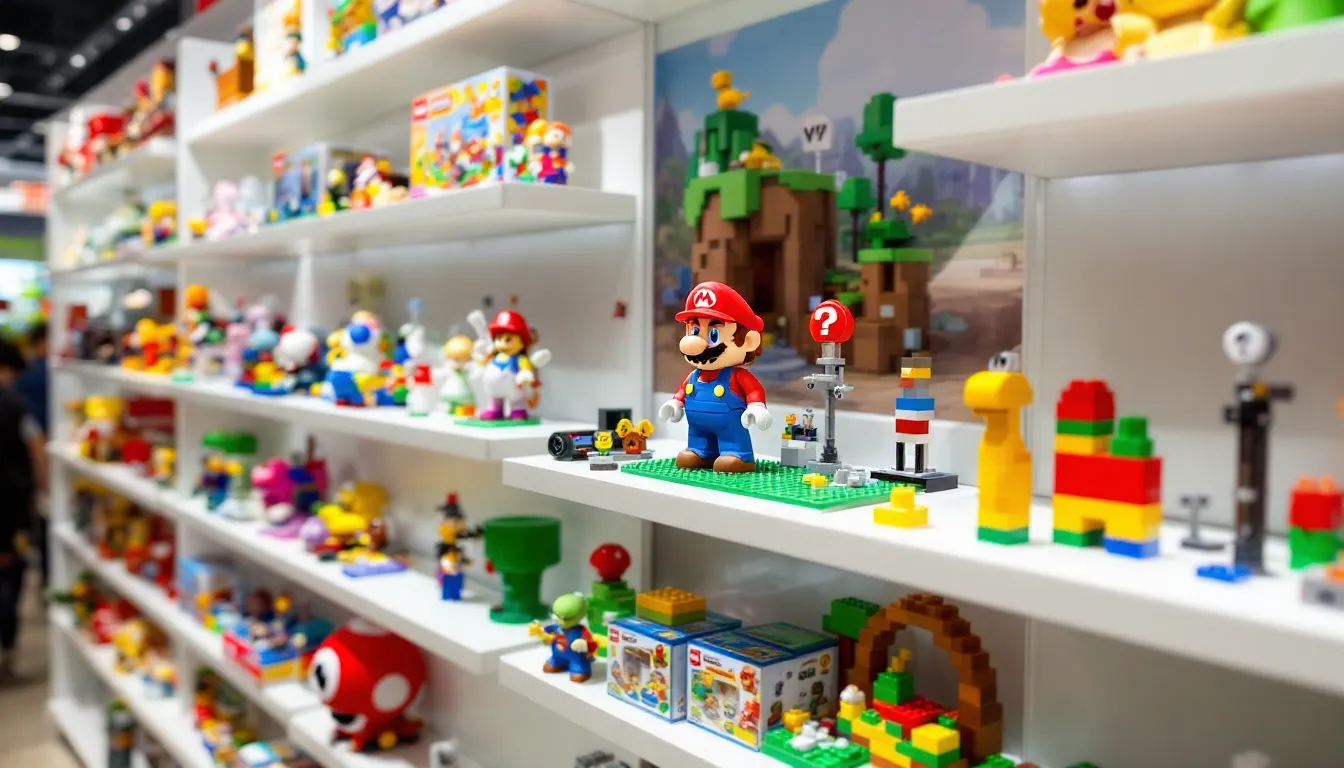
When two of the most iconic brands in play collide, something special happens. Nintendo and LEGO have teamed up to create buildable, playable versions of gaming’s most beloved franchises, letting fans physically construct the Mushroom Kingdom, explore Hyrule brick by brick, and collect their favorite characters in a whole new format. Whether you’re a hardcore Nintendo collector, a LEGO enthusiast looking for your next build, or a parent shopping for a kid who lives and breathes Mario, these sets deliver an experience that goes beyond traditional building blocks.
The Nintendo LEGO lineup has expanded significantly since the partnership first launched, and 2026 brings fresh sets, retired classics, and a growing secondary market for rare pieces. This guide breaks down everything currently available, what’s worth your money, and how to get the most out of your builds, from starter courses to sprawling custom creations that combine multiple sets.
Key Takeaways
- Nintendo LEGO sets combine traditional brick-building with interactive gameplay, offering fans a tangible way to experience beloved franchises like Super Mario and The Legend of Zelda.
- The Super Mario line features multiple starter courses (Mario, Luigi, Peach) that are essential for unlocking interactive features, with expansion sets ranging from $19.99 to $129.99 that connect modularly to create sprawling custom courses.
- The Great Deku Tree set ($299.99) represents LEGO’s premium Zelda offering with 2,500 pieces and dual-build options, delivering display-quality appeal for adult collectors and strong resale value.
- Nintendo LEGO pricing spans all budgets—character packs start at $4.99, mid-range starter courses cost around $60, and premium sets exceed $100, making it accessible for casual players and serious collectors alike.
- Future Nintendo LEGO collaborations are highly likely, with rumors of Animal Crossing, Donkey Kong, and Splatoon sets, though Pokémon remains unlikely due to existing toy licensing agreements.
The History of Nintendo and LEGO Collaboration
How the Partnership Began
The Nintendo and LEGO partnership was officially announced in March 2020, marking a major shift for LEGO Group. While LEGO had already partnered with other entertainment giants like Star Wars, Marvel, and Harry Potter, Nintendo represented a different challenge: translating interactive, digital gameplay into physical building experiences.
The collaboration debuted with LEGO Super Mario in August 2020, introducing a unique product category that blended traditional brick construction with embedded electronics and app integration. Unlike standard LEGO sets that sit static once built, these featured a Bluetooth-enabled Mario figure with an LCD screen, color sensor, and speaker, essentially a physical-digital hybrid toy that reacted to different colored bricks and printed tiles.
The timing aligned with Nintendo’s broader strategy to expand the Mario brand beyond games. With the Super Nintendo World theme park in development and the Mario movie greenlit, LEGO became another avenue to keep the IP relevant across different demographics.
Evolution of Nintendo LEGO Products Over the Years
From 2020 to 2026, the product line has evolved through several distinct phases:
2020-2021: Super Mario Foundation
The initial wave focused exclusively on Super Mario, with the Starter Course (71360) and a handful of expansion sets like the Piranha Plant Power Slide and Boomer Bill Barrage. Character packs introduced buildable versions of Yoshi, Toad, and various enemies. Sales exceeded expectations, proving the concept worked.
2022: Expansion and Refinement
LEGO introduced Luigi as a second interactive figure, allowing for cooperative play. Sets grew more ambitious in scale, with the Bowser’s Castle Boss Battle (71369) and Question Mark Block (71395), the latter being a display-oriented set aimed at adult collectors. The Adventures with Peach Starter Course arrived later, adding a third playable character.
2023-2024: Zelda Enters the Arena
May 2024 saw the launch of the Great Deku Tree 2-in-1 Set (77092), LEGO’s first foray into The Legend of Zelda. This marked a pivot toward more traditional building experiences: unlike Mario sets, Zelda focused on detailed dioramas and minifigures rather than interactive tech. The set featured Link, Zelda, and multiple builds inspired by Breath of the Wild and Tears of the Kingdom.
2025-2026: Diversification and Rumors
The Mario line continues with new power-ups and themed expansions tied to recent game releases. Meanwhile, speculation around additional Nintendo franchises has intensified, with community discussions on platforms analyzing trademark filings and retailer leaks suggesting potential Animal Crossing, Metroid, or Splatoon sets. Nothing’s confirmed yet, but LEGO’s track record suggests more Nintendo IPs are inevitable.
Complete Guide to Super Mario LEGO Sets
Starter Courses and Expansion Sets
Every Super Mario LEGO journey begins with a Starter Course. These aren’t optional, they include the interactive character figure (Mario, Luigi, or Peach) required to unlock the full experience. As of 2026, three starter courses are available:
- Adventures with Mario Starter Course (71360): The original. Includes Mario, a buildable start pipe, goal pole, Goomba, and Bowser Jr. boss fight. 231 pieces, typically $59.99 MSRP.
- Adventures with Luigi Starter Course (71387): Similar structure but with Luigi, Pink Yoshi, Bone Goomba, and different obstacles. Designed for two-player co-op with Mario sets.
- Adventures with Peach Starter Course (71403): Features Peach, Lemmy, and Yellow Toad. Includes exclusive yellow and pink bricks not found in other starters.
Expansion sets plug into these starters, letting builders create sprawling courses. Notable expansions include:
- Bowser’s Airship (71391): 1,152 pieces, $99.99. Features rotating platforms, a Rocky Wrench enemy, and Kamek. One of the largest Mario sets.
- Fliprus Snow Adventure (71417): Ice-themed course with sliding mechanics and a Fliprus enemy.
- Wiggler’s Poison Swamp (71383): Poison-themed obstacles with a buildable Wiggler boss.
Expansion sets range from 130 to 1,200 pieces and $19.99 to $129.99. The modular design means every set connects, so you can build horizontal sprawls or vertical towers depending on your space.
Character Packs and Power-Up Options
Character packs (Series 1-6 as of March 2026) are blind bags containing a single buildable figure and action tag tile. Each pack costs around $4.99 and includes characters like:
- Series 1-2: Paragoomba, Fuzzy, Boo, Spiny, Buzzy Beetle
- Series 3-4: Poison Mushroom, Scuttlebug, Bramball, Galoomba
- Series 5-6: Conkdor, Ty-Foo, Maw-Ray (underwater enemies)
Power-Up packs (also $4.99-$9.99) give Mario/Luigi/Peach new abilities when wearing the costume pieces:
- Fire Mario (71370): Unlocks fire sound effects and animations
- Cat Mario (71372): Climbing abilities from Super Mario 3D World
- Tanooki Mario (71385): Flight animations
- Frog Mario (71394): Water-themed sounds
- Penguin Peach (71404): Ice sliding effects
These packs add replayability since the interactive figures respond differently depending on which power-up they’re wearing. Completionists often hunt for full sets of each series, though blind bag distribution can make specific characters hard to find.
Building Interactive Levels and Creative Challenges
The real appeal of Super Mario LEGO isn’t just building, it’s creating functional courses with challenge and flow. The LEGO Super Mario app (iOS/Android, free) offers:
- Building instructions for all sets
- Digital coin tracking across play sessions
- Course inspiration with community-uploaded designs
- Soundtrack options that change background music during play
Some advanced building techniques include:
Timed Gauntlets: String together multiple enemy encounters with tight spacing, forcing players to clear the course quickly before the 60-second timer expires.
Vertical Towers: Stack expansion sets to create multi-level platforming challenges. The app tracks height-based jumps and rewards bonus coins.
Secret Paths: Use hidden action tags beneath platforms or behind walls to reward exploration.
Boss Rush Modes: Combine boss sets (Bowser, King Boo, Reznor) into a single gauntlet with no checkpoints.
The community has pushed the system’s limits with massive builds exceeding 10,000 pieces, complete with motorized elements from LEGO Technic and custom-printed tiles. While LEGO officially supports combining sets, these mega-builds require serious floor space and organizational skills to keep modular sections straight.
The Legend of Zelda LEGO Sets: What You Need to Know
Available Sets and Themes
As of March 2026, the Zelda LEGO lineup remains relatively small compared to Mario but has made a strong impression with quality over quantity.
Great Deku Tree 2-in-1 Set (77092)
The flagship Zelda set, released May 2024. At 2,500 pieces and $299.99 MSRP, it’s LEGO’s most expensive Nintendo product. The set offers two build options:
- Breath of the Wild version: Features the Deku Tree from the Korok Forest, complete with interior details, buildable Master Sword pedestal, and minifigures of Link and three Koroks.
- Ocarina of Time version: Reimagines the Great Deku Tree as it appeared in the N64 classic, with a darker, more enclosed design and young Link minifigure.
The set includes four minifigures total: Link (BotW), Princess Zelda, Hestu, and young Link (OoT). The Deku Tree himself is highly detailed, with articulated branches, hidden compartments, and printed tiles depicting tree bark texture.
Rumored 2026 Releases
Retailers briefly listed placeholder SKUs for potential Zelda sets in late 2025, but nothing has been officially announced. Speculation centers on:
- A Hyrule Castle set to complement the Deku Tree
- Divine Beast builds from Breath of the Wild
- Smaller $20-$40 sets featuring shrines or enemy encounters
Given LEGO’s typical 18-24 month product cycles, new Zelda sets likely won’t arrive until late 2026 at the earliest.
Unique Features and Collectible Elements
Unlike the interactive Mario sets, Zelda LEGO takes a traditional approach focused on display and authenticity. Key features include:
Minifigure Quality: The Link minifigure features dual molding (two plastic colors in a single piece) for his tunic, along with printed details on the torso, legs, and face. His accessories include the Master Sword, Hylian Shield, and a Sheikah Slate.
Modular Design: The Deku Tree splits into sections for easier construction and display. Each branch is posable, allowing builders to customize the silhouette.
Easter Eggs: Hidden throughout the build are references to Zelda lore, Korok seeds, rupees, and even a tiny buildable Navi fairy tucked inside the tree’s interior.
Collector Appeal: As the first (and currently only) major Zelda LEGO set, the Great Deku Tree has become a must-have for Nintendo collectors. Resale prices spiked briefly after launch when stock shortages hit major retailers, though availability has stabilized in 2026.
The set’s dual-build nature also adds replay value. Most builders construct the BotW version first, then rebuild as the OoT version months later for a fresh display.
Other Nintendo LEGO Collections Worth Exploring
Animal Crossing and Beyond
No official Animal Crossing LEGO sets have been released as of March 2026, but the franchise remains a top candidate for future collaboration. The series’ emphasis on customization, cozy aesthetics, and collectible characters aligns perfectly with LEGO’s strengths.
Fan concepts have circulated across social media, including:
- Buildable villager houses with swappable furniture
- Minifigure-scale characters like Tom Nook, Isabelle, and K.K. Slider
- Seasonal sets tied to in-game events (cherry blossom festival, Bug-Off, Fishing Tourney)
LEGO Ideas (the community submission platform) has seen multiple Animal Crossing proposals, but none have reached the 10,000-supporter threshold required for official review. Given the franchise’s massive popularity, New Horizons sold over 45 million copies, it’s more a question of when, not if.
Other Nintendo franchises that could translate well to LEGO:
- Metroid: Samus’s ship, morph ball mechanics, and atmospheric alien environments would make for compelling builds.
- Splatoon: The vibrant, ink-based aesthetic and Inkling characters offer unique visual opportunities.
- Kirby: Simple, round designs could work as collectible character packs or small playsets.
- Pokémon: Notably absent even though being the highest-grossing media franchise globally. LEGO and The Pokémon Company have never partnered, possibly due to existing toy licensing with Mega Construx (a LEGO competitor). Unless that deal expires, Pokémon LEGO remains unlikely.
Rumored and Upcoming Nintendo LEGO Releases
Beyond Zelda expansions, the rumor mill for 2026-2027 includes:
Super Mario Movie Tie-Ins: With the second Mario film slated for 2026, LEGO could release sets based on the animated designs rather than game aesthetics. This would mirror how LEGO handled other film franchises.
Donkey Kong Country Expansion: Trademark filings from mid-2025 hinted at Donkey Kong integration into the Super Mario line, possibly as a large expansion set featuring DK, Diddy, and jungle-themed obstacles.
Retro NES/SNES Sets: LEGO previously released a buildable NES console (71374) in 2020 with a working crank mechanism and retro TV. A follow-up SNES or Game Boy set has been rumored but never confirmed.
Limited Edition Icons Series: LEGO’s 18+ “Icons” line focuses on nostalgic display pieces. A buildable Zelda or Metroid tribute piece, similar to the Atari 2600 set (10306), could target adult collectors.
Most of these remain speculation. LEGO typically announces new Nintendo sets 2-3 months before release, so watch for official reveals around major gaming events (E3 successor shows, Nintendo Directs, etc.).
How to Choose the Right Nintendo LEGO Set for You
Considerations for Age and Skill Level
Nintendo LEGO sets span a wide age range, from simple 100-piece expansions to complex 2,500-piece builds. LEGO’s age recommendations are:
- 6+: Most Super Mario Starter Courses and small expansions. Simple builds with large pieces, minimal steps.
- 8+: Mid-size expansions like Bowser’s Airship, character packs, and power-ups.
- 13+: Large Mario sets and smaller Zelda dioramas (if released).
- 18+: Great Deku Tree, NES console, and other collector-focused sets.
These are guidelines, not strict rules. A 10-year-old with LEGO experience can easily handle 18+ sets, while an adult new to building might find the modular Mario courses confusing without app guidance.
For younger builders (6-9): Stick with a single Starter Course and 2-3 small expansions. The interactive gameplay keeps them engaged beyond the build itself.
For tweens/teens (10-14): Combine multiple Mario sets or jump into the Great Deku Tree. They’ll appreciate the challenge and have the patience for longer builds.
For adult collectors (15+): Prioritize display sets like the Deku Tree or NES. These sit on shelves looking sharp rather than being played with.
Budget-Friendly vs. Premium Collections
Nintendo LEGO pricing breaks down into tiers:
Budget Tier ($5-$30)
- Character packs: $4.99 each
- Power-up packs: $9.99 each
- Small expansions: $19.99-$29.99
Perfect for testing the waters or adding variety to an existing collection. Character packs especially offer solid value for kids who enjoy collecting.
Mid-Range ($40-$100)
- Starter Courses: $59.99
- Medium expansions: $49.99-$79.99
- Large themed sets: $99.99
This tier is where most families land. A Starter Course plus one or two expansions provides dozens of hours of play without breaking $150.
Premium ($100+)
- Bowser’s Airship: $99.99
- Great Deku Tree: $299.99
- Retired/rare sets: Variable (secondary market)
These are investment pieces. The Deku Tree in particular has held its value well, with sealed boxes occasionally selling for $350+ on secondary markets when stock dips.
Budget Strategy: Wait for seasonal sales. LEGO retailers typically discount 20-30% during Black Friday, back-to-school, and post-holiday clearance. Target and Walmart cycle Nintendo LEGO through promotions every 6-8 weeks.
Display vs. Play Value
Nintendo LEGO sets fall into two camps:
Play-Focused: Super Mario Starter Courses and expansions. These are designed to be rebuilt, reconfigured, and played with repeatedly. Structural integrity isn’t as critical since pieces get swapped constantly. The interactive figures add replayability that static builds can’t match.
Display-Focused: Great Deku Tree, NES console, and anticipated Zelda sets. These are built once, then placed on a shelf or in a display case. Detail and accuracy matter more than interactivity.
Some builders split the difference, they’ll build a massive Mario course, play with it for a few weeks, then photograph it and disassemble into storage. This maximizes both play and space efficiency.
If you’re short on space, prioritize play-focused sets that justify their footprint through ongoing engagement. If you have dedicated display areas (bookshelves, glass cases, themed rooms), the premium display sets become centerpiece conversation starters.
Building Tips and Creative Ideas for Nintendo LEGO
Combining Multiple Sets for Epic Builds
The modular nature of Super Mario LEGO practically begs builders to go big. Combining sets unlocks creative possibilities impossible with single-box builds.
Connection Methods:
- Horizontal Expansion: Most sets connect side-by-side using the standard green baseplate system. You can create sprawling left-to-right courses that span entire tables.
- Vertical Stacking: Use LEGO’s Technic pins or standard brick stacking to build upward. Multi-story courses with drop-down sections and platforming challenges add difficulty.
- Branching Paths: Place multiple routes between the start pipe and goal pole, forcing players to choose their own adventure. Tag different colored bricks to guide players toward specific routes.
Epic Build Ideas:
-
Full Bowser’s Castle Assault: Combine Bowser’s Castle (71369), Bowser’s Airship (71391), and lava-themed expansions into a multi-stage boss gauntlet. Place the goal pole inside the castle’s throne room for a final challenge.
-
Underwater to Sky Tower: Start with underwater sets (Porcupuffer, Urchin), transition to ground-level Mushroom Kingdom expansions, then finish with cloud/airship sets. The interactive figures change music and effects based on the environment.
-
Speed Run Course: String together 10+ expansion sets in a linear gauntlet with minimal branching. Challenge friends to beat your best time or coin count.
-
Maze Builder: Use walls, pipes, and obstacles to create a labyrinth. Hide the goal pole behind false paths and secret doors.
Community builders have documented courses exceeding 15 feet in length with over 8,000 pieces combined. The LEGO Super Mario app’s course builder feature helps plan these mega-projects digitally before committing bricks.
Custom MOC Designs and Community Creations
MOC (My Own Creation) builders have expanded Nintendo LEGO beyond official sets. Popular custom builds include:
Franchise Crossovers: Builders integrate non-Mario Nintendo characters using custom minifigures and printed tiles. Fan-made Zelda, Metroid, and Kirby expansions appear regularly on platforms showcasing creative building communities.
Game-Accurate Recreations: Detailed rebuilds of specific Mario levels (1-1 from the original Super Mario Bros., Rainbow Road, Peach’s Castle exterior) using official LEGO pieces but custom designs.
Technic Integration: Advanced builders add motorized elements, spinning platforms, moving enemies, automated coin dispensers, using LEGO Technic motors and gears. These require separate power functions kits but create truly dynamic courses.
Custom Enemies and Characters: Since not every Mario enemy has an official LEGO release, builders design their own Goombas, Koopas, and bosses using standard LEGO parts. Some even 3D-print custom action tags to trigger unique sounds.
Where to Find MOC Instructions:
- Rebrickable.com hosts fan-made instruction PDFs for custom Nintendo builds
- YouTube channels like “Beyond the Brick” showcase MOC builders and their techniques
- LEGO Ideas and fan forums share WIP (work-in-progress) documentation
Building custom designs requires familiarity with LEGO’s parts catalog and building techniques. Start small, a custom enemy or power-up, before attempting full course recreations.
Where to Buy Nintendo LEGO Sets in 2026
Official Retailers and Online Stores
Nintendo LEGO sets are widely available through both LEGO-specific and general retailers:
LEGO Official Channels:
- LEGO.com: Full catalog, often earliest access to new releases, VIP points program (5% back on purchases)
- LEGO Brand Stores: Physical locations with exclusive sets and build events
Mass Retailers:
- Target: Frequent promotions, occasional exclusive minifigure packs or bundles
- Walmart: Competitive pricing, good for clearance hunting
- Amazon: Convenience and Prime shipping, though prices fluctuate and third-party sellers sometimes inflate MSRP
Toy Specialty Stores:
- Toys”R”Us (Canada/international): Carries full Nintendo LEGO line
- Local toy shops: Support small businesses: some offer pre-orders and hold stock for regulars
Nintendo Store (New York, Tokyo): Occasionally stocks limited quantities of Nintendo LEGO sets, though not their primary focus.
Best Practices:
- Sign up for retailer email lists to catch sales (20-30% off during major holidays)
- Use browser extensions like Honey or CamelCamelCamel to track Amazon price history
- LEGO VIP members get early access to new releases (usually 2-4 weeks before general availability)
- Check stock at multiple retailers: distribution can be uneven during launch windows
Regional Availability: Nintendo LEGO sets are sold globally, but release dates and pricing vary. European releases sometimes lag North America by 1-2 months. Japan gets simultaneous releases but occasionally receives exclusive packaging or bonus items.
Finding Rare and Discontinued Sets
LEGO retires sets regularly, typically 18-24 months after release. Once retired, prices on the secondary market climb fast.
Discontinued Nintendo LEGO Sets (as of March 2026):
- Piranha Plant Power Slide (71365): Retired mid-2023, now $40-$60 (original MSRP $29.99)
- King Boo and the Haunted Yard (71377): Retired late 2024, selling for $80-$120 (MSRP $49.99)
- Reznor Knockdown (71390): Hard to find, $70+ (MSRP $39.99)
- Various Series 1-2 character packs: Individual figures now sell for $8-$15 each
Where to Hunt for Retired Sets:
eBay: Largest selection, but prices reflect demand. Filter by “sold listings” to see actual market value, not inflated asking prices. Watch for auctions ending at odd hours for better deals.
BrickLink: LEGO-specific marketplace where sellers list new, used, and incomplete sets. You can buy individual pieces to complete sets or find bulk lots.
Facebook Marketplace / Craigslist: Local sales sometimes yield deals from parents clearing out toys. Negotiate bundles for better per-set pricing.
r/LEGOmarket (Reddit): Community-driven buying/selling with less markup than eBay. Reputation systems help avoid scams.
LEGO Conventions and Swap Meets: Regional events where collectors buy, sell, and trade. Great for networking with other Nintendo LEGO enthusiasts.
Condition Matters: Used sets without boxes sell for 40-60% of sealed prices. Missing a few pieces? BrickLink lets you order exact replacements. Missing the interactive Mario/Luigi/Peach figure? That’s harder, those figures alone sell for $30-$50 used.
Beware Counterfeits: Third-party sellers (especially on Amazon and AliExpress) sometimes list knockoff sets. Check for LEGO branding on studs, correct packaging, and official instruction booklets. If the price seems too good (a $300 set for $100 new), it’s probably fake.
Caring for and Maintaining Your Nintendo LEGO Collection
LEGO is durable, but Nintendo sets, especially interactive Mario figures, require specific care to stay functional and looking sharp.
Cleaning LEGO Bricks:
- Hand wash in lukewarm water with mild dish soap. Use a soft brush for textured or printed pieces.
- Air dry completely before rebuilding. Don’t use heat sources: some plastics can warp.
- Never dishwasher: High heat and harsh detergents can fade prints and damage electronics.
- Dust regularly: Use a soft brush, compressed air, or a makeup brush for display sets. Prevents buildup in crevices.
Interactive Figure Care (Mario/Luigi/Peach):
- Remove batteries if storing long-term (3+ months). Prevents corrosion.
- Avoid water: The figures contain electronics. Wipe with a damp cloth only: don’t submerge.
- Firmware updates: The LEGO Super Mario app occasionally releases updates for the figures. Connect via Bluetooth to ensure compatibility with new sets.
- Battery replacement: Figures use 2x AAA batteries. Official LEGO estimates 8-12 hours of active playtime per set.
Storage Solutions:
Modular Bins: Store sets by theme (ice world, lava world, etc.) in labeled bins. Makes rebuilding faster.
Ziplock Bags: Keep instruction booklets and small pieces (character packs, power-ups) together. Label with set numbers.
Display Cases: For premium sets like the Great Deku Tree, use UV-protective acrylic cases to prevent sun fading on printed pieces.
Parts Organizers: Tackle boxes or drawer systems help sort pieces by color/type if you’re building custom MOCs.
Protecting Value:
- Keep original boxes: Sealed boxes retain value best, but even empty boxes add 10-20% to resale prices.
- Document builds: Take photos before disassembling. Makes rebuilding from memory easier.
- Avoid sun exposure: Prolonged UV exposure fades colored bricks, especially reds and blues.
- Climate control: Extreme heat or cold can warp pieces over years. Room temperature storage is ideal.
Repair and Replacement:
LEGO offers free replacement for missing or broken pieces through their customer service. You’ll need the set number and piece ID (found in instruction booklets). Response time is typically 2-3 weeks. For interactive figures under warranty, LEGO will repair or replace defective units, register products on LEGO.com to track warranty status.
Conclusion
Nintendo LEGO has carved out a unique space where gaming nostalgia meets hands-on creativity. Whether you’re chasing coins through a sprawling Mario course, displaying the Great Deku Tree as a centerpiece, or hunting down rare character packs to complete your collection, these sets offer something traditional video games can’t: a tangible, reconfigurable piece of the franchises we grew up with.
The partnership shows no signs of slowing. With Zelda expanding, rumors of new franchises entering the lineup, and the Super Mario line still releasing fresh expansions, 2026 and beyond look promising for Nintendo LEGO collectors. The key is knowing what you want from the experience, play, display, or a mix of both, and building your collection accordingly.
Start small if you’re new. Grab a Starter Course, see if the interactive gameplay clicks for you, then expand from there. Or skip straight to the Deku Tree if you’re after that shelf presence. Either way, you’re building more than just a LEGO set, you’re constructing a physical bridge between two of the most iconic play experiences ever created.