
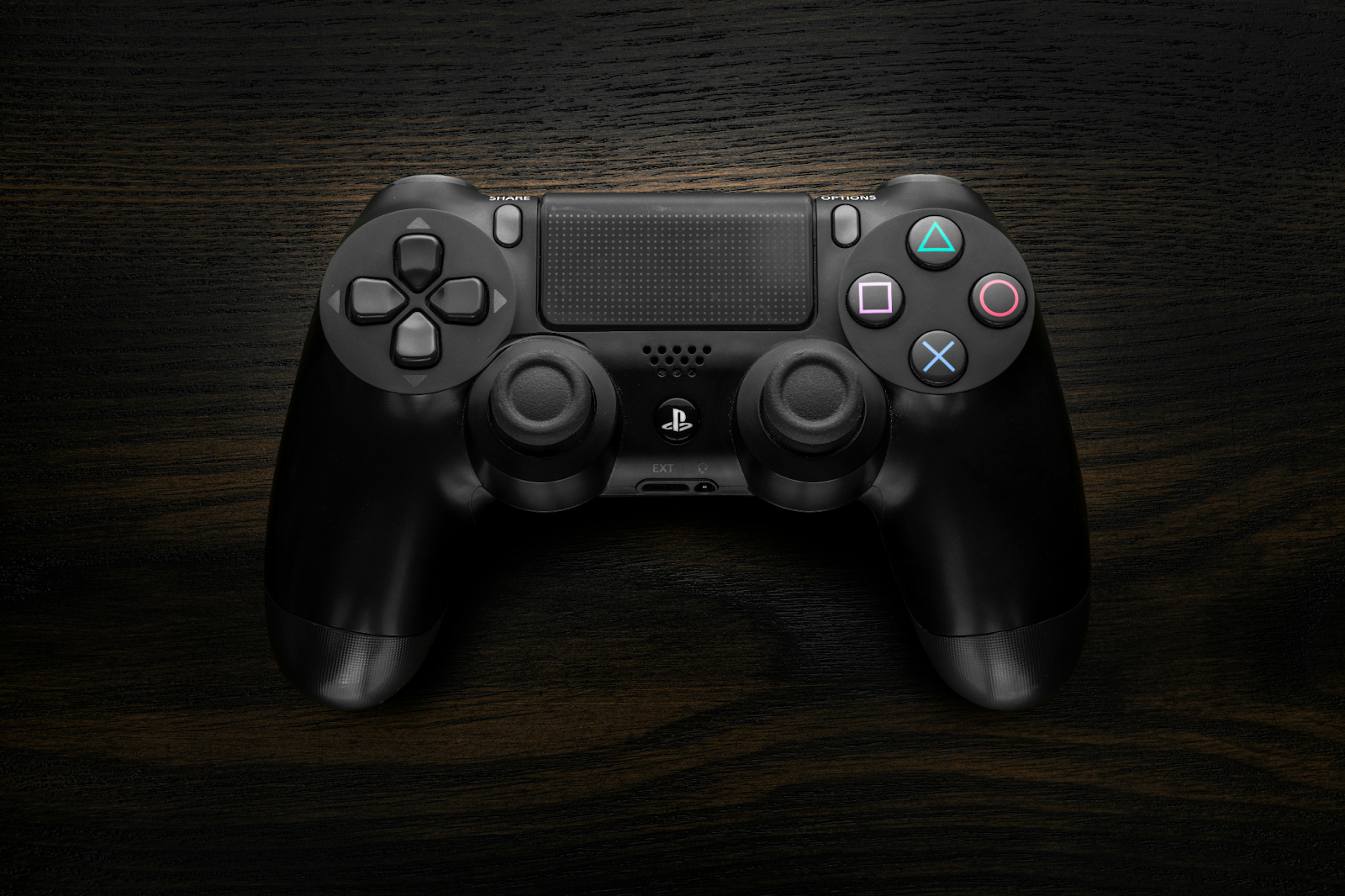
The development of casino games has been gradually adopting proven design trends from console games, especially those popularized by PlayStation games. This fusion is not brought about by superficial imitation but by common answers to common design problems. The structure of interaction in the form of puzzle games and mini-games can be represented as models that are easily translated into controlled casino settings, where the system must be deterministic, auditable, and modular.
By analyzing the adaptation of these mechanics rather than copying them, one can identify why the logic of the consoles has become an effective design source in recent casino games.
Puzzle Logic as a Framework for Structured Interaction
Puzzle games are based on well-defined rules, limited interaction space, and stateful development. Such features are quite compatible with the limitations of casino software, which determines results through preprogrammed logic rather than by playing the game in its entirety. The puzzle mechanics can be used to arrange interactions in discrete steps without dynamically changing the rules.
This is frequently realized as grid-based structures in a casino environment, or as matching conditions or sequence-completion mechanisms. Each interaction will bring the system to a new valid state, just as puzzle games impose legal moves. These structures enable developers to create stratified mechanics with transparent, certifiable logic underneath.
Mini-Games and Modular System Design
PlayStation titles’ minigames are usually closed modules with their own rules, visual identity, and interaction loops. This modular philosophy has been adopted by casino developers to arrange features into larger game structures. Instead of considering special mechanics as special modes, contemporary casino games tend to incorporate mini-game logic into the underlying system.
From an engineering perspective, this modularity makes development and maintenance easier. All features can be implemented as individual components that listen for certain conditions in the system before going off. This design resembles the component-based architectures of console game engines, with reusable logic blocks compiled into larger experiences.
Input Simplicity and Interaction Clarity
The puzzle and mini-games are designed so that their inputs are easily understandable. These mechanics are commonly presented in console titles as small diversions that require little training. The same can be said of casino games, where the interaction models must be user-friendly, without requiring tutorials or complicated control systems.
Casino games can display clear cause-and-effect relationships between inputs and system behaviors by borrowing puzzle-style interactions. This does not mean the consequences are predictable, but it reflects a lack of conceit in how interactions are handled. The outcome is an interface that conveys structure but not its internal logic.
Visual Feedback and State Representation
Another reason casino games can be inspired by PlayStation puzzle design is the efficient visual feedback used to display the system state. Puzzle games are good at displaying progress, completion and transitions using visual indicators like highlighted tiles, completed rows, or unlocked sections.
The techniques used in casino games are modified to signify state changes in the systems. Visual indicators can indicate which parts of a grid are in use, which features have been satisfied, or which layers are currently enabled in the feature list. These signals are fuelled by finished logic steps and they do not change any underlying rules, only they externalise the state of the system in a form easily interpretable.
Platform-Agnostic Logic and Cross-Device Compatibility
The logic of puzzles and mini-games is axiomatically platform-independent. The consoles, handheld devices, and mobile platforms can implement the same rules with minimal modification. This flexibility is important to casino developers because a game needs to work across desktops, mobile browsers, and native applications.
Moreover, the developers can create systems that scale across resolutions and input types by following proven logic patterns from PlayStation ecosystems. Such uniformity is especially useful when using the operators of multiple local platforms, such as the Newfoundland casino sites, where technical standards and device usage patterns can differ, yet the system behavior should remain the same.
Regulatory Alignment and Predictable State Transitions
Console puzzle games are constructed around a deterministic transition of state, which is defined as a legal successor state of each action. This aligns with regulatory requirements for casino software, which must be testable under controlled conditions and repeatable.
Casino games add complexity with layers rather than the randomness provided by borrowing puzzle logic. The layers have known boundaries and all the possible states can be listed at certification. This is what makes puzzle-based mechanics especially appealing in controlled spaces.
Influence Without Imitation
It should be mentioned that casino games do not directly imitate PlayStation puzzles in their entirety. They instead abstract the principles behind it, including modularity, clarity of state, and interaction depth. These principles are thereafter implemented in another regulatory and technical setting.
It is architectural and not thematic. Casino games assume the logic scaffolding of puzzle and mini-games, but maintain distinct systems of outcome resolution and compliance-grounded restrictions.
The logic of puzzles and mini-games is borrowed from casino games because PlayStation titles provide solutions to common design issues. Formal communication, modularity, an explicit model of state, and platform adaptation can all be easily translated into a casino software structure.
Ultimately, this borrowing represents a broader convergence between console gaming and casino development at the system level. Since casino games will keep evolving, the logic of puzzles as a design reference is likely to remain, not as a stylistic decision but as an effective structure that allows the creation of complex, yet controlled, interactive systems.

Wayne is a unique blend of gamer and coder, a character as colorful and complex as the worlds he explores and the programs he crafts. With a sharp wit and a knack for unraveling the most tangled lines of code, he navigates the realms of pixels and Python with equal enthusiasm. His stories aren’t just about victories and bugs; they’re about the journey, the unexpected laughs, and the shared triumphs. Wayne’s approach to gaming and programming isn’t just a hobby, it’s a way of life that encourages curiosity, persistence, and, above all, finding joy in every keystroke and every quest.